


Combo Perfume Vending Machine: Ultimate Buyer's Guide

- Selecting the Right Multi-fragrance Dispenser Architecture
- Dispensing mechanisms and their procurement implications
- Capacity, throughput and user experience metrics
- Payment, authentication and retail integration
- Operational Planning: Site Selection, Logistics, and Serviceability
- Site-fit analysis and placement factors
- Refill supply chain and inventory replenishment
- Maintenance, warranty and remote diagnostics
- Technical Standards, Compliance and Security Considerations
- Consumer safety and product labeling
- IoT architecture and data governance
- Accessibility and environmental sustainability
- Financial Modeling and Vendor Evaluation
- Total cost of ownership and ROI drivers
- Vendor capability checklist
- Data-driven acceptance criteria
- Why supplier manufacturing scale and R&D matter — MAKMIK's competitive profile
- Production capacity and quality controls
- Product breadth and integration capabilities
- Support infrastructure and global deployment
- Frequently Asked Questions
High-density This enterprise guide decodes procurement and deployment of combined-fragrance automated dispensers — hybrid scent kiosks that deliver multiple bottled perfumes or atomized sprays from one unattended cabinet. It synthesizes specification criteria (capacity, dispensing mechanism, payment & telemetry), site-fit analysis (traffic, placement, security), TCO modeling (CAPEX, refill logistics, service SLAs), and compliance checkpoints (consumer-product labeling, electrical safety standards). Buyers will find an actionable vendor-evaluation checklist, comparison of mechanical platforms (coil drop, carousel, robotic arm) with throughput and footprint metrics, and practical integration patterns for POS, CRM, and cloud analytics via secure IoT stacks. Links to authoritative resources for vending technology and IoT standards are embedded to support due diligence.
Selecting the Right Multi-fragrance Dispenser Architecture
Dispensing mechanisms and their procurement implications
Mechanical architecture determines refill cadence, product versatility, and maintenance. Coil-and-drop systems are low-cost and simple to service but are best for boxed formats or rigid bottles. Carousel platforms allow higher SKU counts with denser storage density and are appropriate for High Quality retail environments that need frequent assortment changes. Atomized spray modules deliver single-serve mists and are optimised for fragrance sampling and perfume spray units; they require attention to nozzle life, fluid compatibility, and aerosol regulations. Buyers should map expected SKU mix, bottle shapes, and dispensing granularity to the chosen platform to avoid costly retrofit cycles.
Capacity, throughput and user experience metrics
Specify capacity (number of distinct SKUs and total units), peak transactions per hour, and average transaction time during procurement. For example, a high-footfall department store display might require 200+ daily cycles and sub-30-second transaction latency; a hotel lobby installation can tolerate lower throughput but must prioritize ambient noise levels and small footprint. Performance SLAs should include mean time between failures (MTBF), mean time to repair (MTTR), and maximum acceptable stockout windows tied to refill logistics.
Payment, authentication and retail integration
Payment modules must support EMV, NFC/mobile wallets, and optional corporate billing integrations. For multi-location rollouts consider centralized payment reconciliation and tokenized payment flows to reduce PCI scope. Authentication layers (loyalty ID, QR-based coupons) should integrate via APIs with POS and CRM systems to enable targeted promotions and inventory-driven merchandising. Ensure the vendor provides developer documentation, sandbox APIs, and secure transport protocols such as TLS 1.2+ for cloud communication.
Operational Planning: Site Selection, Logistics, and Serviceability
Site-fit analysis and placement factors
Conduct micro-site audits evaluating hourly foot traffic, dwell time, sightlines, and power/network availability. Locations adjacent to beauty counters, hotel lobbies, airport concourses, or High Quality malls generate higher conversion for fragrance sampling dispensers. Lighting, anti-theft mounting, and accessibility (ADA) considerations should be mapped in the site plan. Installations requiring HVAC stability should be flagged for temperature control to protect volatile fragrance assets.
Refill supply chain and inventory replenishment
Define refill intervals, SKU rotation schedules, and secure logistics for high-value fragrance stock. Consider a hub-and-spoke model with regional depots for faster replenishment. Implement telemetry-driven replenishment using real-time inventory reporting to shift from calendar-based to demand-driven restocking, reducing lost sales due to stockouts and minimizing working capital tied in inventory.
Maintenance, warranty and remote diagnostics
Require remote diagnostics, over-the-air updates, and predictive maintenance capabilities in vendor contracts. Telemetry should expose sensor health (pump cycles, nozzle pressure, dispense counts), environmental data (temperature, humidity), and security events. Contracts must specify spare-part lead times and local service coverage. Service-level agreements should include guaranteed first-response windows and replacement strategies for critical failures.
Technical Standards, Compliance and Security Considerations
Consumer safety and product labeling
Fragrance dispensers fall under consumer product and chemical labeling regulations in many jurisdictions; buyers must ensure that sample units include ingredient disclosures and allergen warnings per local law. For reference information on product regulation frameworks consult ISO guidance and regional regulatory sites. Electrical and mechanical safety compliance testing (e.g., CE, UL) should be specified in procurement contracts.
IoT architecture and data governance
Edge-to-cloud designs must minimize PII exposure and follow secure authentication patterns (mutual TLS, OAuth 2.0). Where telemetry is used to personalize offers, data governance policies should define retention periods, pseudonymization needs, and cross-border transfer rules. For background on IoT principles and security research consult Internet of Things - Wikipedia and technical publications found on IEEE Xplore.
Accessibility and environmental sustainability
Specify accessibility requirements in line with local regulations (e.g., clear user interfaces, reachable dispense heights). For sustainability, assess energy consumption, recyclable packaging for sample pods, and the vendor’s take-back program for used cartridges. Lifecycle analysis reduces ecological impact and can be an important criterion for corporate procurement committees.
Financial Modeling and Vendor Evaluation
Total cost of ownership and ROI drivers
Model CAPEX (machine, installation), OPEX (refill cost, service, connectivity), and revenue (transaction average, conversion rate). Include intangible benefits such as brand engagement and data capture. Scenario-modeling should account for price elasticity during promotions and seasonality. Require vendors to provide historical case studies or anonymized telemetry to validate claimed conversion and average order value (AOV).
Vendor capability checklist
Procurement teams should evaluate manufacturing scale, quality control processes, R&D depth, and after-sales infrastructure. Key evidence includes ISO certifications, factory tour documentation, and sample test reports. Ensure the supplier has proven multi-site rollouts and reliable software update procedures. Reference third-party information on vending technology trends at Vending machine - Wikipedia for background market context.
Data-driven acceptance criteria
Acceptance tests should include load testing (sustained transactions per hour), inventory accuracy thresholds (e.g., >99.5% counting accuracy), dispense success rate (>99%), network resilience tests, and UX validation with a representative user cohort. Include contractual penalties for SLA breaches and defined remediation timelines.
| Platform Type | Typical Capacity | Average Transaction Time | Best Use Case | Estimated Cost Range (unit) |
|---|---|---|---|---|
| Single-slot coil / drop | 10–40 units | 20–45 seconds | Low-cost sample distribution, boxed bottles | $2,000–$6,000 |
| Carousel multi-slot cabinet | 40–200 SKUs | 15–35 seconds | Retail fixtures, multi-SKU merchandising | $8,000–$25,000 |
| Atomized spray / precision pump | 20–120 vials/cartridges | 25–60 seconds | Sampling, High Quality fragrance dispensing | $10,000–$30,000 |
Why supplier manufacturing scale and R&D matter — MAKMIK's competitive profile
Production capacity and quality controls
Buying decisions for complex smart cabinets require a supplier with volume production capability, robust quality assurance, and repeatable manufacturing processes. MAKMIK is a high-tech enterprise focusing on software and hardware solutions for unmanned retail and has more than 10 years of R&D and production experience in the Internet of Things and unmanned retail industries. The company operates advanced production equipment including fully automatic assembly lines, CNC machining centers, laser cutting machines, and automatic welding equipment. With over 300 skilled technical workers across a 20,000+ square meter facility, MAKMIK delivers consistent build quality and can scale to produce thousands of units annually while maintaining strict quality control standards.
Product breadth and integration capabilities
MAKMIK’s product portfolio spans dedicated scent dispensers, beauty and cosmetic vending cabinets, beverage machines, and fresh-food automation. The company provides both perfume vending machine and perfume spray vending machine solutions, and supports customization for branding, payment systems, and cloud telemetry. Buyers benefit from a supplier that integrates hardware, embedded firmware, and cloud-based analytics, accelerating time-to-market and reducing vendor multiplicity.
Support infrastructure and global deployment
For multi-site rollouts, local service networks and regional spare-part distribution are essential. MAKMIK’s manufacturing scale and engineering resources enable tailored SLAs, regional stocking of consumables, and remote diagnostic tooling. Our vision is to become a global leader in unmanned vending machine solutions, and this commitment is backed by documented deployments and customer endorsements in international markets. For technical readers, vendor R&D publications and whitepapers can be cross-checked against industry research on IoT and vending ecosystems at IEEE Xplore and ISO guidance at ISO.
Procurement checklist (quick reference): technical spec sheet, SLA terms, MTTR/MTBF targets, spare-part catalogue, software API documentation, security & compliance evidence, pilot acceptance criteria, and post-warranty support options.
Case selection guidance: pilot in one high-visibility site, collect 30–90 days of telemetry, confirm refill cadence and conversion uplift, then iterate SKU assortment and commercial model before scaling to multiple locations.
Contact MAKMIK or review product specifications and deployment case studies on our corporate site: https://www.makmiktech.com/
Frequently Asked Questions
What are the main dispensing technologies for multi-fragrance cabinets and when should each be used?
Common architectures include coil-and-drop (best for rigid bottles and low cost deployments), carousel multi-slot systems (higher SKU density and flexible assortment), and atomized spray or precision-pump modules (optimised for sampling and perfume sprays). Selection depends on SKU formats, expected throughput, and maintenance capacity.
How should buyers model total cost of ownership for fragrance vending installations?
TCO should include CAPEX (machines, installation), OPEX (refill consumption, service, connectivity), and lost-sales risk from stockouts. Include telemetry costs, spare parts provisioning, and expected lifespan. Scenario-modeling for conversion rates and seasonal demand will provide accurate ROI forecasts.
What security and data governance requirements are essential for cloud-connected fragrance dispensers?
Devices should use encrypted transport (TLS 1.2+), secure device authentication (mutual TLS or token-based methods), and minimal PII capture. Define data retention policies, pseudonymization techniques, and restrictions for cross-border transfers in vendor contracts.
Which acceptance tests should be included in procurement contracts?
Acceptance tests should validate sustained transaction throughput, inventory-count accuracy (target >99.5%), dispense success rate (>99%), network resilience, and user experience validation. Contracts should include remedies and SLA penalties for performance shortfalls.
Why does supplier manufacturing scale matter and what production capabilities should buyers verify?
Scale indicates consistent quality, availability of spare parts, and the ability to support multi-site rollouts. Buyers should verify production equipment (assembly lines, CNC, laser cutting), workforce size, quality control processes, and documentation such as test reports and certifications.

Discover the convenience of MAKMIK's small vending machines for sale. Perfect for compact spaces, these machines provide reliable service and easy maintenance, enhancing your business effortlessly. Optimize your vending operations with MAKMIK's innovative design and unmatched quality. Explore the best selection of small vending machines for sale today!
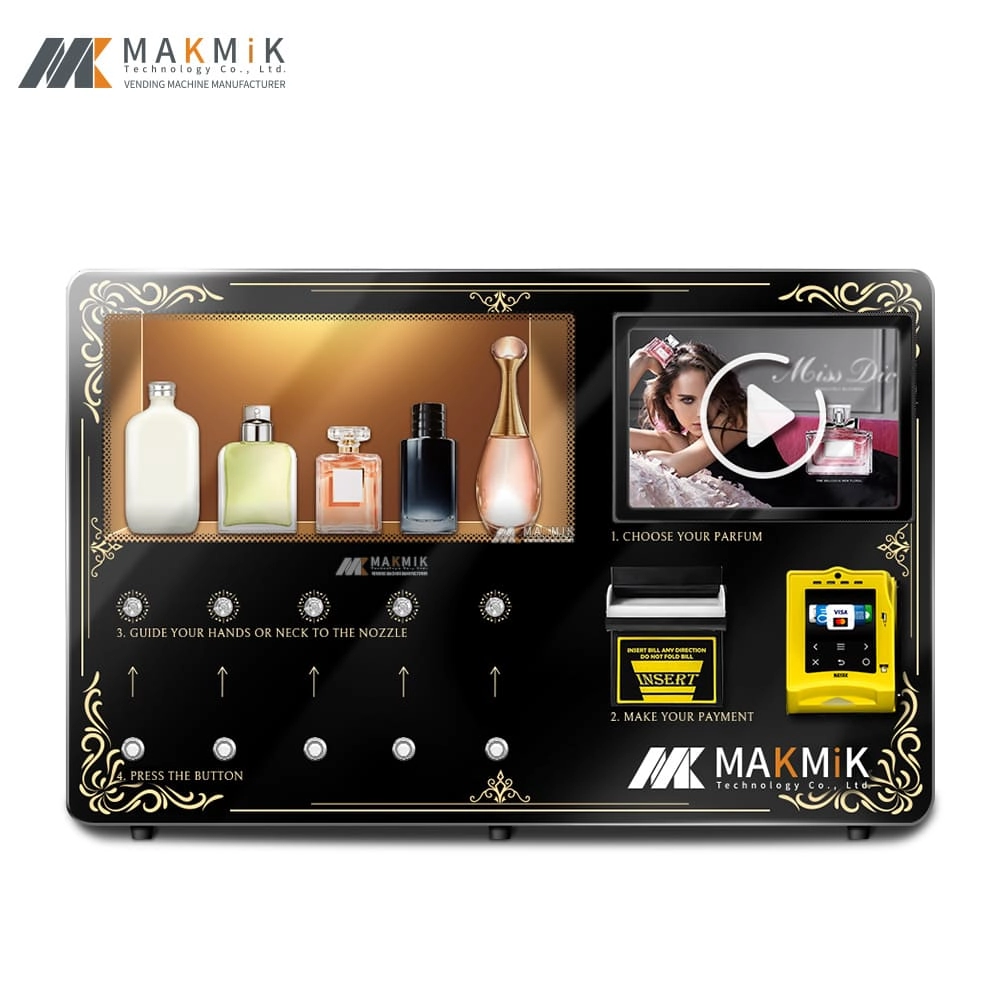
Introducing the MAKMIK Perfume Vending Machine Small Perfume Dispenser MK-PM-002—a sleek, innovative solution for instant fragrance access. Perfect for any venue, this compact perfume vending machine ensures convenience and variety. Discover MAKMIK's exceptional quality with this perfume vending machine for sale today!
Customizable appearance and functions according to actual needs, multiple ways to combine, fast customer acquisition

Introducing the MAKMIK Split Base Model MK-PM001, a cutting-edge perfume vending machine designed for modern convenience. This smart vending solution offers seamless operation and a sleek design, bringing the latest in fragrance technology to your fingertips. Elevate your space with the perfume vending machine by MAKMIK.
Customisable appearance and functions according to actual needs, multiple ways to combine, fast customer acquisition.

Discover the future of beauty retail with the Makmik Customized Innovation Smart Cosmetics Contact Lenses Sunscreen Vending Machine. Designed by MAKMIK, this cutting-edge beauty vending machine offers a seamless shopping experience, providing instant access to cosmetics and lenses. This unique cosmetics vending machine solution is designed to elevate your business.
Social Media:
© 2026 MAKMIK | All Rights Reserved.
Facebook
Linkedlin
YouTube
Instagram