






Multi-Nozzle Perfume Vending Machines: Cross-Contamination Risk
- How to Control Cross-Contamination in Multi-Nozzle Systems
- What Does Cross-Contamination Mean in a Perfume Vending Machine?
- Why Multi-Nozzle Systems Need More Channel Control
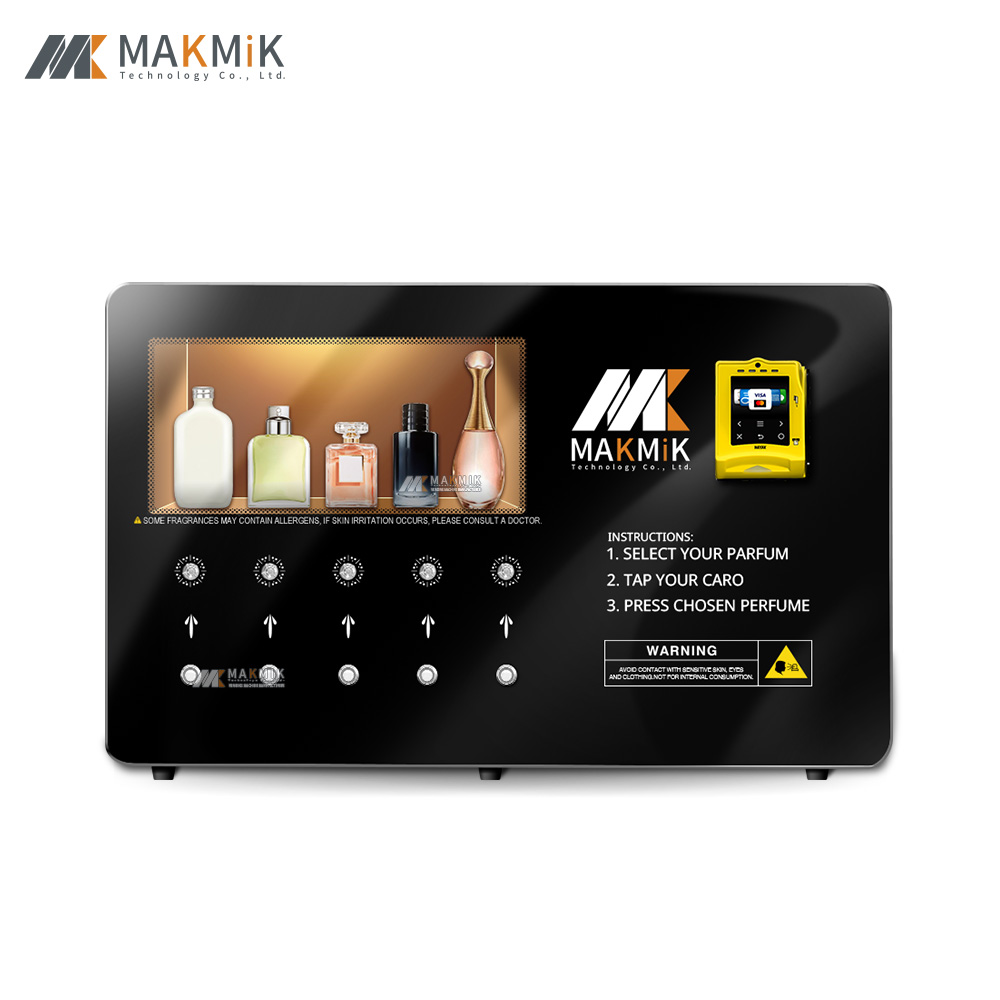
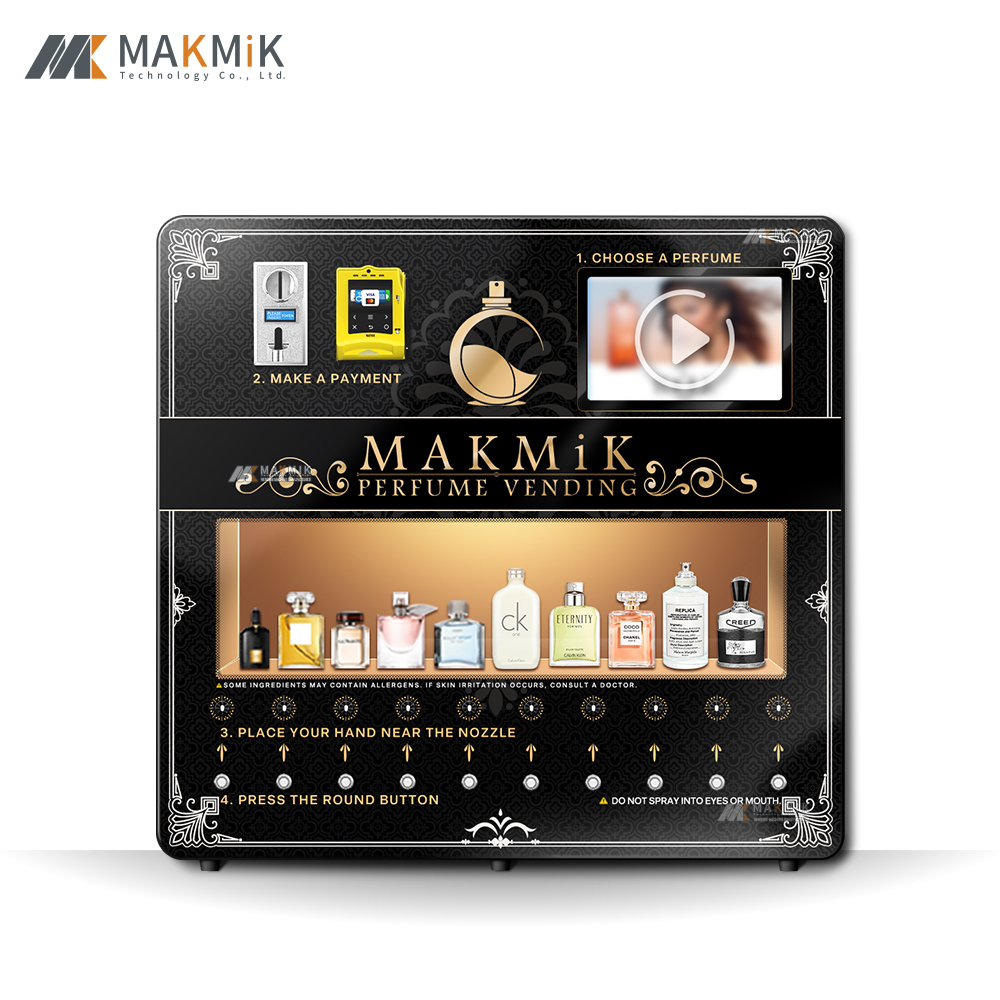
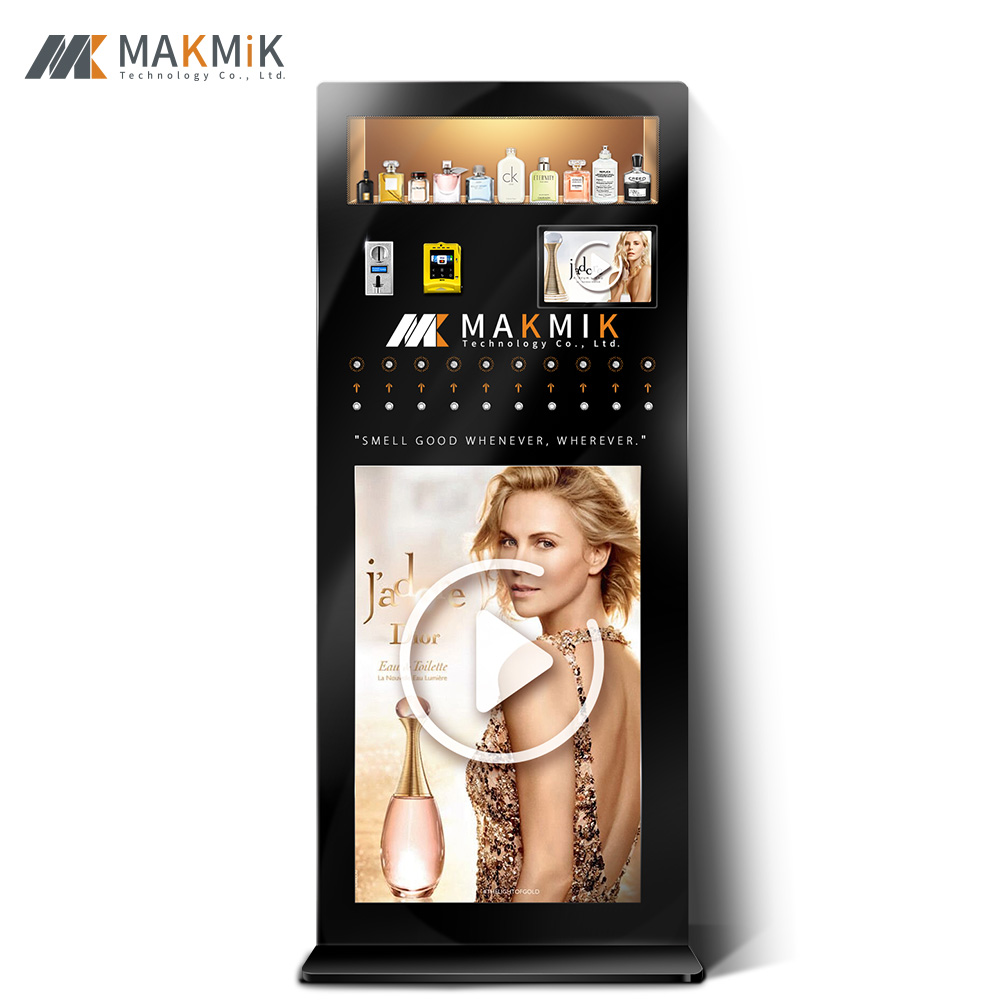
- Real Product Formats to Verify: 5 vs 10 Nozzles
- Where Fragrance Carryover Can Occur
- Separate Fragrance Paths Where the Design Requires It
- Nozzle Residue and the Dispensing Area
- Airborne Fragrance Is Different from Channel Contamination
- Refilling Is a Major Operational Control Point
- A Refill and Channel-Mapping Procedure
- Changing a Channel to a Different Fragrance
- Cross-Contamination vs Dispensing Accuracy
- What Buyers Should Check Before Shipment
- Record Evidence for Each Channel During Acceptance Testing
- Multi-Nozzle Cross-Contamination Control
- How Cross-Contamination Changes Fleet Operations
- When Should a Buyer Be More Concerned?
- Final Takeaway
- Multi-Nozzle Perfume Vending Machine Cross-Contamination FAQ
A multi-nozzle perfume vending machine can offer customers more fragrance choices from one machine, but increasing the number of fragrance channels also makes separation between scents more important.
At MAKMIK, we recommend treating cross-contamination primarily as a fragrance carryover and channel-control issue. The main concern is that residue, mist, incorrect refilling, shared contact surfaces, or poor channel identification may allow one fragrance to affect the experience of another.
The actual risk depends on the machine design, dispensing structure, refill method, fragrance characteristics, cleaning procedure, and daily operation. Buyers should therefore avoid assuming that every multi-nozzle machine has the same level of cross-contamination risk.
Key Takeaways
How to Control Cross-Contamination in Multi-Nozzle Systems
- Nozzle count alone is not a contamination rating. Ask how containers, pumps, tubes and outlet components are assigned to fragrances.
- Distinguish physical mixing from perceived scent carryover. A fragrance remaining in the air is not proof that another liquid path is contaminated.
- Refill and changeover are control points. Use a recorded channel map, labeled stock and only the supplier-approved cleaning or part-replacement procedure.
- Verify, do not assume. Request a model-specific dispensing-path diagram and agreed test evidence before shipment.
The goal is not simply to add more fragrance channels. The goal is to keep each fragrance channel identifiable, repeatable, and practical to maintain.
What Does Cross-Contamination Mean in a Perfume Vending Machine?
In perfume vending, cross-contamination usually means that fragrance from one channel influences another fragrance or the customer's next scent experience.
This is different from assuming that two fragrances are physically connected inside every machine.
A multi-nozzle system may use separate fragrance containers and separate dispensing paths, but scent carryover can still occur around the dispensing area if residual droplets, airborne mist, contaminated surfaces, refill tools, or operator errors are not controlled.
These situations require different controls, so identifying the source matters before deciding how to correct it.
| Symptom | Possible Source | First Verification |
|---|---|---|
| Wrong scent from one nozzle | Channel label, refill error or interface mapping | Match container → channel → outlet → interface setting |
| Residual scent at the outlet | Surface residue or a previously used component | Inspect nozzle and sample/contact surfaces |
| Mixed smell near the machine | Airborne fragrance after repeated sprays | Evaluate sampling area and airflow separately from the liquid path |
Why Multi-Nozzle Systems Need More Channel Control
A single-fragrance machine has relatively simple product identification.
A multi-nozzle machine introduces several relationships that must remain synchronized.
If one relationship is wrong, a customer may select one fragrance while receiving another, or an operator may refill the wrong channel.
That is why we recommend treating channel identification as part of the operating system rather than only as a machine-design issue.
Real Product Formats to Verify: 5 vs 10 Nozzles
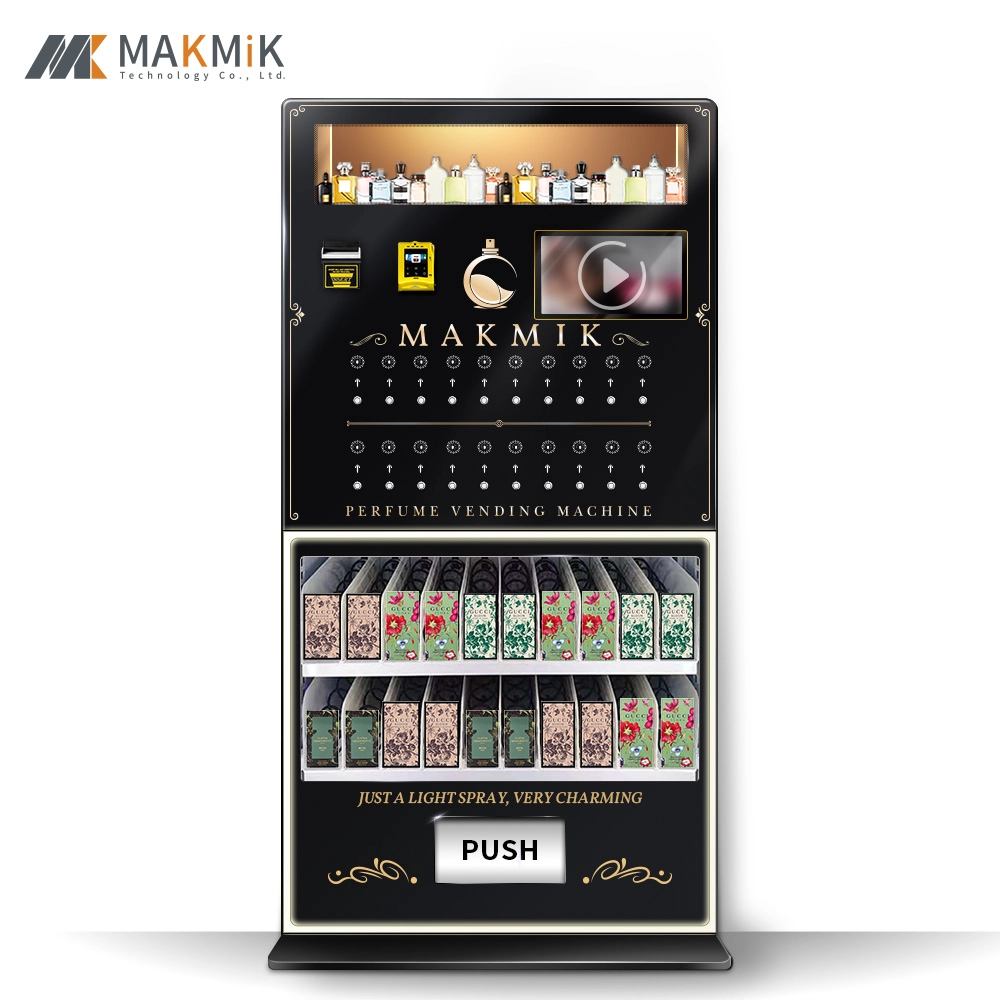
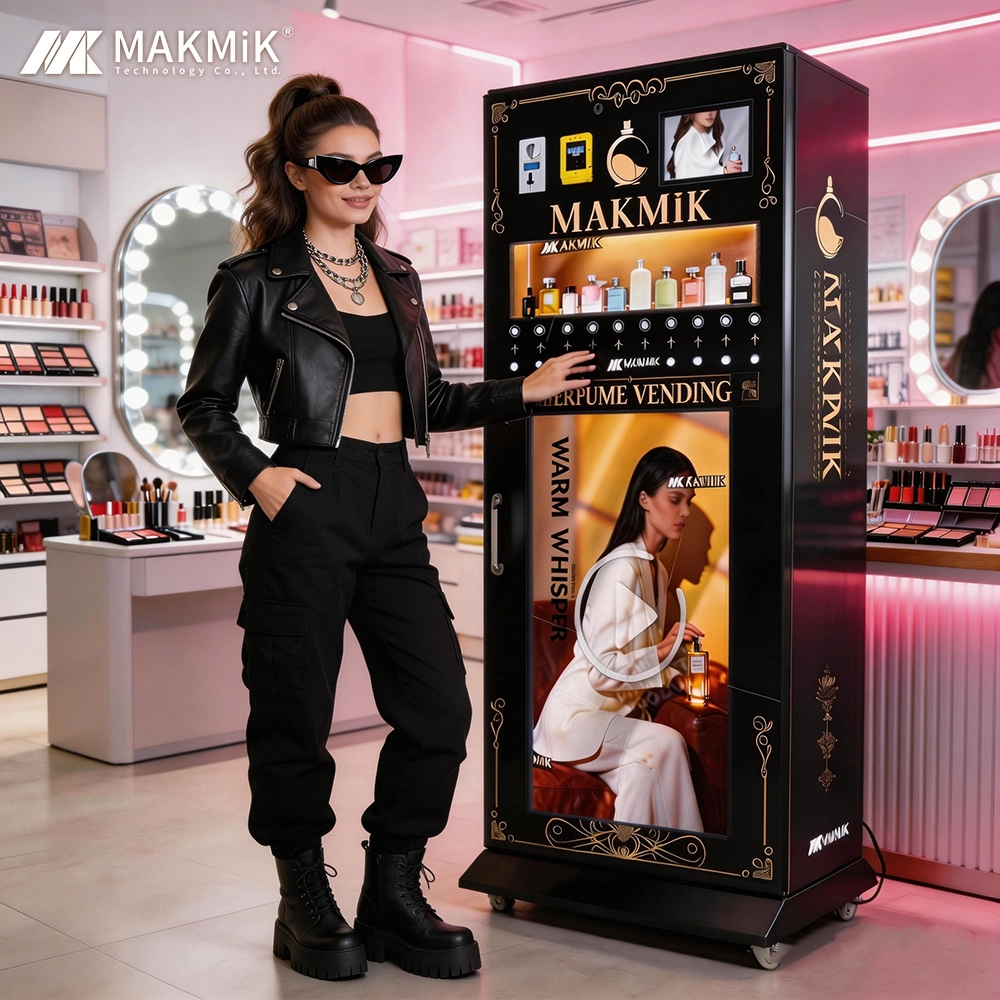
The published MAKMIK models below confirm the available nozzle counts and physical formats, not the internal fluid-path design. Buyers should request diagrams and cleaning/changeover instructions for the exact model before making claims about separation performance. A further 5-nozzle versus 10-nozzle machine comparison explains the assortment and operating trade-offs.
Where Fragrance Carryover Can Occur
At MAKMIK, we recommend checking four areas when evaluating cross-contamination risk.
The relative importance of each area depends on the actual machine configuration. For that reason, we recommend checking the real dispensing architecture rather than relying only on the number of nozzles advertised.
Separate Fragrance Paths Where the Design Requires It
The strongest control is to understand which fragrance-contact components are dedicated to each scent.
If each fragrance has its own container and dispensing path, the operator can manage that channel as one identifiable unit.
If any component is shared between fragrances, buyers should understand how that shared section is cleaned, cleared, or controlled before approving the configuration.
At MAKMIK, we do not recommend assuming that a particular internal architecture applies to every perfume vending machine. Buyers should ask the supplier to identify the fragrance-contact path from container to dispensing point and explain which parts are dedicated and which, if any, are shared.
Nozzle Residue and the Dispensing Area
Even when fragrance paths are separated internally, the dispensing area still deserves attention.
Perfume is designed to remain noticeable after application. A small amount of residual fragrance around a nozzle or sampling area can therefore affect the next customer's perception.
At MAKMIK, we recommend keeping the dispensing zone accessible for routine inspection and cleaning. Operators should pay attention to visible droplets, buildup, fragrance residue around outlet points, and areas customers may touch during sampling.
The practical objective is not to make the area completely odorless after every spray. It is to prevent avoidable residue from accumulating until one scent begins to dominate the sampling area.
Airborne Fragrance Is Different from Channel Contamination
A customer may detect a previous fragrance in the air even when the machine's internal channels are completely separated.
If several perfumes are sprayed within a short period, the surrounding air may contain a mixture of fragrance notes. This does not necessarily mean one fragrance has contaminated another dispensing line.
Location conditions can influence how quickly fragrance disperses. A confined corner, enclosed room, strong HVAC airflow, or high-frequency sampling environment may create a different scent experience from an open commercial area.
At MAKMIK, we therefore recommend evaluating the sampling environment together with the machine itself. Before installation, the guidance on nightclub perfume vending placement and customer flow can help buyers review airflow, installation position, customer interaction space, and other site conditions that may affect the real sampling experience.
Refilling Is a Major Operational Control Point
Many cross-contamination problems can be introduced during service rather than during customer use.
When operators manage several fragrances at the same time, channel identity must remain clear from removal through refill and reinstallation.
If a fragrance is permanently assigned to one channel, keeping that relationship stable can simplify operation.
If channels are expected to be reassigned frequently, buyers should clarify the required changeover method before confirming the machine configuration. At MAKMIK, we recommend including questions about fragrance channels, refill method, dispensing structure, and changeover requirements in the Perfume Vending Machine RFQ Checklist before quotation and production are finalized.
The correct procedure depends on the actual dispensing system and should be confirmed for the selected machine rather than invented at the site.
A Refill and Channel-Mapping Procedure
- Put the affected dispensing channel into a safe service state according to the model instructions; keep customers away from any open fragrance-contact parts.
- Confirm the exact fragrance name, product reference, container and assigned channel before opening or replacing stock.
- Use model-approved tools and handling materials; do not transfer fragrance with an unverified shared funnel, tube or dispenser.
- Check seals, caps, connections and orientation; record the container change, operator and time.
- Restore the channel only after verifying that the customer selection corresponds to the intended physical outlet and an authorized test dispense is satisfactory.
Do not invent a universal flushing solvent, cycle count or cleaning interval. Perfume compatibility and any changeover procedure must be confirmed against the manufacturer's material and equipment instructions. When in doubt, isolate the affected channel and ask the supplier for a written corrective procedure.
Changing a Channel to a Different Fragrance
Changing fragrance A to fragrance B is more demanding than simply refilling fragrance A with more of the same product.
Residual fragrance can remain in fragrance-contact components depending on the machine design.
At MAKMIK, we recommend treating a fragrance change as a controlled changeover rather than a normal refill.
In some configurations, cleaning may be appropriate. In others, replacing dedicated fragrance-contact components may be more practical. The correct method should follow the actual machine structure and supplier instructions.
Cross-Contamination vs Dispensing Accuracy
Cross-contamination and dispensing accuracy are related to fragrance performance, but they are not the same problem.
A channel can dispense a consistent amount and still have a scent carryover issue. A channel can also remain completely separate from other fragrances while delivering inconsistent quantities.
At MAKMIK, we recommend evaluating both independently. Perfume Spray Dispensing Accuracy can support the dose-consistency side of that technical review.
What Buyers Should Check Before Shipment
Cross-contamination risk should be considered during pre-shipment verification, especially for multi-nozzle configurations.
Rather than relying on one general demonstration, we recommend checking each configured fragrance channel and confirming that the interface selection matches the intended physical outlet. Repeated dispensing can also help identify obvious channel-mapping or functional issues.
These checks fit naturally into the wider Perfume Vending Machine Factory Acceptance Test Checklist, where channel verification can be reviewed together with dispensing, interface, payment, connectivity, branding, and other agreed machine functions before shipment.
Record Evidence for Each Channel During Acceptance Testing
Agree on the test method and pass/fail criteria before the supplier performs a factory acceptance test (FAT). A practical record should show what was tested, not merely state that the system was inspected.
| Evidence | What to Record | Acceptance Decision |
|---|---|---|
| Channel identity | Fragrance SKU, channel ID, interface label, nozzle/outlet ID | All mappings match |
| Dispensing sequence | Test order, operating settings and repeat observations | Agreed functional result |
| Residue / carryover | Nozzle and surrounding area observations; changeover test if specified | Assess against approved test method |
| Corrective action | Deviation, responsible technician, retest evidence, sign-off | Close before shipment where critical |
Odor perception can be influenced by the testing environment and evaluator. If a buyer needs a quantitative carryover limit, ask for a mutually agreed, validated method instead of treating a general smell check as laboratory proof of zero contamination.
Multi-Nozzle Cross-Contamination Control
| Control Area | Main Risk | Recommended Focus |
|---|---|---|
| Fragrance path | Residue or incorrect channel use | Understand dedicated vs shared fragrance-contact parts |
| Nozzle area | Residual droplets or buildup | Routine inspection and cleaning |
| Sampling environment | Previous scent remains in surrounding air | Review location and sampling conditions |
| Refill operation | Wrong fragrance placed in wrong channel | Maintain clear channel identification |
| Fragrance changeover | Previous fragrance remains in contact parts | Follow the confirmed changeover procedure |
| Interface mapping | Customer selection does not match physical channel | Verify every configured channel |
| Maintenance | Residue accumulates over time | Include dispensing areas in service routines |
A larger number of nozzles does not automatically mean unacceptable cross-contamination. What matters is whether the system has a clear way to keep fragrance paths, channel assignments, service procedures, and customer-facing dispensing areas under control.
How Cross-Contamination Changes Fleet Operations
The issue becomes more important when an operator manages several machines.
With one machine, an experienced operator may remember which fragrance belongs in each position. Across multiple locations, that knowledge should be documented.
At MAKMIK, we recommend using consistent fragrance naming and channel records so refill staff do not depend on memory. If the same machine configuration is deployed across several sites, a standardized channel structure can also simplify training and replenishment.
This becomes part of the wider operating system described in perfume vending machine maintenance guidance, where fragrance allocation, refill procedures, machine records, maintenance, and multi-location operations need to remain coordinated as the fleet grows.
When Should a Buyer Be More Concerned?
Cross-contamination deserves more attention when fragrances are changed frequently, several perfumes are sampled in rapid succession, operators manage many channels without clear records, or a design uses fragrance-contact components that are not dedicated to one scent.
The concern should lead to better questions, not an automatic conclusion that multi-nozzle machines are unsuitable.
A Better Technical Question
How does this machine keep each fragrance channel identifiable and controlled from refill to dispensing?
Final Takeaway
Multi-nozzle perfume vending machines can expand fragrance choice, but more channels require stronger control over scent separation and operating procedures.
Cross-contamination risk is not determined by nozzle count alone. Machine design, fragrance-contact components, refill practices, channel mapping, cleaning, fragrance changeovers, and the surrounding sampling environment all affect the result.
A well-managed multi-nozzle system should make it clear which fragrance belongs to each channel, how that fragrance reaches the dispensing point, how the area is maintained, and what happens when the fragrance is changed.
Multi-Nozzle Perfume Vending Machine Cross-Contamination FAQ
What does cross-contamination mean in a multi-nozzle perfume vending machine?
At MAKMIK, we use cross-contamination to describe situations where one fragrance affects another fragrance or the customer's next scent experience. This can come from residue in fragrance-contact parts, buildup around the dispensing area, airborne scent, refill mistakes, or incorrect channel identification.
Does a higher nozzle count automatically increase cross-contamination risk?
No. At MAKMIK, we do not judge cross-contamination risk by nozzle count alone. The actual risk depends on the machine's fragrance-contact path, channel separation, refill method, cleaning procedure, channel mapping, and how the machine is operated and maintained.
How can operators reduce fragrance carryover around the nozzle area?
We recommend keeping the dispensing zone accessible for routine inspection and cleaning. Operators should watch for visible droplets, buildup, or residue around outlet points and customer-contact areas so one scent does not gradually dominate the sampling zone.
Can airborne fragrance be mistaken for internal channel contamination?
Yes. If several perfumes are sprayed within a short period, customers may still smell a previous fragrance in the surrounding air even when internal channels are separated. At MAKMIK, we recommend evaluating the sampling environment separately from the internal dispensing system.
What should be checked when changing one fragrance channel to a different scent?
At MAKMIK, we recommend treating fragrance changeover as a controlled procedure rather than a normal refill. The operator should identify which parts contacted the previous fragrance and follow the confirmed cleaning, replacement, flushing, or other changeover method that applies to the actual machine configuration.
What should buyers verify before shipment on a multi-nozzle perfume vending machine?
We recommend checking every configured fragrance channel, confirming that the interface selection matches the intended physical outlet, and repeating dispensing where appropriate to identify obvious channel-mapping or functional issues. Any project-specific fragrance separation or changeover requirements should also be confirmed before shipment.
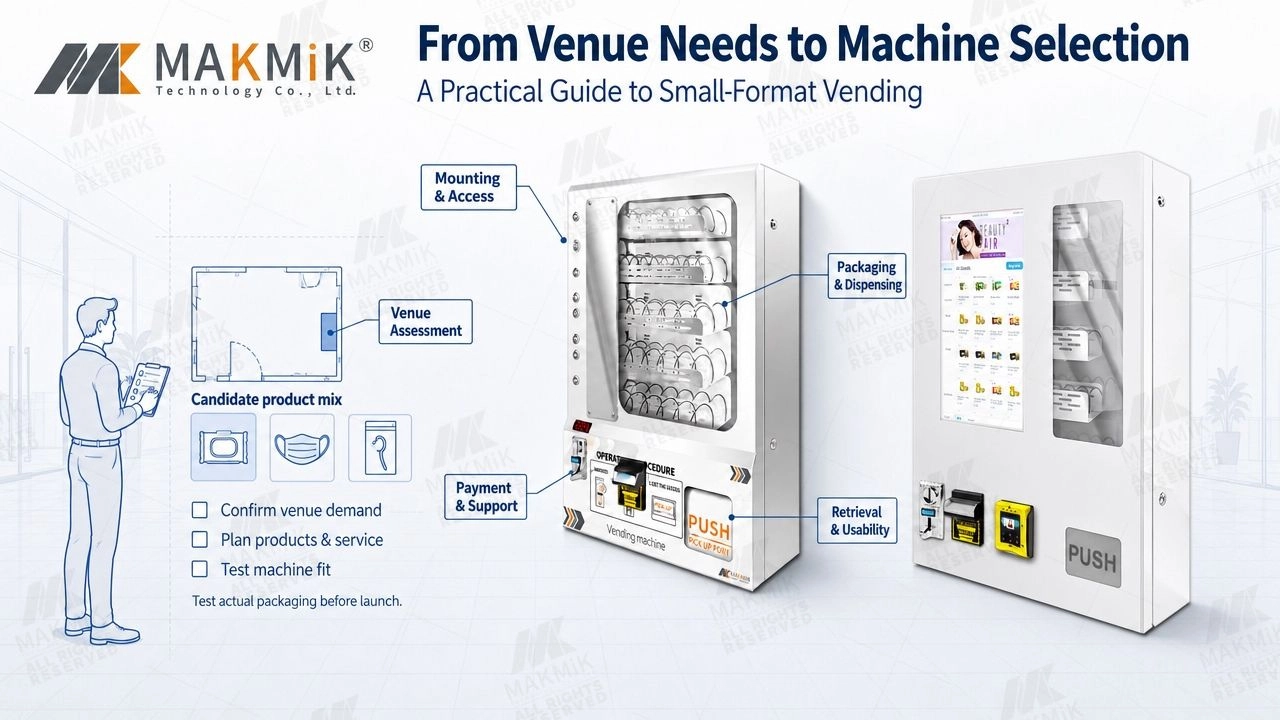
From Venue Needs to Machine Selection: A Practical Guide to Small-Format Vending
Perfume Vending Machine Fragrance Assortment Planning: Local Demand, Nozzle Capacity and Product Rotation

Perfume Vending Machine Payment Reconciliation: Sales, Refunds and Venue Revenue Share
Perfume Vending Machine Site Performance: When to Relocate an Underperforming Machine
Perfume Vending Machine Refill Route Planning: Labor Costs, Inventory and Stockouts
FAQ
What payment options do your vending machines support?
Our vending machines support various payment methods, including cash, credit/debit cards, mobile payments, and contactless payments.
Are your vending machines energy-efficient?
Yes, our vending machines are designed with energy-efficient technologies to reduce power consumption and minimize environmental impact.
What kind of technical support do you offer?
We provide 24/7 technical support, including troubleshooting, repair services, and remote assistance to resolve any issues promptly.
What types of vending machines do you manufacture?
We manufacture a wide range of vending machines, including snack, beverage, combo, fresh food, and specialty vending machines.
Distributor
Can the machines be customized?
Yes, absolutely. Deep customization options (including UI, hardware structure, and payment methods) are available to meet your specific market and client requirements.
Send my request
Connect with us to schedule a consultation, request samples, or arrange a site visit to see our facilities and capabilities firsthand.
Reach out to us via phone, email, or through the contact form below, and we'll get back to you promptly within 24 hours.
Social Media:
© 2026 MAKMIK | All Rights Reserved.
Facebook
Linkedlin
YouTube
Instagram