






Perfume Spray vs Bottled Perfume Vending Machines: Which Sales Model Fits Your Operation?
- 1. What Is the Difference Between Spray and Bottled Perfume Vending?
- 2. Spray vs Bottled Perfume Vending Machine Comparison
- 3. When Does a Perfume Spray Vending Machine Fit?
- Spray Model Limitations
- 4. When Does Bottled Perfume Vending Fit?
- 5. Inventory, Maintenance, and Failure Risks
- Spray Vending: Fluid-System Control
- Bottled Vending: Product-Delivery Control
- 6. How Do Costs and Revenue Differ?
- 7. Choosing a Model for Different Locations
- 8. Can Spray and Bottled Sales Be Combined?
- 9. What Changes When You Scale to Multiple Machines?
- 10. Procurement Checklist Before Requesting a Quotation
- Which Sales Model Fits Your Operation?
- Discuss Your Perfume Vending Configuration with MAKMIK
- Perfume Spray vs Bottled Perfume Vending Machine FAQ
Perfume vending is not a single retail model. A perfume spray vending machine sells a measured application of fragrance, while a bottled perfume vending machine delivers a packaged product that customers can take away. Both automate sales, but they serve different purchasing occasions and require different equipment and operating procedures.
For buyers planning installations in shopping malls, nightlife venues, hotels, airports, or beauty retail spaces, the decision affects transaction value, replenishment, technical maintenance, product handling, and expansion costs. At MAKMIK, we recommend defining the customer purchase first, then specifying the machine around that transaction.
Spray vending sells fragrance access by dose. Bottled vending sells physical inventory by unit. Neither format is automatically more profitable; suitability depends on demand, cost structure, location, and execution.
1. What Is the Difference Between Spray and Bottled Perfume Vending?
A spray vending customer chooses a fragrance and pays for a measured application. The machine draws liquid from a fragrance reservoir through a controlled dispensing path. Its principal operating tasks are refill management, channel identification, dose verification, and nozzle care.
A bottled vending customer chooses a packaged fragrance product and receives a physical item through a delivery mechanism. The operator manages stock-keeping units (SKUs), package dimensions, loading positions, retrieval, and product delivery reliability. Bottled formats can include miniatures, samples, and full-size products when the machine is designed for their dimensions and weight.
The distinction is commercial as well as mechanical. A quick refresh or trial may require little consideration, whereas a packaged fragrance purchase can involve more comparison of brand, size, authenticity, and price.
2. Spray vs Bottled Perfume Vending Machine Comparison
| Decision Factor | Spray Vending | Bottled Vending |
|---|---|---|
| Customer purchase | Measured spray or dose | Packaged fragrance unit |
| Typical customer intent | Refresh, trial, convenience | Ownership, gifting, replenishment |
| Inventory measurement | Remaining fragrance volume by channel | Unit count by SKU and slot |
| Primary mechanism | Pump, tubing, valve, nozzle | Storage and physical delivery system |
| Transaction pricing | Per application or dose | Per packaged item |
| Refill process | Replenish compatible fragrance reservoirs | Reload packaged units |
| Quality checks | Dose consistency, leakage, channel identity | Package fit, delivery success, product condition |
| Service priorities | Fluid path, seals, cleaning, calibration | Loading, jams, retrieval, mechanical wear |
| Loss exposure | Over-dispensing, leakage, evaporation | Damaged packages, expired or unsold stock |
| Scaling requirements | Refill routes and channel standardization | SKU assortment and physical stock logistics |
The comparison identifies where the workload sits. A spray system concentrates technical attention on fluid handling and accurate dosing. A bottled system concentrates it on packaged stock and physical product delivery. Buyers should ask suppliers to demonstrate the functions that directly affect their chosen sales model.
3. When Does a Perfume Spray Vending Machine Fit?
Spray vending suits occasions where customers want immediate fragrance access without committing to a bottle. Potential locations include entertainment venues, shopping centers, hospitality facilities, and other sites with appropriate permissions and customer traffic.
- Multiple scent options can be offered through separate dispensing channels.
- Customers pay for an application rather than purchasing packaged stock.
- Operators can measure consumption by channel to guide replenishment.
- The transaction can be brief when instructions and payment are straightforward.
Those benefits depend on accurate dispensing and consistent maintenance. An incorrect dose can affect fragrance consumption, customer satisfaction, and unit economics. MAKMIK recommends validating perfume spray dispensing accuracy across repeated transactions and after refills or service.
Spray Model Limitations
Fragrance-contact components must be compatible with the formulation. Operators should plan for nozzle cleaning, possible residue, fragrance traceability, and prevention of channel mix-ups. Brand and commercial-use permissions also require verification; possession of a fragrance does not necessarily authorize every form of resale or dispensing.
4. When Does Bottled Perfume Vending Fit?
Bottled vending suits customers who intend to own a packaged product. It may be relevant in retail settings, travel environments, and gifting contexts where buyers can identify the fragrance and accept its price without extensive consultation.
A packaged-product machine needs suitable product dimensions, storage capacity, and reliable delivery. Operators should check whether different bottle shapes, protective cartons, and weights are supported. Fragile glass packaging requires attention to the handling and retrieval process.
- Verify bottle and carton compatibility before stocking.
- Track units, product identity, batches, and expiry or shelf-life requirements where applicable.
- Test delivery reliability using actual product packages.
- Plan stock replenishment around product turnover and storage constraints.
The packaged model may produce a higher transaction value than a single spray, but it can also tie up more capital in inventory. Sales price alone does not determine contribution margin or payback.
5. Inventory, Maintenance, and Failure Risks
The models require different stock controls. Spray operators estimate remaining saleable doses using fragrance volume and measured output. Bottled operators reconcile physical units against recorded sales and loading counts. Both require controls for failed transactions, refunds, and machine downtime.
Spray Vending: Fluid-System Control
Service tasks can include reservoir refilling, seal inspection, nozzle cleaning, checking for leakage, and confirming that the selected channel dispenses the correct fragrance. Consistent channel labels and documented refill procedures help prevent operational mistakes.
Bottled Vending: Product-Delivery Control
Service tasks focus on stock loading, product-position checks, delivery-path inspection, retrieval access, and investigation of jams or damaged packaging. Product dimensions should be validated using the exact merchandise intended for sale.
MAKMIK recommends documenting failure scenarios before deployment. For spray machines, test insufficient fragrance, interrupted payments, and unsuccessful dispensing. For bottled machines, test empty slots, delivery failures, and product retrieval. Transaction logs should support reconciliation in either case.
6. How Do Costs and Revenue Differ?
A spray model generally earns revenue from the number of paid applications. A bottled model earns revenue from the number of packaged units sold. Comparing the models requires contribution per transaction, expected sales volume, inventory cost, venue charges, and service requirements.
Spray contribution per sale = selling price − fragrance consumed − payment fee − other variable costs
Bottled contribution per sale = selling price − product acquisition cost − payment fee − other variable costs
Both calculations exclude fixed costs unless explicitly allocated. Installation, machine purchase, venue rent, servicing, and downtime also affect overall returns.
Spray operators should monitor actual dose volume and waste; bottled operators should monitor stock turnover, product damage, and unsold inventory. Payment acceptance costs and location commissions may apply to either model. Forecasts should use location-specific assumptions instead of treating hypothetical transaction counts as guaranteed results.
7. Choosing a Model for Different Locations
| Location | Potential Model Fit | Key Validation |
|---|---|---|
| Nightclubs and entertainment | Spray often aligns with quick fragrance refresh | Check traffic flow, hygiene, venue permissions, and security |
| Shopping malls | Either, depending on shopper intent | Distinguish fragrance trial from packaged retail demand |
| Hotels and hospitality | Spray may suit convenience; bottled may suit gifting | Assess guest profile, operating hours, and placement |
| Travel locations | Either, subject to site and retail rules | Check customer dwell time and permitted merchandise |
| Beauty retail environments | Spray or hybrid concepts may support trial | Confirm product authorization and sales journey |
A location label is not enough to determine demand. Operators should assess dwell time, purchase intent, accessibility, electrical and network access, service clearance, and local operating rules. The installation site survey requirements help translate a proposed location into practical equipment specifications.
8. Can Spray and Bottled Sales Be Combined?
A hybrid arrangement may support a trial-to-purchase journey: a customer experiences a fragrance and can also buy a packaged product. However, hybrid capability depends on actual machine design and should not be assumed to be available in a standard spray or bottled configuration.
Combining both formats can increase cabinet size, inventory complexity, servicing requirements, and interface design work. Buyers should define the commercial objective and verify the technical feasibility, dispensing permissions, and package-delivery requirements before specifying a hybrid solution.
9. What Changes When You Scale to Multiple Machines?
For spray fleets, standardizing fragrance channels, refill identification, dispensing checks, and service procedures helps maintain consistency across sites. For bottled fleets, standardizing SKU layouts, product dimensions, loading procedures, and stock records supports replenishment efficiency.
Mixed-format fleets require separate inventory and technical workflows. As operators move toward multi-location perfume vending operations, service routing and machine configuration become increasingly important. A single-site pilot can provide demand and maintenance data before a broader rollout.
10. Procurement Checklist Before Requesting a Quotation
A quotation should describe the intended customer transaction, not simply the desired cabinet appearance. Buyers should confirm machine structure and acceptance criteria that reflect the selected model.
- Spray, bottled, or technically validated hybrid sales model
- Target venue, dimensions, power supply, and connectivity
- Fragrance-channel count or packaged-product SKUs and dimensions
- Dispensing accuracy or product-delivery acceptance tests
- Destination-market payment methods and transaction reporting
- Refill or loading process, service access, and replacement parts
- Branding, warranty, shipping, documentation, and after-sales support
The perfume vending machine RFQ specifications should make supplier proposals comparable. Before shipment, request demonstrations or acceptance testing for the critical functions of the chosen configuration.
Which Sales Model Fits Your Operation?
Choose a spray vending model when the commercial offer centers on measured fragrance access, convenience, or trial, and the operator can maintain the liquid dispensing system. Choose a bottled perfume vending model when customers are purchasing packaged merchandise and the operator can manage unit inventory and physical delivery.
A hybrid model warrants consideration only when the customer journey justifies both functions and the equipment can support them reliably. MAKMIK recommends validating location demand, operating costs, service capability, and the intended transaction before finalizing a machine specification.
Discuss Your Perfume Vending Configuration with MAKMIK
We can review your target location, sales model, fragrance or product assortment, payment requirements, and operating plan to identify suitable equipment specifications.
Perfume Spray vs Bottled Perfume Vending Machine FAQ
What is the main difference between perfume spray and bottled perfume vending machines?
A spray vending machine sells fragrance access in a measured spray or dose, while a bottled perfume vending machine sells a physical packaged product that the customer takes away. The two models therefore require different inventory, delivery, and maintenance processes.
When is a perfume spray vending machine a better fit?
A spray model may suit locations where customers want quick access, fragrance trial, convenience, or lower-commitment purchases. It is especially relevant when the operator can manage fragrance channels, refilling, and consistent dispensing.
When should you choose a bottled perfume vending machine?
A bottled perfume model may be more suitable when customers are buying a packaged product, already know the fragrance or brand, and the operator is prepared to manage physical stock, package compatibility, loading, and reliable product delivery.
How is inventory management different between spray and bottled perfume vending?
Spray vending inventory is usually tracked by fragrance volume in each channel, while bottled vending inventory is tracked by individual packaged units. The refill and replenishment processes are therefore different.
Can a perfume vending machine combine spray and bottled sales?
A hybrid setup may be possible depending on the machine design and commercial concept. It can support a trial-to-purchase journey, but it also increases complexity because the operator must manage both fragrance dispensing and packaged product inventory.
What should buyers define before requesting a quotation?
Buyers should define whether the project is for spray vending, bottled-product vending, or a hybrid model, along with the target location, number of fragrances or products, payment requirements, customer journey, refill process, and service expectations.
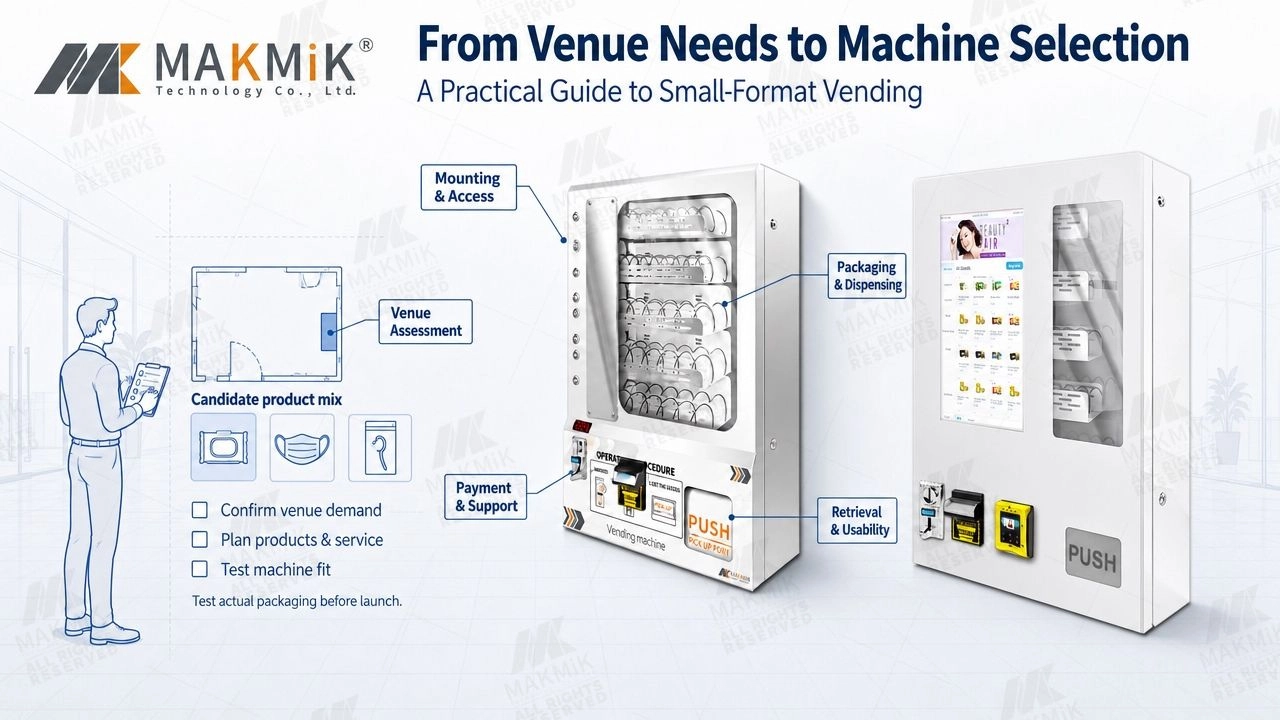
From Venue Needs to Machine Selection: A Practical Guide to Small-Format Vending
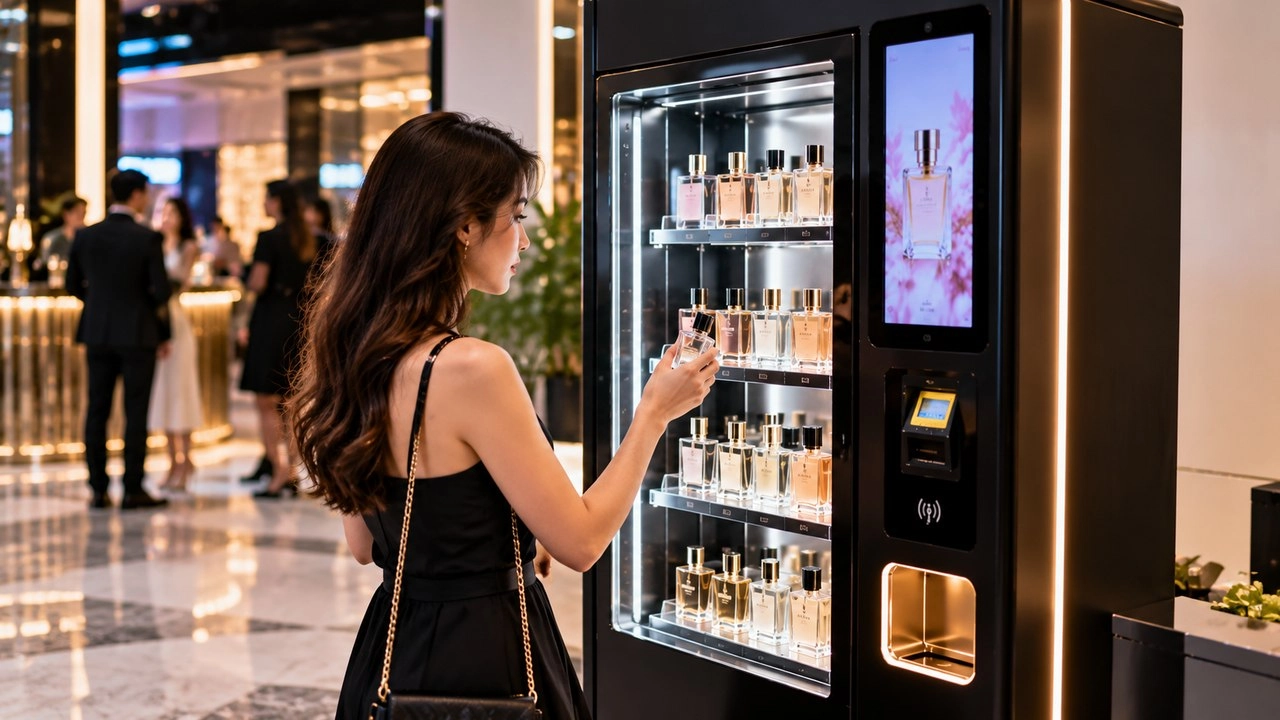
Perfume Vending Machine Fragrance Assortment Planning: Local Demand, Nozzle Capacity and Product Rotation

Perfume Vending Machine Payment Reconciliation: Sales, Refunds and Venue Revenue Share
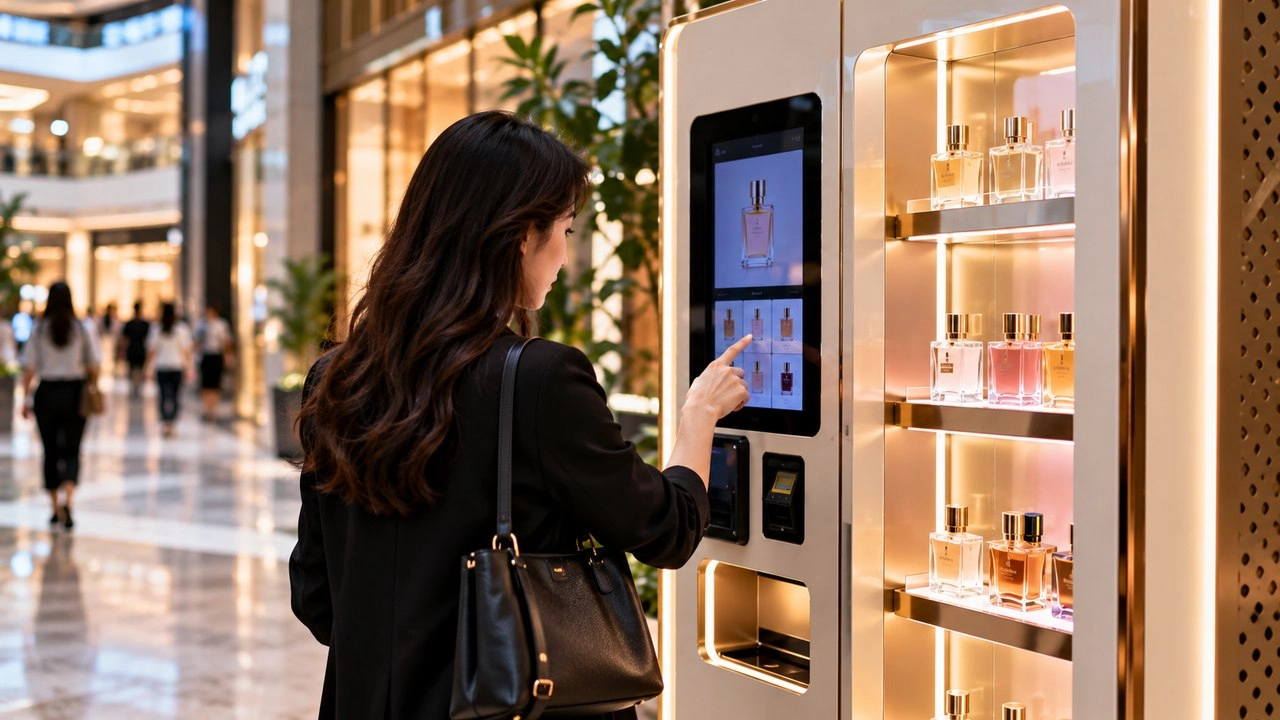
Perfume Vending Machine Site Performance: When to Relocate an Underperforming Machine
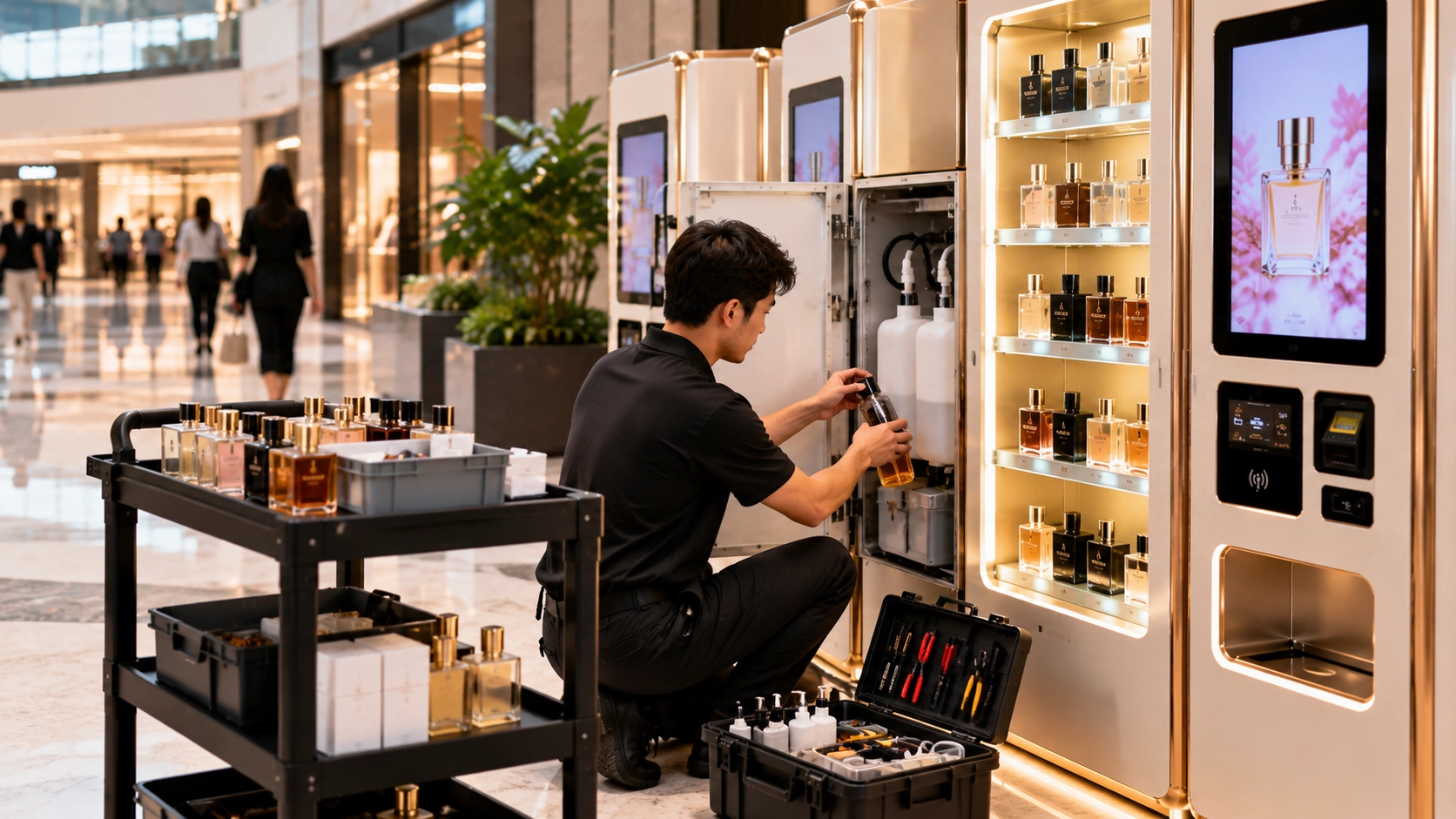
Perfume Vending Machine Refill Route Planning: Labor Costs, Inventory and Stockouts
FAQ
What types of vending machines do you manufacture?
We manufacture a wide range of vending machines, including snack, beverage, combo, fresh food, and specialty vending machines.
How do you ensure the quality of your vending machines?
We adhere to strict quality control processes and use high-quality materials and components to ensure durability and reliability.
Do you offer warranties on your vending machines?
Yes, we provide warranties on all our vending machines, covering parts and labor for a specified period to ensure peace of mind for our clients.
Can your vending machines be customized?
Yes, we offer customization options to meet specific client requirements, including branding, product selection, and payment systems.
How can I monitor and manage my vending machines remotely?
Our vending machines come with advanced telemetry systems that allow remote monitoring and management through a web-based platform or mobile app.
Send my request
Connect with us to schedule a consultation, request samples, or arrange a site visit to see our facilities and capabilities firsthand.
Reach out to us via phone, email, or through the contact form below, and we'll get back to you promptly within 24 hours.
Social Media:
© 2026 MAKMIK | All Rights Reserved.
Facebook
Linkedlin
YouTube
Instagram