


A perfume vending machine may report successful purchases while the payment provider shows a different deposit, a refund, or a chargeback. When several machines operate in malls, hotels or nightclubs, operators also need to calculate the share owed to each venue. Without a repeatable reconciliation process, a difference of a few transactions can become a confusing monthly settlement dispute.
Payment reconciliation requires matching machine-level sales records with captured payments, processor settlements, refunds, chargebacks and bank deposits. Venue commissions must use the contractually defined sales base and reporting period. Available export fields and settlement reports depend on the machine and payment-provider configuration.
Quick Answer
For each machine and settlement period, reconcile recorded successful sales against provider captures, refunds, chargebacks, fees and bank deposits. Then calculate any venue commission from the contractually defined sales base.
KEY TAKEAWAYS
- A vending transaction event is not always the same as captured or settled funds.
- Record refunds, voids, disputes, processing fees and time-zone or date-cutoff differences separately.
- Write down how the venue's revenue-share base is calculated before paying commissions.
- Close each venue's account with matched source records and an owner for unresolved exceptions.
1. Define What the Machine, Processor and Bank Actually Record
A machine interface may record a selected fragrance, dispensing event and payment result; a payment platform may separately record authorization, capture, refund, reversal, settlement and fees. A bank account records funds actually received. These datasets have different purposes and may have different timestamps, especially when payments settle across time zones or weekends.
Build a common reference around machine ID, venue ID, sale ID or transaction reference, date/time, currency and amount. Keep an explicit mapping between the vending record and the processor transaction reference. A single total at the end of the day is usually insufficient to troubleshoot a disputed item.
| Record Source | Key Fields | What It Confirms |
|---|---|---|
| Machine/transaction log | Machine, sale ID, time, item/channel, result | What vending software believes occurred |
| Payment processor | Reference, capture, reversal, refund, chargeback, fees | What was financially authorized and settled |
| Bank/deposit statement | Deposit date, reference, net amount | What cash actually arrived |
| Venue agreement | Commission rate, defined sales base, cutoffs, adjustments | What amount is owed to the site partner |
Reliable multi-payment vending integration requires transaction references, supported capture and refund states, consistent reporting time zones and access to settlement exports. Actual providers, data fields and API capabilities vary by market and must be verified for the ordered hardware and software.
2. Decide Which Sales Count Toward Venue Revenue Share
A contract stating only “15% of sales” leaves significant ambiguity. Define whether the base is gross collected transactions, net of taxes where applicable, after refunds and chargebacks, or something else. If a payment processor deducts fees before deposit, confirm whether commission is calculated before or after those fees.
In the agreement, specify how to treat voided transactions, complimentary samples, promotional discounts, multi-currency transactions, deposits received after the reporting month, and corrections from a prior period. A clear definition prevents an operator from calculating one number while the venue expects another.
The venue commission base and settlement clauses should define eligible transactions, refunds, tax treatment, payment due dates, relevant reports and dispute-resolution procedures. Contract and tax treatment varies by jurisdiction, so material terms may require local professional review.
3. Work Through an Illustrative Monthly Reconciliation
In an illustrative single-venue scenario, the placement contract specifies 15% commission on successful customer payments after refunds and chargebacks, before payment fees. All amounts are treated as comparable figures exclusive of sales tax for simplicity. These figures are hypothetical, not actual MAKMIK merchant results or typical processor charges.
| Example Item | Calculation / Treatment | USD |
|---|---|---|
| Gross captured payments | Total successful captures, excluding voids | $1,200.00 |
| Refunds | Customer reversals paid during period | −$60.00 |
| Chargebacks | Disputed sales reversed | −$20.00 |
| Contract-defined sales base | $1,200 − $60 − $20 | $1,120.00 |
| Venue commission | 15% × $1,120 | $168.00 |
| Payment-processing fees | Illustrative processor charges | −$33.00 |
| Operator's remaining settlement before operating costs | $1,120 − $168 − $33 | $919.00 |
The $919 above is not net profit. It precedes fragrance expense, rent or other contract charges, staff time, servicing, network charges, financing, taxes and other operating costs. In this simplified example the processor's net payment deposit is $1,087 before paying the venue its $168 commission, assuming no other adjustments.
Real settlements may include taxes, cross-border fees, delayed payouts, rolling reserves or multiple partial refunds. Reconcile to actual provider statements and the signed venue terms instead of assuming the example applies universally.
4. Build a Repeatable Daily, Weekly and Monthly Workflow
Review frequency should reflect transaction volume, payment risks and contractual deadlines. Daily exception monitoring, periodic processor-to-bank settlement checks and a documented monthly venue close can be used even if exports must be downloaded manually.
- Daily exceptions: flag failed dispensing after capture, reversals, repeated declined payments and suspicious duplicate records.
- Settlement check: compare successful captures and processor adjustments with payouts received for the relevant settlement batch.
- Site-level close: isolate transactions by machine and venue, applying the correct reporting calendar and currency.
- Commission calculation: apply the signed percentage to the correct gross/net base, then account for authorized adjustments.
- Approval and record: retain calculation files, provider statement references, venue report and reviewer sign-off.
Time-zone differences can produce apparent mismatches when a local venue closes at midnight but the processor reports in another zone. Record the timestamp convention and separate transaction date from bank settlement date. Never alter raw source records simply to force totals to match.
5. Resolve Unmatched Transactions, Refunds and Disputes
Reconciliation is only useful if it creates an action list. A discrepancy should have a transaction reference, amount, owner, evidence and a resolution status. Do not count unresolved transactions as revenue for venue commission until the agreed accounting treatment is confirmed.
| Discrepancy | Possible Cause | Next Check |
|---|---|---|
| Machine shows sale; processor does not | Failed capture, offline delay, reference mismatch | Check payment status and dispensing record |
| Processor shows refund/chargeback | Customer support event, disputed or reversed transaction | Tie reversal to original sale and venue rules |
| Deposit differs from captured totals | Fees, reserve, refund, settlement timing | Reconcile provider's batch statement |
| Venue reports different sales | Period cutoffs, tax base, promotion treatment | Compare contract terms and transaction-level schedule |
For complaints involving fragrance delivery, record whether dispensing actually occurred before making a refund decision. The policy should assign responsibility for customer service without promising or denying refunds that applicable law or payment-provider rules require.
6. Design a Practical Monthly Reconciliation Report
A concise site-level reconciliation report should be reusable across the fleet. Start with an opening period and closing period, machine IDs, provider name and statement references. Include captured sales, all adjustment categories, settlement amount, defined commission base, venue fee, amounts already paid and outstanding balance.
| Report Field | Document / Source | Responsible Review |
|---|---|---|
| Venue & machines | Location record, serial numbers and reporting period | Operations |
| Gross sales and refunds | Machine export plus processor transactions | Finance |
| Fees & bank settlement | Processor batch file plus bank confirmation | Finance |
| Revenue-share calculation | Signed site agreement and adjustment log | Contract/finance owner |
| Unresolved exceptions | Ticket list, screenshots and support correspondence | Assigned investigator |
| Sign-off and payable date | Approved closing report | Finance and venue contact |
For a one-to-twenty-machine perfume vending rollout, consistent machine IDs, settlement cutoffs and venue account codes prevent errors when transaction volume and location count increase. The reconciliation procedure should remain consistent while commission terms are applied separately for each contract.
7. Verify the Payment Capabilities of Each Machine Configuration
Payment setup is not identical merely because two vending machines can dispense perfume. A regional payment terminal, cloud software subscription or operator's payment account may change the transaction references, available reports and security obligations. Validate the actual selected hardware, integration and export options during procurement and site commissioning.
MAKMIK Product Formats for Commercial Planning


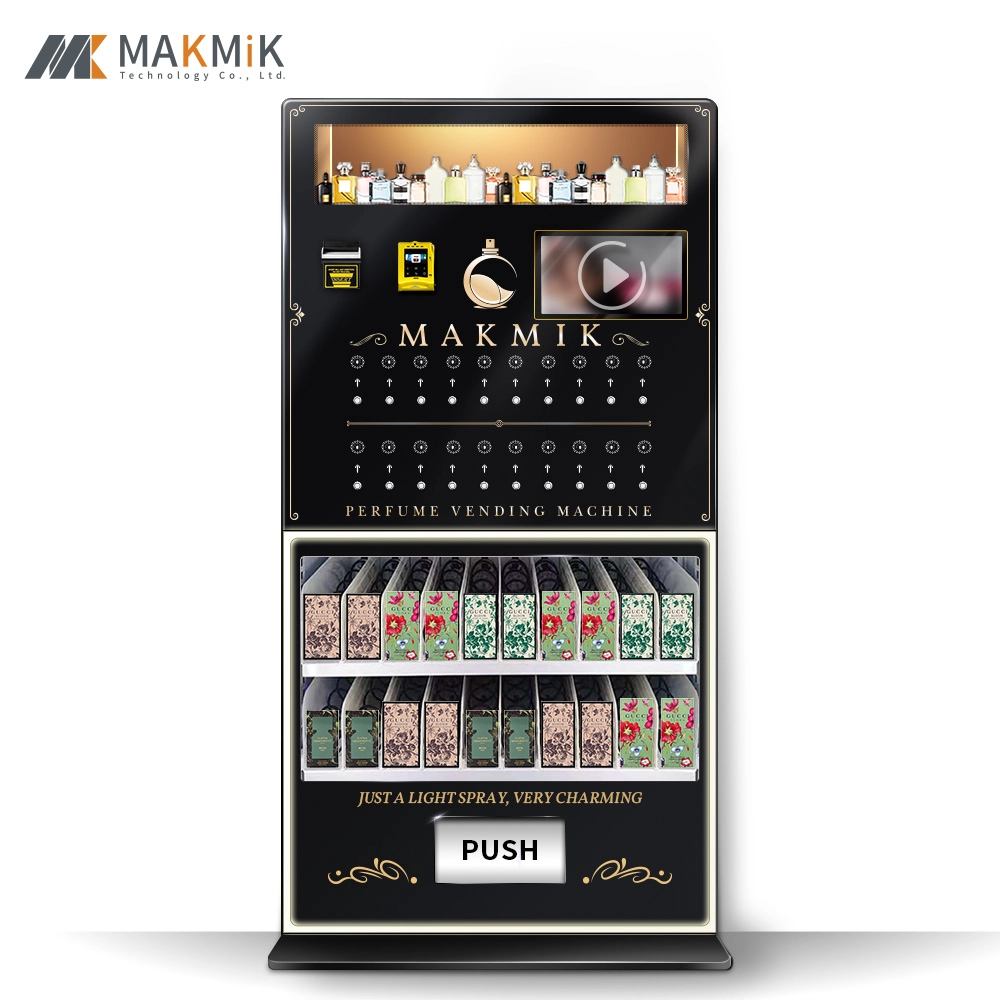
Each perfume vending machine RFQ should specify required transaction exports, accepted payment methods, currency, refund administration, reporting access and the split of responsibility between supplier and payment processor. Obtain written confirmation for the exact equipment, market and software configuration before procurement.
8. Close the Month with a Reconciliation Checklist
- All machines and venue contract versions mapped correctly
- Sales period and time zone documented
- Processor captures, reversals, fees and settlements reconciled
- Bank payout deposits verified against batches
- Venue commission calculated using the written sales base
- Refunds, chargebacks and disputed items assigned
- Final report and source evidence saved with reviewer approval
Payment reconciliation protects relationships with venue partners and gives operators a more accurate view of each machine's contribution. Build the controls early, verify what each payment system actually reports, and apply the same process before adding more sites.
Confirm Your Commercial Configuration
Discuss Payment Requirements Before Ordering
Share your target countries, venue model, preferred payment provider and machine quantity so MAKMIK can discuss relevant equipment and project quotation requirements.




Facebook
Linkedlin
YouTube
Instagram