






What Spare Parts Should You Stock for a Perfume Vending Machine?
- What Perfume Vending Machine Spare Parts Matter Most?
- 1. Start with the Parts That Can Stop the Machine
- 2. Match the Spare List to the Exact Machine Configuration
- Compare Spare-Part Needs by Actual Machine Format
- 3. Give Dispensing Parts Higher Maintenance Attention
- 4. Decide Carefully Which Electronic Parts to Stock
- Spare-Parts Prioritization Matrix
- 5. Plan Spare Parts Before the Machines Ship
- Diagnose First: Avoid Replacing the Wrong Part
- 6. Change the Stocking Strategy as the Fleet Grows
- Single Unit vs Multi-Site Fleet: How Stock Policy Changes
- 7. Keep a Simple Spare-Parts Register
- Spare-Parts Register: Fields to Record
- Five Questions to Include in a Spare-Parts RFQ
- Final Takeaway
- Perfume Vending Machine Spare Parts FAQ
A perfume vending machine combines dispensing hardware, payment components, screens, controllers, power systems, locks, sensors, and serviceable parts. Any of these may eventually need attention, but that does not mean an operator should keep every possible replacement component in stock.
At MAKMIK, we recommend planning spare parts before installation so the operator already knows which components can interrupt service, which can be replaced locally, and which are better handled through supplier support.
Key Takeaways
What Perfume Vending Machine Spare Parts Matter Most?
- Start with the exact model: pumps, tubing, nozzles, payment terminals and electronic boards are not automatically interchangeable across machines.
- Prioritize operational downtime: focus on verified consumables and locally serviceable parts before expensive configuration-specific modules.
- Separate routine service from faults: a weak spray, failed transaction or offline machine needs diagnosis before replacing hardware.
- Confirm support with your supplier: record part references, installation requirements, lead times, warranty coverage and replenishment options.
Stock for uptime and serviceability, not simply for quantity.
1. Start with the Parts That Can Stop the Machine
A useful spare-parts plan starts with business impact. A part that fails often is not automatically the most important part to stock. A component that fails less frequently may deserve higher priority if its failure stops payment, dispensing, customer interaction, or power.
We suggest evaluating each component against three questions: how much operation is affected if it fails, how difficult it is to replace, and how long a replacement would take to obtain.
This keeps the spare-parts plan focused on uptime rather than turning it into a warehouse list.
2. Match the Spare List to the Exact Machine Configuration
Not every perfume vending machine uses the same pump, nozzle, screen, payment terminal, controller, power supply, or locking structure. Even two machines that look similar from the outside may use different internal components.
At MAKMIK, we recommend building the spare list from the confirmed machine model, fragrance channel count, screen configuration, payment setup, networking hardware, and dispensing structure. The exact part reference matters because a component from one model should not be assumed to fit another.
This is also the right stage to decide which parts should be held locally and which should remain under supplier support. A component has little practical value in local stock if the service team cannot identify, configure, or replace it correctly.
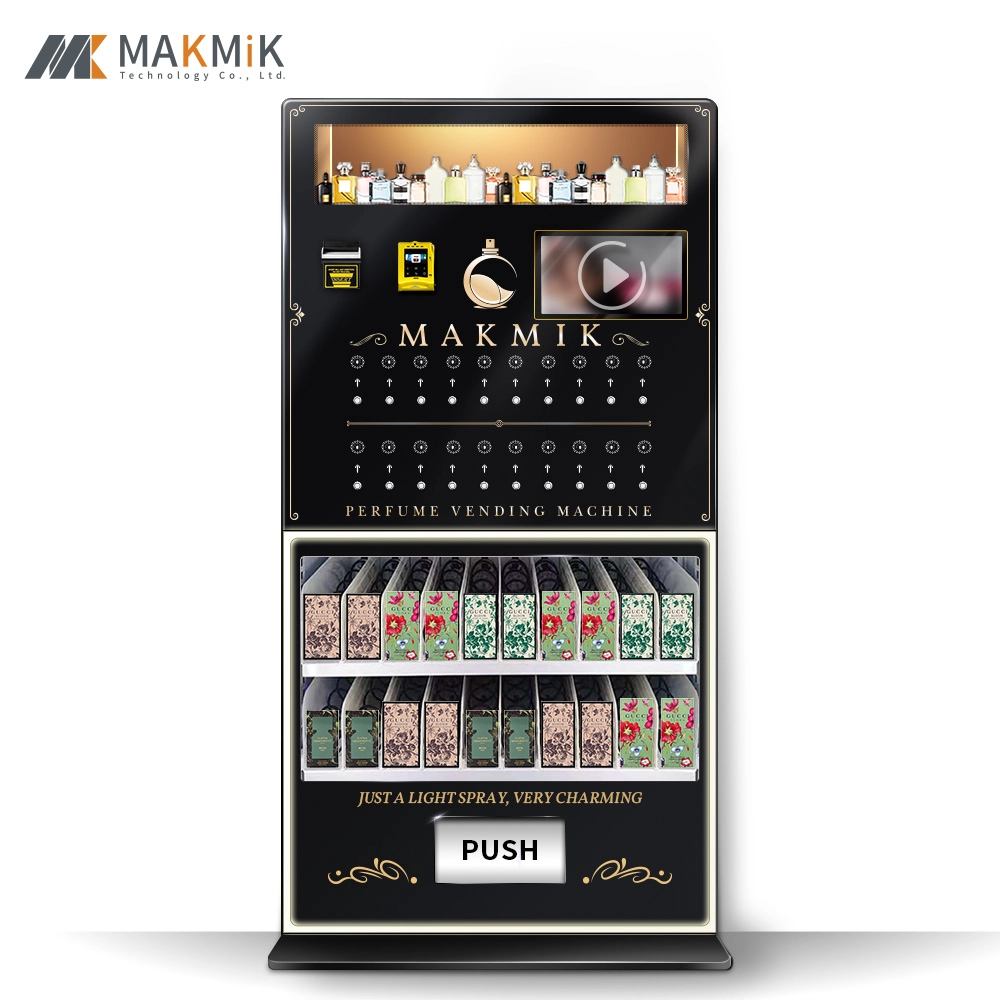
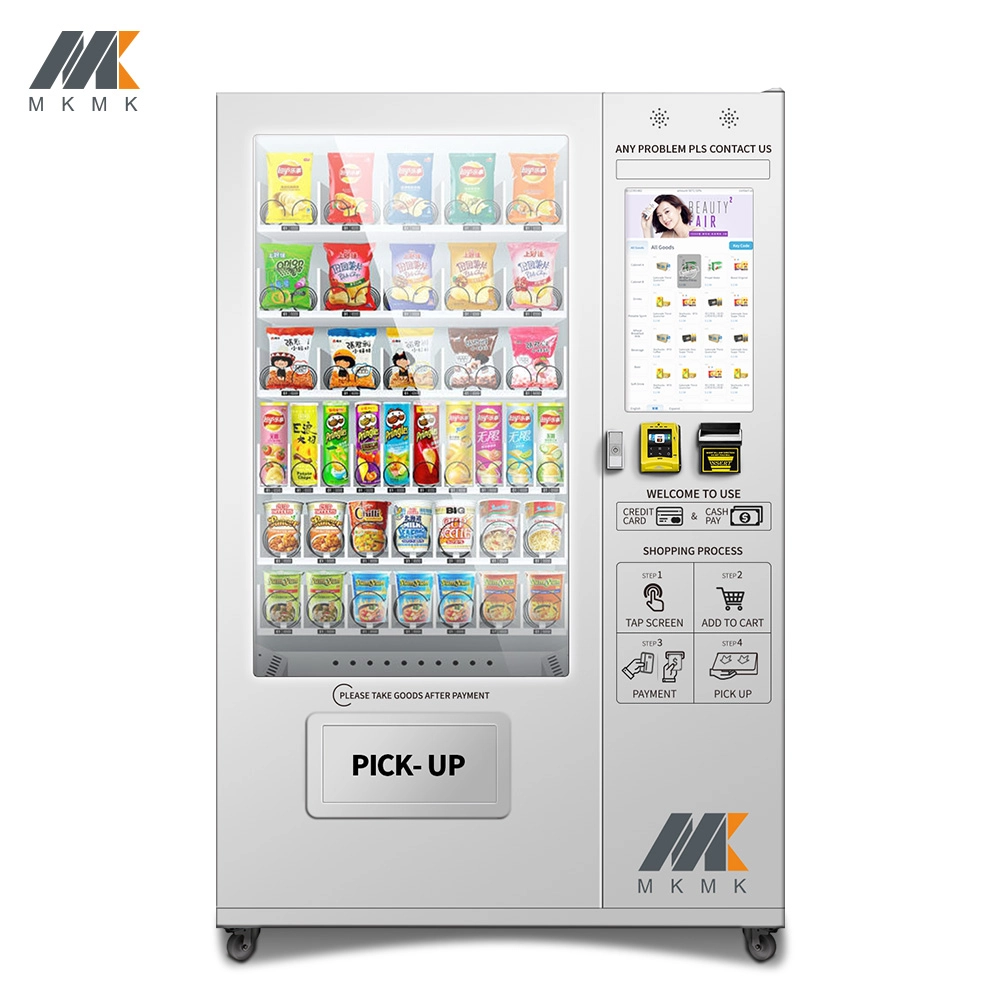
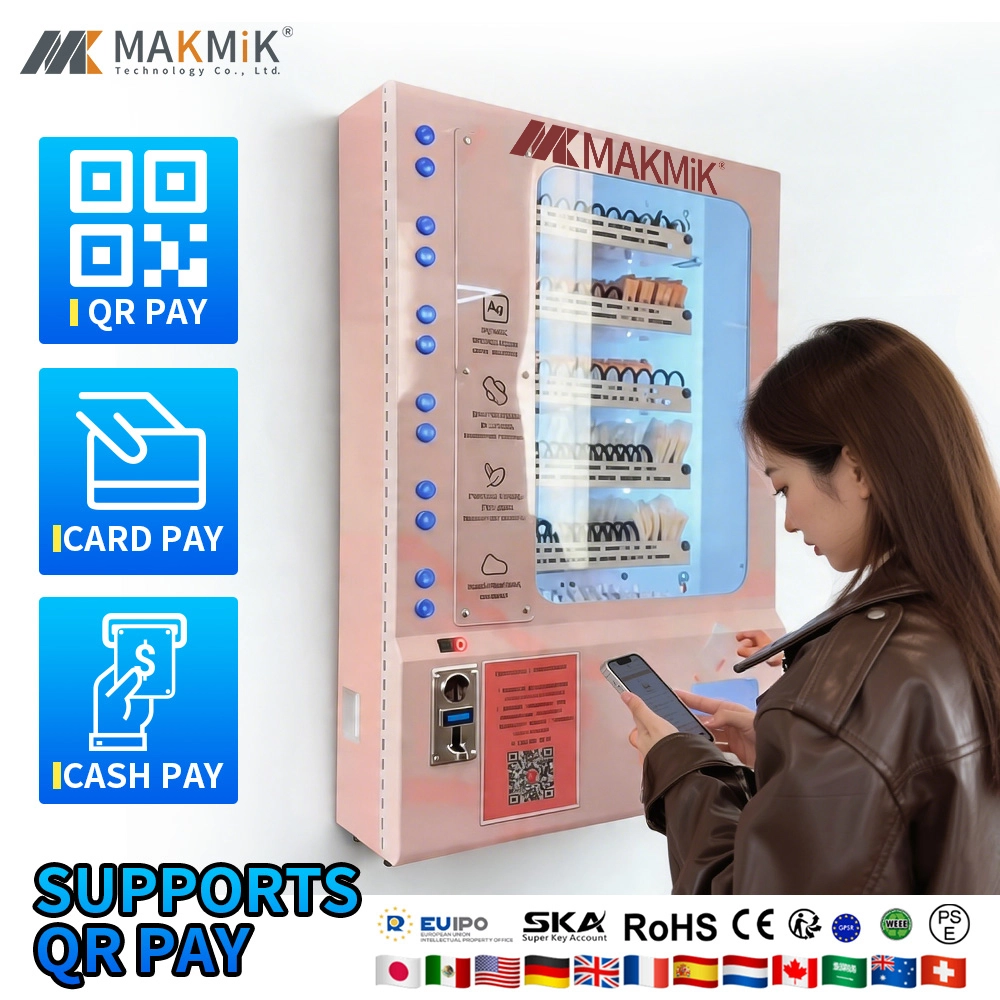
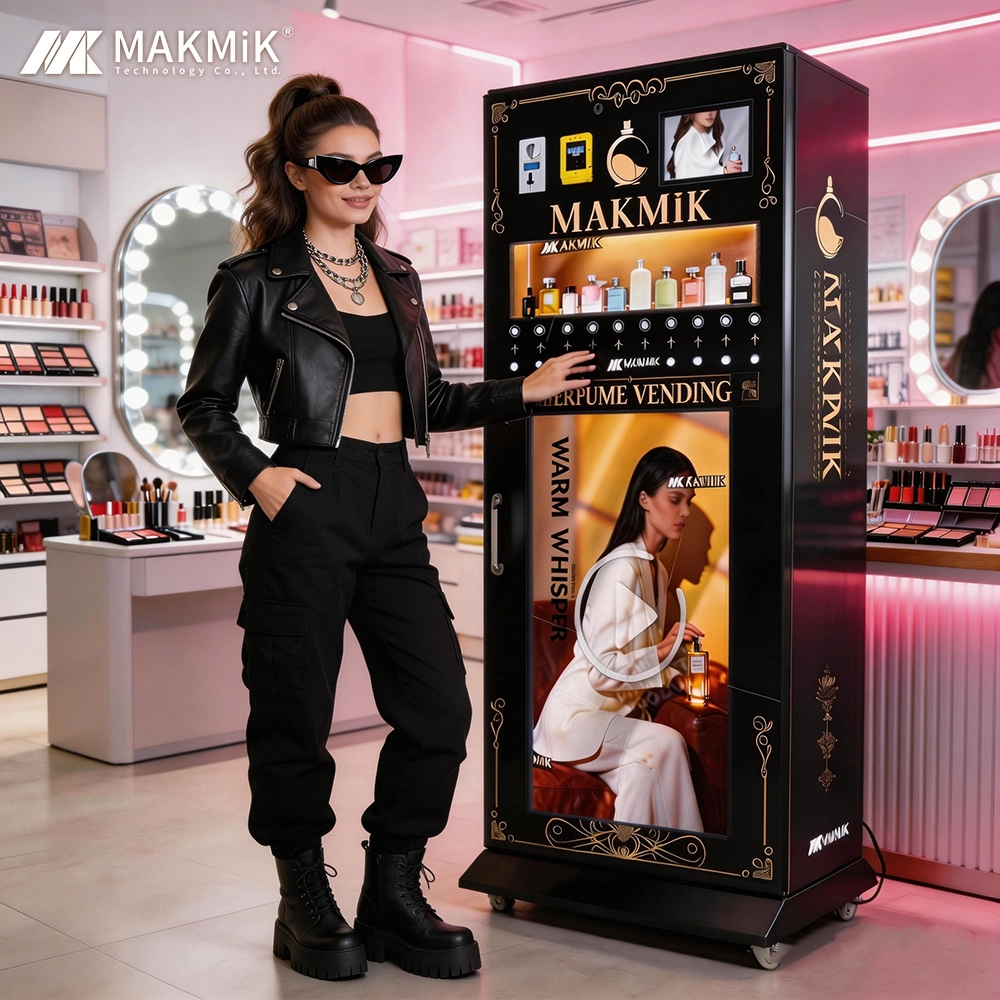
Compare Spare-Part Needs by Actual Machine Format
Before requesting spare parts, check the precise model and its options. The following are documented MAKMIK product formats, not a claim that their pumps, payment terminals or replacement parts share a part number. Ask for a compatible spare-parts list for the exact equipment revision.
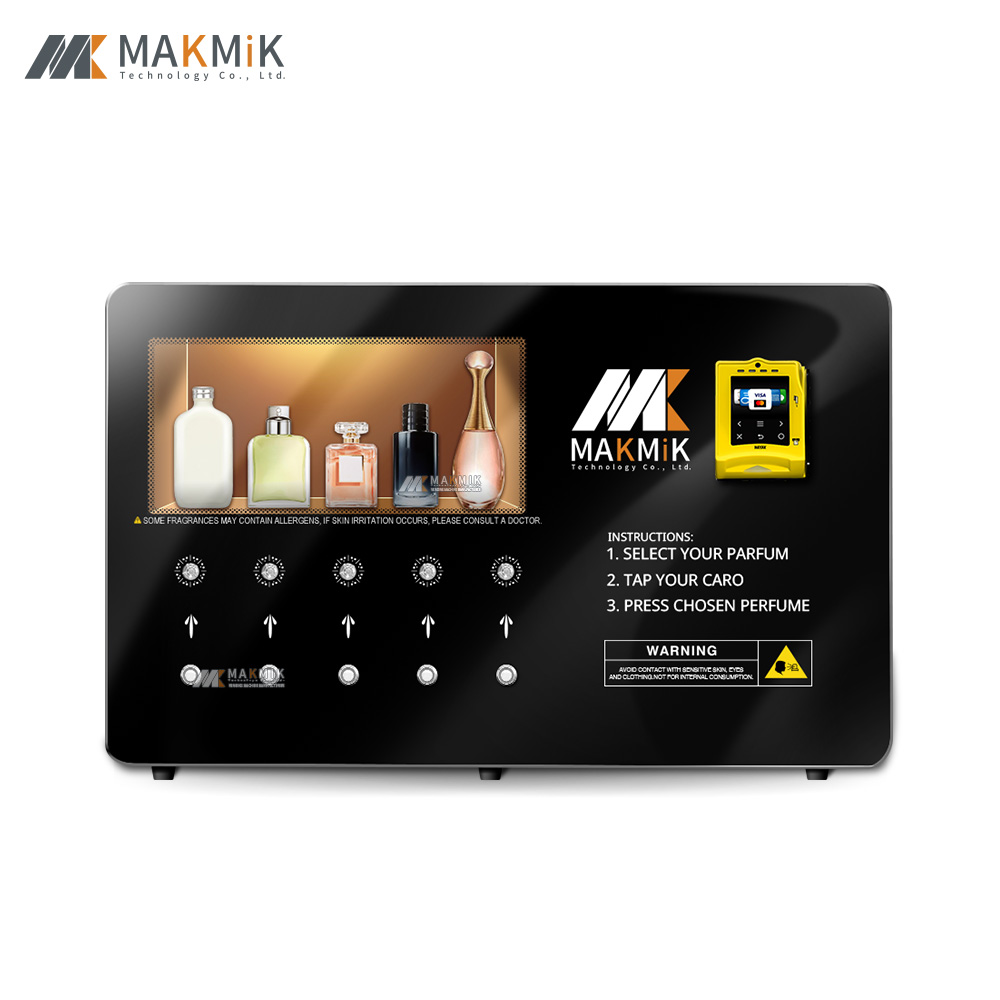
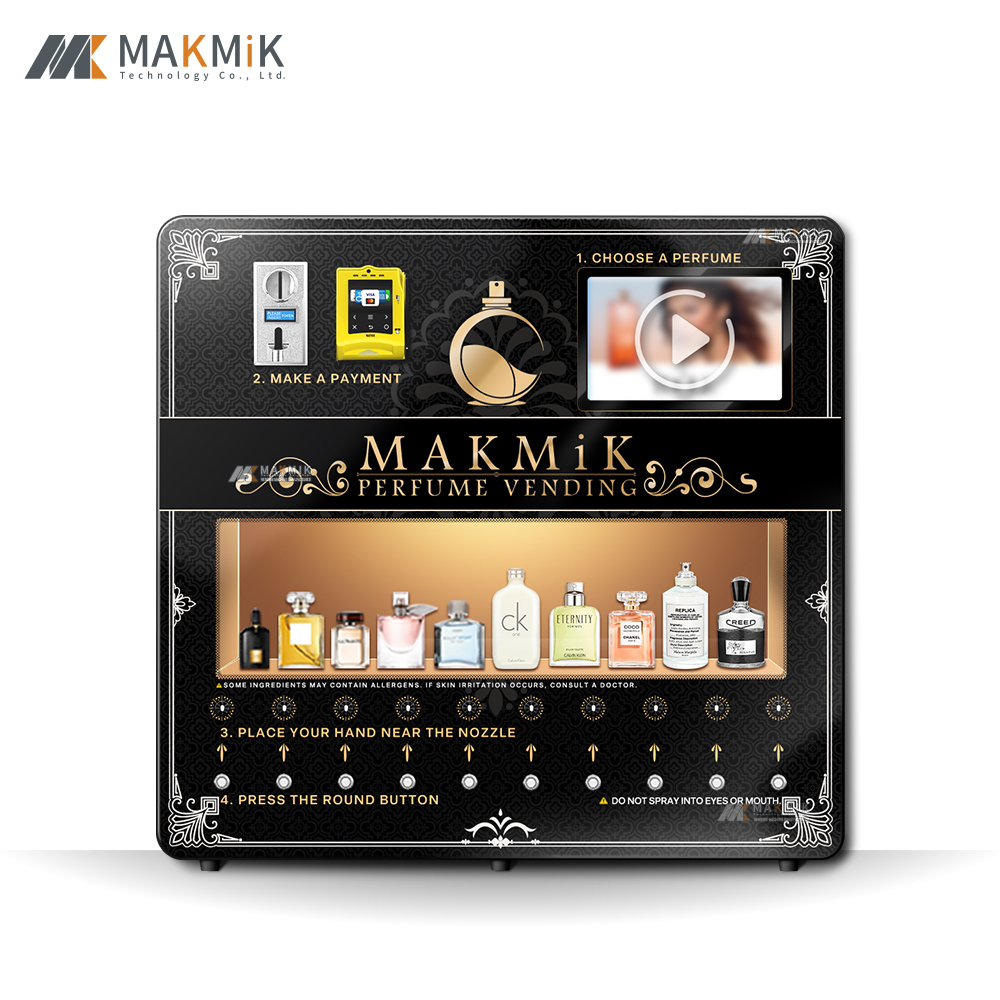

3. Give Dispensing Parts Higher Maintenance Attention
Pumps, valves, tubing, connectors, nozzles, and other fragrance-contact parts directly affect spray delivery. A blocked nozzle, unstable pump, loose connection, or contaminated line can change the spray pattern or dispensing consistency.
We therefore recommend keeping the likely service needs of the dispensing system in mind when selecting local spares. At the same time, a weak spray does not automatically mean a part has failed. Residue, air in the line, priming, blockage, connection issues, or fragrance conditions can produce similar symptoms.
After a dispensing component is serviced or replaced, it is sensible to verify output rather than assume the repair is complete. Our guidance on testing perfume spray dispensing accuracy provides a practical way to check whether the machine is delivering consistently after maintenance.
4. Decide Carefully Which Electronic Parts to Stock
Payment terminals, displays, controllers, network modules, and power components can have a large effect on uptime. A machine may still have fragrance and functioning spray hardware but be unable to complete a transaction if one of these systems is unavailable.
However, expensive or configuration-specific modules do not always belong in local inventory. Some may require software setup, technical diagnosis, or supplier-side configuration.
At MAKMIK, we suggest stocking locally only when the component is operationally important, identifiable, replaceable by the available service team, and difficult to source quickly when needed.
Spare-Parts Prioritization Matrix
This is a procurement decision matrix, not a universal OEM bill of materials. The chosen model, service contract, parts lead time and technician competence determine what should be stocked locally.
| Component Group | Possible Symptom / Impact | Stocking Decision |
|---|---|---|
| Approved nozzle / tubing / connectors | Spray blockage, leaks or inconsistent output | Consider local service stock only when exact model compatibility and cleaning practices are confirmed |
| Pump / valve assembly | One fragrance channel does not operate as specified | Confirm part revision, tools and technician capability; supplier-held stock may be preferable |
| Locks, hinges and approved service accessories | Cannot open, secure or safely access equipment | Check wear, security and authorization requirements; use model-specific references |
| Payment reader / interface | Sales interrupted or transactions unsuccessful | Escalate diagnosis to payment provider; assess replacement provisioning and regional certification |
| Power, controller, display and networking modules | Entire machine offline or customer interface unavailable | Usually require qualified personnel, model-specific firmware and supplier coordination |
A spare should never be considered approved merely because it fits mechanically. Contact materials, electrical ratings, connector type, firmware, payment provisioning and warranty conditions may differ between revisions. Ask MAKMIK for an authenticated spare part reference and supported replacement procedure.
5. Plan Spare Parts Before the Machines Ship
Spare-parts planning works better when it begins during procurement rather than after the first breakdown. Buyers should confirm which parts are recommended for the selected configuration, which are included with the order, which are optional, and how future replacements can be identified.
That information belongs naturally in the purchasing conversation. When preparing a supplier inquiry, include spare-parts requirements alongside machine configuration, payment setup, and service expectations. The questions in our perfume vending machine RFQ checklist can help make those requirements explicit before a quotation is finalized.
If spare parts are included with the shipment, verify them before dispatch. Confirm the quantity, identity, and compatibility of the agreed components during the factory acceptance test so the service kit arrives with the same machine configuration it is intended to support.
Diagnose First: Avoid Replacing the Wrong Part
- Identify the affected function: dispensing, payment, communication, power, display or access.
- Record the symptom: channel ID, timestamp, transaction or error information, and photos where useful.
- Check permitted routine items: consumable level, visible obstruction, secure external connections and documented system status.
- Follow safe service boundaries: isolate affected equipment and involve qualified technicians for electrical, payment and pressurized or fragrance-contact assemblies as applicable.
- Document the corrective action: part reference and revision, cause, operator, replaced-item disposition and post-repair test.
Use the supplier-approved procedure for cleaning, flushing and fragrance changeover. Do not use an unverified solvent or universal cleaning mixture on perfume-contact parts. Check dispensing accuracy again after any work that could affect dose delivery.
6. Change the Stocking Strategy as the Fleet Grows
A single machine and a twenty-machine fleet should not use the same spare-parts logic. With one unit, a small set of essential parts plus supplier support may be enough. With multiple machines, shared spares, centralized inventory, and standardized configurations become much more valuable.
Standardization is especially important. If several machines use the same pump, controller, nozzle arrangement, or payment hardware, one spare component may support multiple locations. If every machine is configured differently, the inventory becomes harder to manage and service teams need to recognize more part variants.
This is one reason spare-parts planning should evolve together with fleet operations. The same standardization principle appears when a structured perfume vending machine maintenance program: common configurations make maintenance, training, and replacement planning easier to control.
Single Unit vs Multi-Site Fleet: How Stock Policy Changes
For a single machine, a supplier-approved maintenance kit and reliable escalation process may be more practical than holding expensive spare controllers. For multiple locations, a centralized spare pool can reduce duplicated stock where the same exact parts are verified to fit several machines. Avoid treating “ten nozzles” or a similar housing as proof of interchangeability.
If an item is repeatedly consumed, a basic reorder policy can use expected usage during replenishment lead time plus a safety allowance. Rare, high-value repair parts need a different decision based on observed failures, supplier response time and downtime risk; a generic numerical reorder level should not be copied across projects.
7. Keep a Simple Spare-Parts Register
A spare-parts register does not need to be complicated. For each stocked item, record the machine model, component name, part reference, quantity, storage location, and replacement history where relevant.
For multi-location operations, it also helps to record whether a part is held centrally or on site. Repeated replacement of the same item should trigger a closer look at the underlying cause rather than becoming a routine stock issue.
| Spare-Part Type | Operational Impact | Stocking Approach |
|---|---|---|
| Maintenance parts | Support routine servicing | Often practical for local stock |
| Dispensing parts | Can affect fragrance delivery | Prioritize where locally serviceable |
| Payment/control parts | May stop transactions | Review by criticality and support model |
| Configuration-specific modules | Can be essential but expensive | Plan individually with supplier support |
At MAKMIK, we recommend keeping stocked parts clean, identified, protected from damage, and separated by model where necessary. Good labeling can prevent the wrong component from being installed simply because two parts look similar.
Spare-Parts Register: Fields to Record
| Inventory Field | Required Information | Why It Matters |
|---|---|---|
| Part reference and revision | Supplier part number, revision, photo | Avoids look-alike substitutions |
| Approved machine models | Exact model/serial or BOM reference | Supports fit and compatibility checks |
| Quantity and location | Available, reserved, ordered, central/on-site | Prevents misplaced or double-counted stock |
| Lead time and vendor | Written replenishment estimate and supplier contact | Guides service continuity and restocking |
| Service record | Work order, reason, technician, post-repair test | Supports warranty and recurring-failure review |
During procurement, request the recommended spare-parts list together with the confirmed machine bill of materials, wiring or service documents where applicable, warranty exclusions and replacement training. For delivery checks, match the agreed kit against the confirmed pre-shipment acceptance checklist.
Five Questions to Include in a Spare-Parts RFQ
- Which wear items and critical parts are recommended for this precise model and hardware revision?
- What items ship as standard spares, and which have an additional cost?
- Which items can a trained local operator replace, and which require authorized service or software provisioning?
- What are typical replacement lead times, warranty conditions and spare-part shipping terms?
- Can the supplier provide the part reference, installation guidance and post-repair test procedure in writing?
Final Takeaway
The strongest spare-parts plan is not the one with the largest inventory. It is the one that helps the operator restore important machine functions efficiently without holding unnecessary components.
Start with the real machine configuration, identify the parts that matter most to uptime, match local stock to actual service capability, verify agreed spares before shipment, and adjust inventory as the fleet grows.
Perfume Vending Machine Spare Parts FAQ
What spare parts should you stock for a perfume vending machine?
The spare-parts list should match the actual machine configuration. Priority usually goes to maintenance-related parts, dispensing components, critical uptime parts, and configuration-specific items that the local service team can identify and replace correctly.
Which perfume vending machine parts deserve the highest stocking priority?
Priority should be based on failure impact, replacement difficulty, supply lead time, and whether the part can stop dispensing, payment, control, power, or customer interaction. A part does not need to fail frequently to be important if the whole machine depends on it.
Should you keep pumps, valves, tubing, and nozzles as spare parts?
Dispensing-related parts can deserve higher maintenance attention because they directly affect fragrance delivery and spray performance. The exact parts to stock should be confirmed against the selected machine model and dispensing configuration.
Do you need to stock payment, display, and control components locally?
Not always. Some electronic modules may be expensive, configuration-specific, or better handled through supplier support. Local stocking should depend on how critical the component is, how quickly a replacement can be supplied, and whether the local team is qualified to replace it.
How does spare-parts planning change when operating multiple perfume vending machines?
As the fleet grows, standardizing machine configurations can simplify spare-parts inventory, training, and troubleshooting. Shared components across multiple machines may reduce the number of different parts that need to be stocked.
How can you avoid overstocking perfume vending machine spare parts?
Evaluate each component by criticality, diagnosis difficulty, replacement difficulty, and supply lead time. Stocking should support uptime without creating unnecessary inventory, especially for expensive or rarely replaced configuration-specific parts.
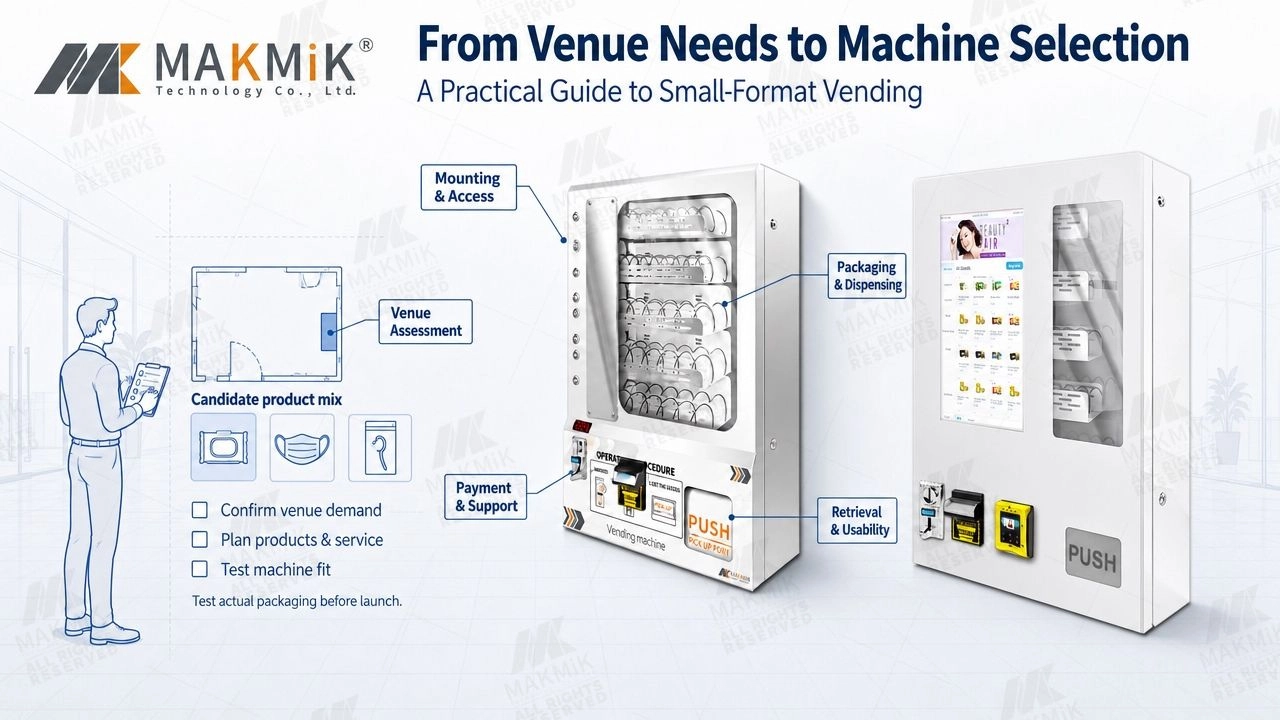
From Venue Needs to Machine Selection: A Practical Guide to Small-Format Vending

Perfume Vending Machine Fragrance Assortment Planning: Local Demand, Nozzle Capacity and Product Rotation

Perfume Vending Machine Payment Reconciliation: Sales, Refunds and Venue Revenue Share

Perfume Vending Machine Site Performance: When to Relocate an Underperforming Machine
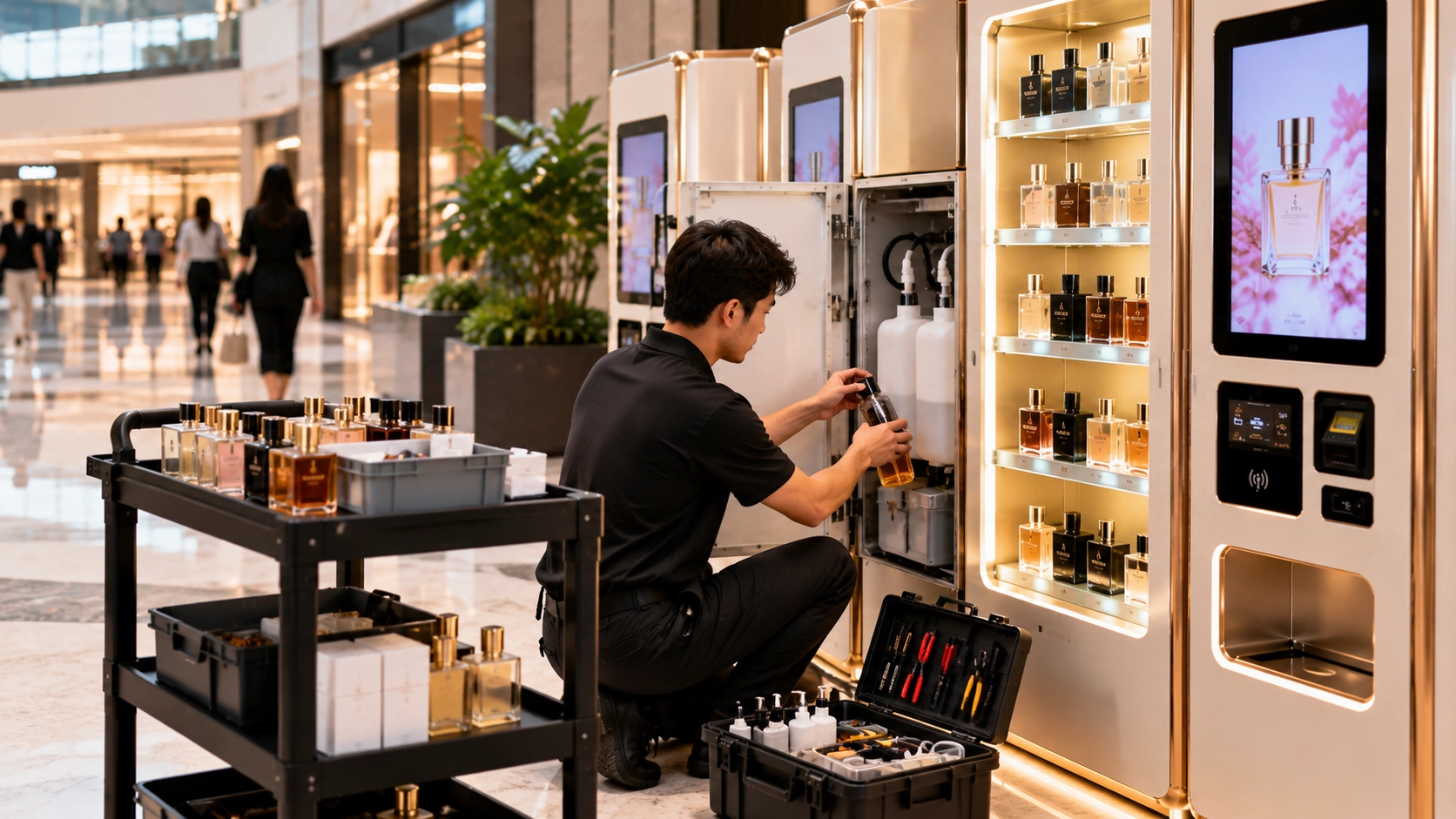
Perfume Vending Machine Refill Route Planning: Labor Costs, Inventory and Stockouts
FAQ
Can your vending machines be customized?
Yes, we offer customization options to meet specific client requirements, including branding, product selection, and payment systems.
What is the lead time for manufacturing and delivery?
Lead times vary based on the type and quantity of vending machines ordered, but we strive to deliver within 6-8 weeks from the date of order confirmation.
Are your vending machines energy-efficient?
Yes, our vending machines are designed with energy-efficient technologies to reduce power consumption and minimize environmental impact.
What kind of technical support do you offer?
We provide 24/7 technical support, including troubleshooting, repair services, and remote assistance to resolve any issues promptly.
What types of vending machines do you manufacture?
We manufacture a wide range of vending machines, including snack, beverage, combo, fresh food, and specialty vending machines.
Send my request
Connect with us to schedule a consultation, request samples, or arrange a site visit to see our facilities and capabilities firsthand.
Reach out to us via phone, email, or through the contact form below, and we'll get back to you promptly within 24 hours.
Social Media:
© 2026 MAKMIK | All Rights Reserved.
Facebook
Linkedlin
YouTube
Instagram