






Screenless vs Advertising-Screen Perfume Vending Machines: Which Display Setup Fits Your Business?
- 1. Screenless vs Advertising-Screen: Main Differences
- 2. Customer Journey: Simplicity or Visual Guidance
- 3. Location Visibility and Viewing Conditions
- 4. What Commercial Value Can an Advertising Screen Create?
- 5. Content Management Is an Ongoing Operating Task
- 6. Hardware, Connectivity and Failure Modes
- 7. Power Consumption and Total Ownership Cost
- 8. Measuring Display Performance After Installation
- 9. Multi-Location Operations and Standardization
- 10. Buyer Decision Matrix
- 11. Questions to Confirm Before Quotation
- Conclusion
- Compare Perfume Vending Machine Display Options
- Screenless vs Advertising-Screen Perfume Vending Machine FAQ
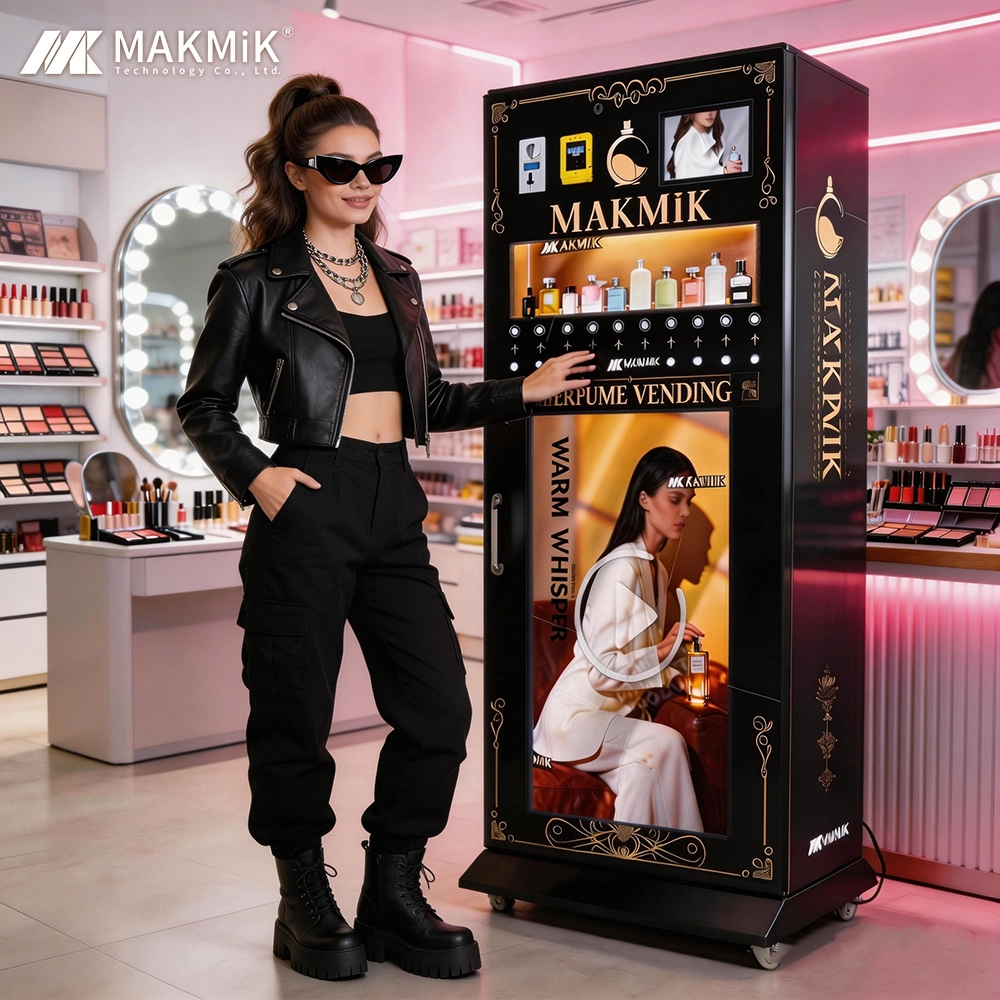
Screenless and advertising-screen perfume vending machines can deliver the same core vending function while creating different customer experiences. A screenless configuration relies on clear product labels and a simple selection process. An advertising-screen configuration adds space for product explanations, promotional media, and brand messaging.
At MAKMIK, we recommend evaluating display options as a commercial and operational decision. A larger screen is useful only when it improves visibility, customer understanding, or campaign execution enough to justify the hardware, content, power, and maintenance requirements.
Start with the transaction journey and location conditions. Add advertising media when the operator has a measurable use case, a content owner, and a plan for keeping the display functional.
1. Screenless vs Advertising-Screen: Main Differences
| Factor | Screenless | Advertising Screen |
|---|---|---|
| Customer information | Physical labels, buttons or simple controls | Additional visual explanations and campaigns |
| Brand presence | Cabinet graphics and surrounding signage | Dynamic visual storytelling |
| Content operations | Limited ongoing media work | Asset creation, scheduling and review |
| Hardware dependencies | Fewer display-related components | Display, controller and potentially network |
| Energy use | No dedicated advertising display load | Additional display consumption, model-dependent |
| Maintenance | Fewer media-related fault points | Screen and playback diagnostics |
| Commercial value | Focused purchasing interaction | Potential promotional value requiring measurement |
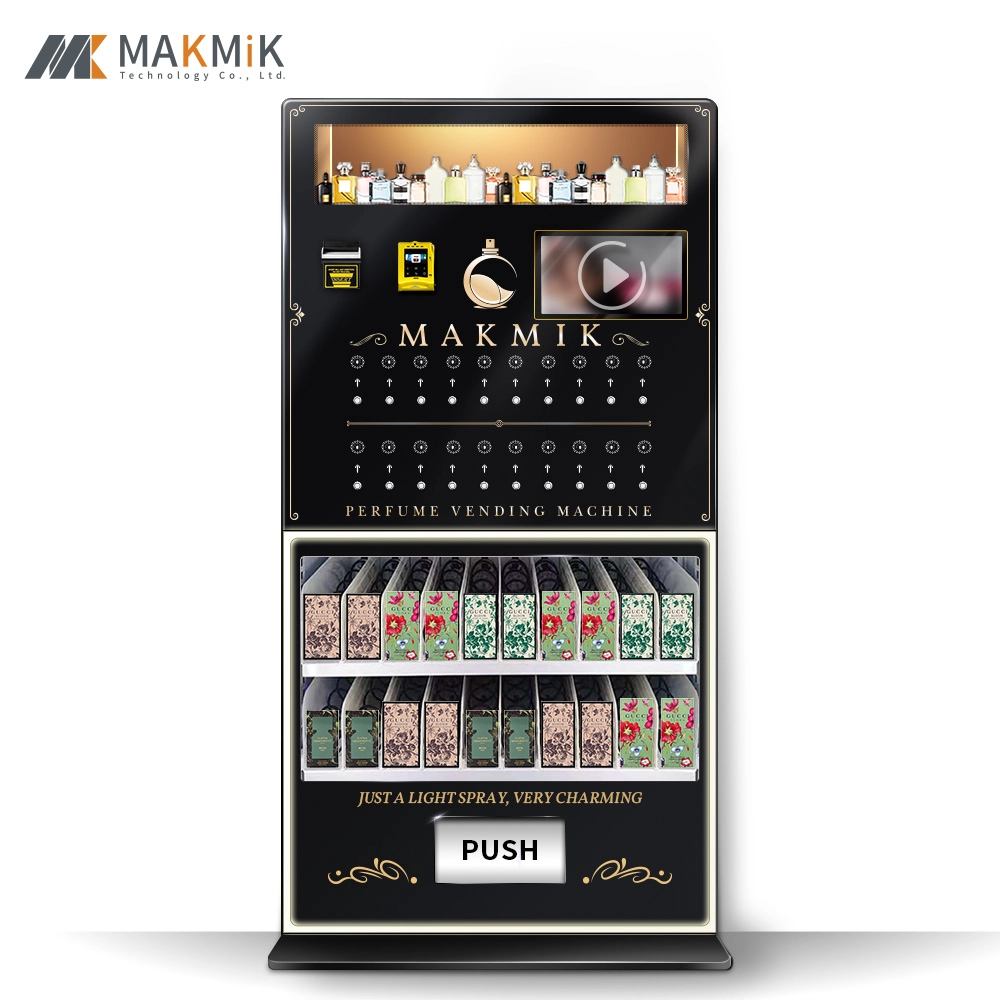
A screenless machine may still have payment indicators or a small control interface; the term refers to the absence of a dedicated advertising display. The exact hardware arrangement should be confirmed in the supplier's specification.
2. Customer Journey: Simplicity or Visual Guidance
A straightforward fragrance offer can work with clear labels, visible pricing, and a short selection-to-payment process. Screenless equipment may suit customers who already understand the concept or locations where staff and surrounding signage provide context.
An advertising screen can explain how fragrance sampling works, present scent profiles, show price and campaign information, or communicate usage instructions. It may be helpful when customers are encountering perfume vending for the first time.
The interface should never require customers to watch a long promotional sequence before completing a transaction. Product selection, payment, and dispensing should remain understandable even when advertising media is not playing.
3. Location Visibility and Viewing Conditions
The value of an advertising display depends on where customers first notice the machine, how far they stand from it, ambient brightness, reflections, and competing signage. A screen placed out of the normal line of sight may contribute little despite adding cost.
Screenless models can be appropriate for beauty salons, hotel facilities, and compact branded environments where the machine is already easy to find. Advertising-screen machines may be considered for open retail areas, entertainment venues, or exhibitions where additional visual communication has a defined role.
Screen size should be assessed alongside cabinet position, access clearance, and the customer approach route. The choice between wall-mounted and floor-standing perfume vending machines can influence sightlines and usable display space.
4. What Commercial Value Can an Advertising Screen Create?
An advertising display can support fragrance promotions, seasonal collections, co-branded campaigns, or venue-specific messages. These are potential uses rather than guaranteed revenue streams. Commercial value depends on whether the content changes customer behavior or creates a separately contracted advertising opportunity.
Operators should distinguish between incremental vending revenue and third-party advertising revenue. A campaign that shifts customers from one fragrance to another without increasing total contribution may offer branding value but little immediate financial return.
If the advertising-screen option adds $600 in upfront equipment cost and $15 per month in incremental power, content and maintenance expenses, the first-year incremental cost is $780. At $1.50 contribution per additional transaction, approximately 520 incremental transactions would be required to cover that first-year amount. These are hypothetical inputs, not MAKMIK prices or measured conversion results.
For actual evaluation, calculate the incremental installed cost and ongoing expenses, then compare them with observed changes in paid transactions, contribution margin, and any contracted advertising income.
5. Content Management Is an Ongoing Operating Task
A display creates value only when the media is relevant and maintained. Define who produces creative assets, approves claims, checks translations, updates prices, schedules campaigns, and verifies playback. These responsibilities are easy to overlook during procurement.
Content should match the actual fragrances available in the machine. Promoting a scent that is out of stock can create customer frustration. Operators with several venues may need different campaign schedules, languages, or fragrance messages by location.
6. Hardware, Connectivity and Failure Modes
Advertising-screen configurations may add a display panel, media player, controller, storage, power supply, software, and network connection depending on the product. Each component has its own service and replacement considerations.
Confirm whether the display operates offline, how media files are uploaded, what happens after a power interruption, and whether remote content updates are included. If the network is unavailable, the screen should have a defined fallback behavior appropriate to the machine design.
Core vending operation and promotional playback should be assessed separately. Ask the supplier whether a display fault affects product selection, payment, or dispensing, and include the specified recovery behavior in the factory acceptance test.
7. Power Consumption and Total Ownership Cost
A dedicated advertising display generally introduces additional electrical load. The actual consumption depends on screen size, brightness, operating hours, and hardware efficiency. Buyers should request rated and measured consumption for the exact configuration rather than using generic screen estimates.
Total cost of ownership should include display hardware, installation, electricity, content production, connectivity where required, software support, service labor, and possible replacement components.
For screenless equipment, compare the cost of alternative signage or printed instructions. A simpler cabinet may still need clear visual communication to convert customer interest into a successful purchase.
8. Measuring Display Performance After Installation
Screen effectiveness should be tested with operational data. Track transactions, conversion where reliable footfall data exist, average contribution per sale, campaign dates, customer complaints, and display uptime. Compare similar time periods and locations while accounting for changes in traffic, pricing, and fragrance assortment.
A screen should not be credited with sales growth when other variables changed simultaneously. Where practical, test the same campaign across comparable locations or alternate campaign and control periods to isolate its contribution.
9. Multi-Location Operations and Standardization
A single advertising-screen machine may be manageable through manual updates. A larger fleet requires asset naming, version control, permissions, scheduling, and troubleshooting procedures. Operators may choose screenless units in locations with little promotional demand and advertising-screen units where campaigns are commercially useful.
For fleets, establish a small number of approved display configurations. Standardizing media formats, software versions, and service parts can reduce operational variation while allowing venue-specific content.
10. Buyer Decision Matrix
| Business Condition | Initial Direction | Reason |
|---|---|---|
| Simple fragrance offer and strong nearby signage | Screenless | Prioritize straightforward purchasing |
| Frequent brand or seasonal campaigns | Advertising screen | Dynamic media has an ongoing purpose |
| Limited content staff and update capacity | Screenless | Avoid unsupported media operations |
| Open retail site with visual competition | Evaluate advertising screen | Measure viewing distance and conversion |
| Unreliable connectivity | Evaluate offline capabilities | Confirm playback and transaction fallback |
| Multi-location rollout | Standardize by venue type | Control media and maintenance complexity |
This matrix provides an initial direction, not a substitute for comparing actual machine specifications and site requirements. A display option should be justified by a clear customer or commercial function.
11. Questions to Confirm Before Quotation
- Screenless controls, customer interface screen, or separate advertising display
- Screen size, resolution, brightness and placement
- Supported image/video formats and content update method
- Offline playback and network failure behavior
- Electrical load and operating-hour settings
- Software support, warranty, spare parts and media responsibilities
Request a quotation that identifies the display hardware and software included, optional services, integration limitations, and the acceptance tests available before shipment. Clear specifications prevent confusion between an advertising screen and the customer interface used to complete a purchase.
Conclusion
Screenless perfume vending machines can support a focused customer journey with fewer media-related responsibilities. Advertising-screen machines offer additional communication and campaign capabilities but also introduce content, hardware, and operating costs.
At MAKMIK, we recommend selecting the display configuration according to customer needs, venue visibility, available content resources, and measurable commercial objectives. The screen should support the vending business rather than become an unnecessary dependency.
Compare Perfume Vending Machine Display Options
Tell MAKMIK about your venue, customer journey, promotional plans and technical requirements to discuss a suitable screen configuration.
Screenless vs Advertising-Screen Perfume Vending Machine FAQ
What is the main difference between a screenless and an advertising-screen perfume vending machine?
The main difference is how much visual information the machine can present. A screenless machine keeps the customer journey simpler, while an advertising-screen machine provides more space for branding, instructions, promotions, and fragrance content.
When is a screenless perfume vending machine a better fit?
A screenless setup may suit locations where the fragrance offer is easy to understand, surrounding branding is already strong, customers do not need much explanation, and the operator wants a simpler content and maintenance workload.
When should you choose a perfume vending machine with an advertising screen?
An advertising-screen configuration may be useful when the location needs stronger visual attraction, the operator wants to display promotional or instructional content, and there is a clear plan for managing that content over time.
Does an advertising screen increase maintenance complexity?
It can add more hardware and system dependencies, such as display components, media playback, connectivity, storage, or software configuration. The actual maintenance impact depends on the selected machine design and content system.
How should location influence the display setup?
Screen choice should reflect customer viewing distance, visual competition, how much explanation the vending concept needs, and whether the machine is installed in a compact branded environment or a more open high-traffic location.
Should the display configuration be decided before requesting a quotation?
Yes. Buyers should specify whether they need a screenless machine, a customer interface screen, an advertising display, or another display arrangement before requesting a quotation so the supplier can discuss the appropriate configuration.
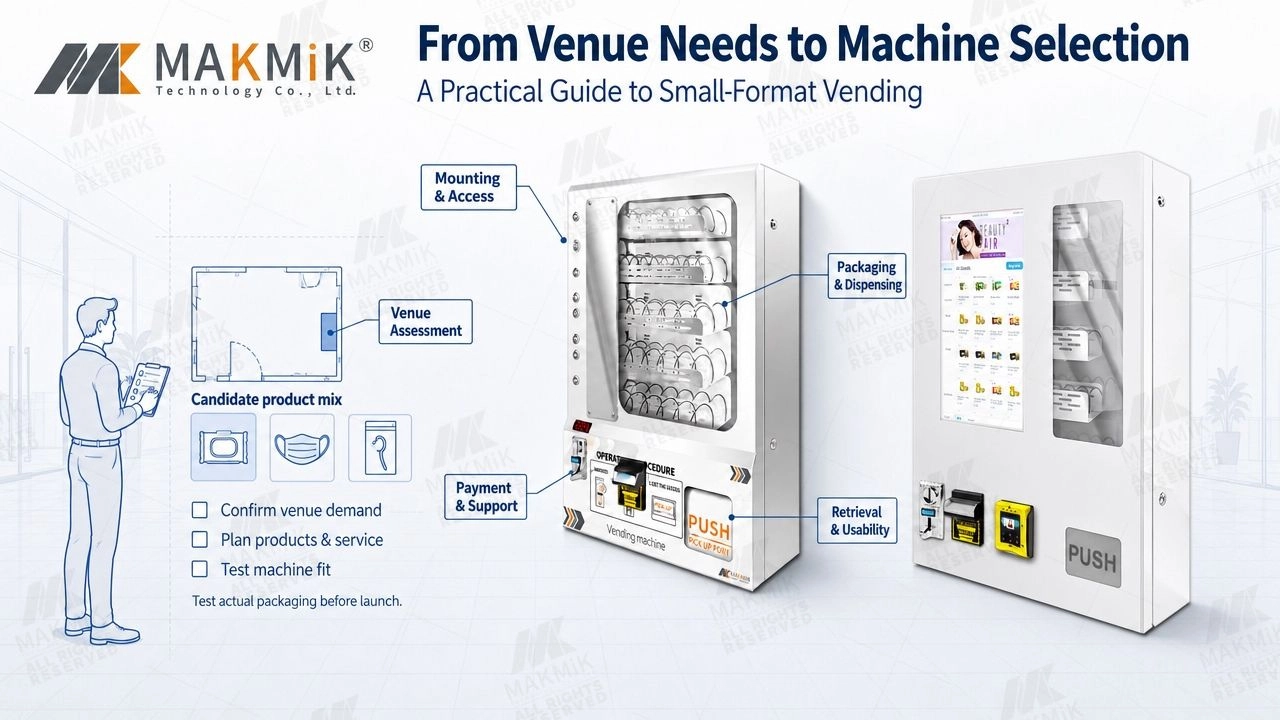
From Venue Needs to Machine Selection: A Practical Guide to Small-Format Vending
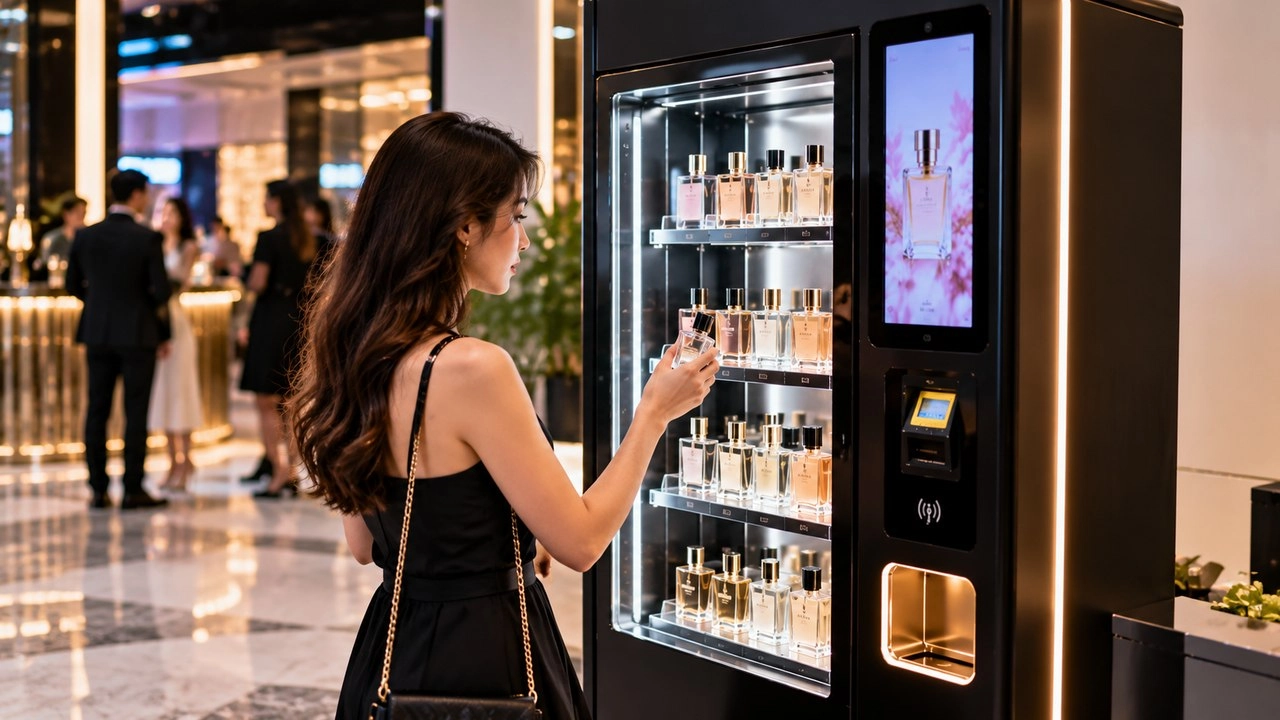
Perfume Vending Machine Fragrance Assortment Planning: Local Demand, Nozzle Capacity and Product Rotation
Perfume Vending Machine Payment Reconciliation: Sales, Refunds and Venue Revenue Share
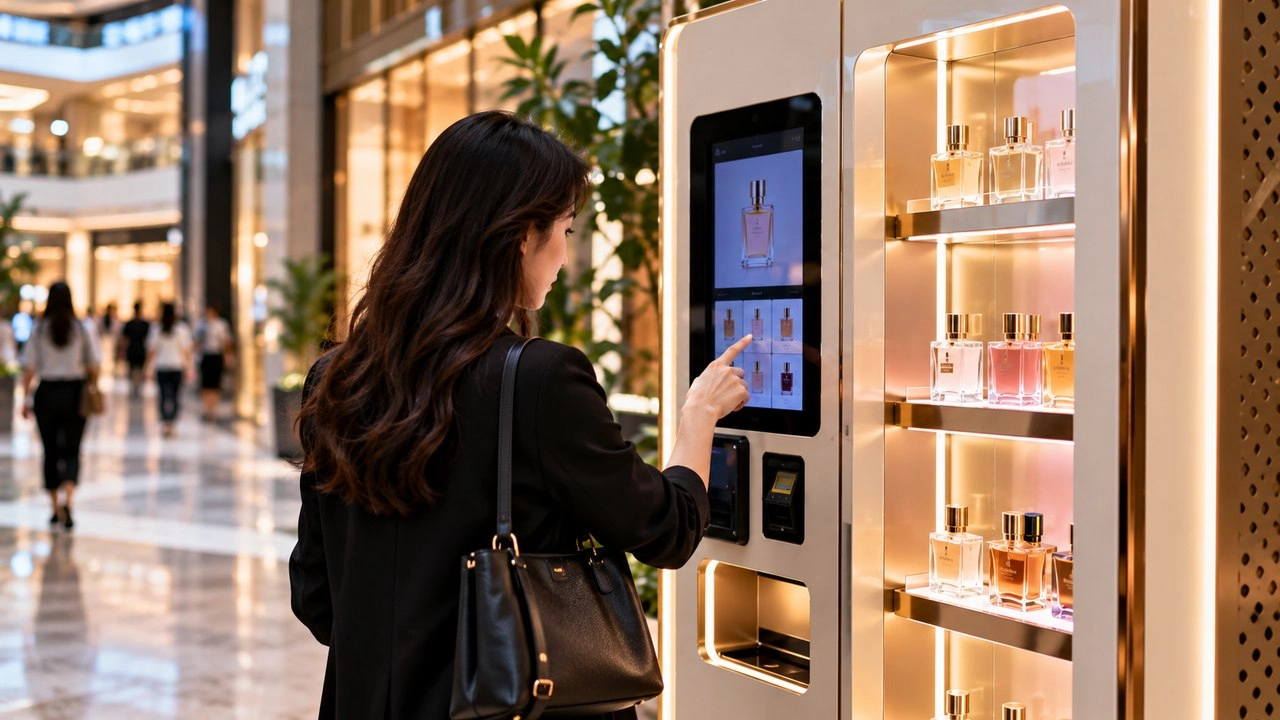
Perfume Vending Machine Site Performance: When to Relocate an Underperforming Machine
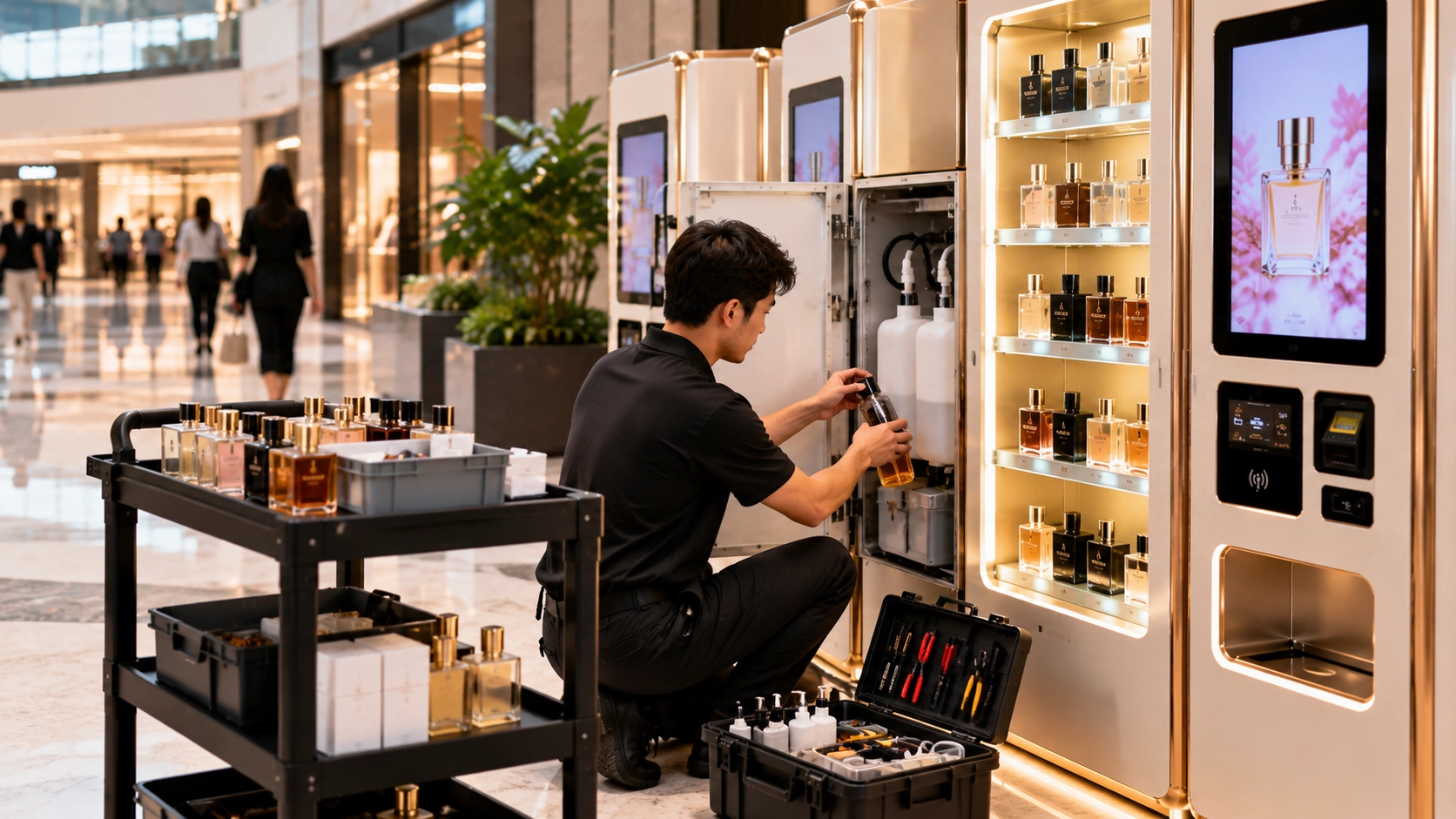
Perfume Vending Machine Refill Route Planning: Labor Costs, Inventory and Stockouts
FAQ
Do you offer warranties on your vending machines?
Yes, we provide warranties on all our vending machines, covering parts and labor for a specified period to ensure peace of mind for our clients.
What kind of technical support do you offer?
We provide 24/7 technical support, including troubleshooting, repair services, and remote assistance to resolve any issues promptly.
What payment options do your vending machines support?
Our vending machines support various payment methods, including cash, credit/debit cards, mobile payments, and contactless payments.
What types of vending machines do you manufacture?
We manufacture a wide range of vending machines, including snack, beverage, combo, fresh food, and specialty vending machines.
How can I monitor and manage my vending machines remotely?
Our vending machines come with advanced telemetry systems that allow remote monitoring and management through a web-based platform or mobile app.
Send my request
Connect with us to schedule a consultation, request samples, or arrange a site visit to see our facilities and capabilities firsthand.
Reach out to us via phone, email, or through the contact form below, and we'll get back to you promptly within 24 hours.
Social Media:
© 2026 MAKMIK | All Rights Reserved.
Facebook
Linkedlin
YouTube
Instagram