


Refilling a single perfume vending machine can be a simple stop on the operator’s schedule. Refilling ten or twenty machines is different: wasted travel, blocked venue access, missing fragrances, repeated cleaning, and surprise repairs can turn a seemingly profitable route into an expensive operation.
A reliable refill plan connects actual fragrance consumption with available stock, venue service hours, technician time and a clear exception process. It is not just a list of addresses. This guide provides a practical framework for perfume vending operators who want to reduce stockouts and avoid unnecessary servicing trips as their fleets grow.
Quick Answer
Group compatible sites into workable routes, schedule visits using channel-level consumption and access windows, and measure labor cost per completed visit. Refill before a realistic stockout threshold—not simply because a fixed calendar date has arrived.
Key Takeaways
- Track stock by machine and fragrance channel, not only by total bottles in storage.
- Use actual refill time, travel time and paid technician hours to calculate route cost.
- Set reorder thresholds using consumption, lead time, safety allowance and usable inventory.
- Separate routine servicing from urgent faults; an offline machine needs diagnosis, not automatically a fragrance refill.
1. Start with the Inventory and Site Data You Can Verify
A refill route should begin with the operating facts at each venue: machine ID and precise location, approved fragrance channels, remaining usable inventory, most recent refill, consumption since that visit, access restrictions, technician availability and any unresolved faults. Sites that look similar may use fragrances at very different rates.
For channel-based perfume dispensing, distinguish a fragrance container from its associated pump, nozzle and product selection. Incorrect mapping can create dispensing errors even when there is plenty of stock. Record every fragrance or container change and use the manufacturer-approved refill procedure.
| Record | Suggested Fields | Why It Matters |
|---|---|---|
| Machine & venue | Site ID, model, location, contact, allowed access hours | Enables repeatable visits and avoids locked-site delays |
| Channel inventory | Fragrance ID, channel ID, usable quantity, refill date, counted usage | Identifies faster-moving scents and stockout risk |
| Service status | Open incidents, cleaning requirement, access approval, follow-up owner | Prevents unnecessary return trips |
| Supply | Central stock, supplier lead time, approved packaging, expiration constraints | Supports realistic replenishment decisions |
Where telemetry is available, treat remotely estimated inventory as an input to be verified—not an infallible physical measurement. Compare software estimates with actual refills and service notes. The existing real-time perfume inventory management guide provides wider context on connected inventory systems; this article focuses on the route and labor decisions that follow.
2. Group Machines into Routes Based on Geography and Access
A technician may be able to complete several nearby machines in a single trip, but only if each venue permits service at the planned time. Mall delivery windows, hotel security desks, club operating hours and loading restrictions can matter as much as the distance between locations. Group sites into practical service territories rather than blindly choosing the nearest points on a map.
Build the order of visits around scheduled access windows, expected on-site work, travel conditions and the urgency of stockouts or faults. Plan a realistic allowance for security check-in, parking, machine opening, channel verification, cleaning and reporting. Reserve separate emergency capacity when a failed dispenser could otherwise remain offline until the next routine round.
Three Useful Service Groups
| Route Type | Typical Situation | Dispatch Principle |
|---|---|---|
| Scheduled refill | Forecast consumption suggests stock is approaching its replenishment threshold | Combine with other nearby approved sites |
| Priority stockout | A key fragrance channel is depleted or likely to run out before normal service | Reorder route by urgency and access availability |
| Fault / maintenance | No dispensing, payment trouble, leakage or connectivity issues | Diagnose first; send qualified personnel with approved parts if needed |
Venue agreements should specify access for ordinary refills, repair and emergency visits. If you are negotiating locations, the perfume vending location agreement checklist helps translate those operational needs into practical site-access and responsibility terms.
3. Calculate the Real Labor Cost of Each Refill Route
Distance alone is not a reliable measure of route expense. Use paid technician hours and all attributable vehicle, transport, parking and access charges. Route cost is different from fragrance product cost: they should be calculated separately to prevent confusion between logistics savings and gross margin.
Route Cost Formula
Route labor cost = (travel + preparation + on-site servicing + reporting hours) × fully loaded hourly labor cost.
Cost per completed machine visit = (route labor + travel/vehicle + parking and other route charges) ÷ completed productive machine visits.
Illustrative Route Calculation—Not MAKMIK Operating Data
Suppose a technician services four machines in one trip. The hypothetical route requires 70 minutes driving, 25 minutes preparing, 20 minutes working at each machine and 15 minutes recording the results. At an illustrative fully loaded $20 hourly labor rate with $18 in transport expenses:
| Example Component | Calculation | Illustrative Cost |
|---|---|---|
| Paid labor time | 70 + 25 + (4 × 20) + 15 = 190 minutes | 3.17 hours |
| Labor expense | 190 ÷ 60 × $20 | $63.33 |
| Travel expense | Assumed vehicle, fuel or local transport | $18.00 |
| Total route expense | $63.33 + $18.00 | $81.33 |
| Per completed visit | $81.33 ÷ 4 machines | $20.33 |
These figures are for method illustration only, not a typical labor rate, expected performance claim or recommended service frequency. They exclude the fragrance stock itself, unallocated overhead, taxes and other location-specific costs. If a venue is closed and one of the four visits fails, the cost per successful visit increases. Record failed access attempts and return journeys instead of excluding them.
4. Establish a Reorder Point Without Inventing Machine Capacity
Refill planning is a balance between avoiding empty channels and carrying unnecessary inventory. A simple first-pass rule is forecast consumption during replenishment lead time + safety stock. For on-site service, the relevant time may include both supply replenishment and the delay until the next authorized venue visit.
Illustrative Reorder Trigger
If one channel uses an estimated 12 dose-equivalents per day, replenishment takes 4 days, and the operator allocates 2 extra days of demand as a safety allowance, then:
12 × (4 + 2) = 72 dose-equivalents
This threshold is hypothetical. It is not a physical tank volume, spray setting or MAKMIK product specification. Convert it into usable fragrance stock only after confirming actual dosing, container configuration and product-specific requirements.
Use separate stock limits for each channel and storage location. A high-demand fragrance may require an earlier visit while another remains usable for longer. Where data is sparse, use conservative manual checks and refine thresholds after enough genuine transactions have been recorded. Track bottle integrity, approved storage conditions and any applicable shelf-life restrictions.
5. Prevent Stockouts Without Excessive Refill Visits
Stockouts can result from unexpected demand, incorrect channel mapping, inaccurate inventory counts, delayed supplier shipments or venues denying access. A good system must record the cause, not only the symptom. Treat a failed or blocked nozzle differently from an empty fragrance container.
- Confirm the affected machine and channel using records and, when possible, physical verification.
- Check whether the issue is actual depletion, mapping error, pump/nozzle fault, or a payment or connectivity problem.
- Estimate time until loss of service using known inventory and demand, not a guessed universal threshold.
- Dispatch within permitted access hours with verified fragrance or qualified repair support.
- Record the correction, time unavailable, consumables used and the reason for any repeated incident.
A repeat-stockout location may need more reserved stock or a different route frequency, while a low-demand site may tolerate fewer visits. High frequency is not inherently good if the additional labor and travel costs outweigh the value of avoiding occasional low-impact depletion. Evaluate the decision at the level of each site and fragrance.
6. Standardize the On-Site Refill and Handover Workflow
Standard procedures prevent technicians from skipping channel checks or leaving a machine with inconsistent fragrance labels. Confirm the permitted cleaning and contact-material procedures for the exact model. Do not introduce unapproved solvents, tubes or replacement containers that may affect fragrance quality, compatibility or warranty terms.
- Confirm access and isolate work safely: follow venue check-in and any manufacturer-required service precautions.
- Identify the machine and channels: match machine, nozzle, product and container references to the service record.
- Measure and refill: record stock added, opening and closing quantities, and any mismatches requiring investigation.
- Inspect approved service items: visually check for leakage, contamination, damage or obvious blockage; escalate repairs beyond technician authorization.
- Verify operation: use approved post-service checks, including dispensing or transaction testing when appropriate and authorized.
- Close the visit: document technician, timestamps, exceptions, photographs where permitted and next action.
When service requires a part replacement, follow a model-specific perfume vending machine spare-parts stocking plan. A compatible part reference, qualified technician and completed post-repair check matter more than carrying an oversized assortment of unverified components.
7. Match the Refill Plan to the Actual Machine Configuration
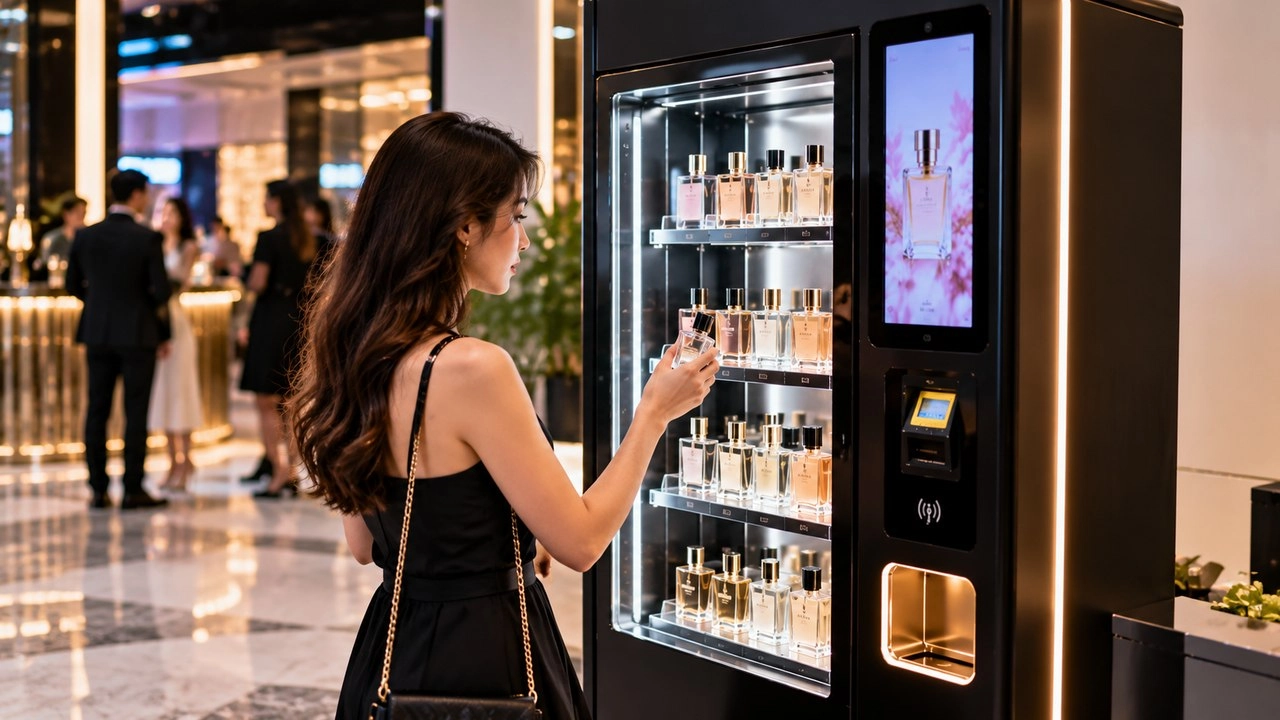
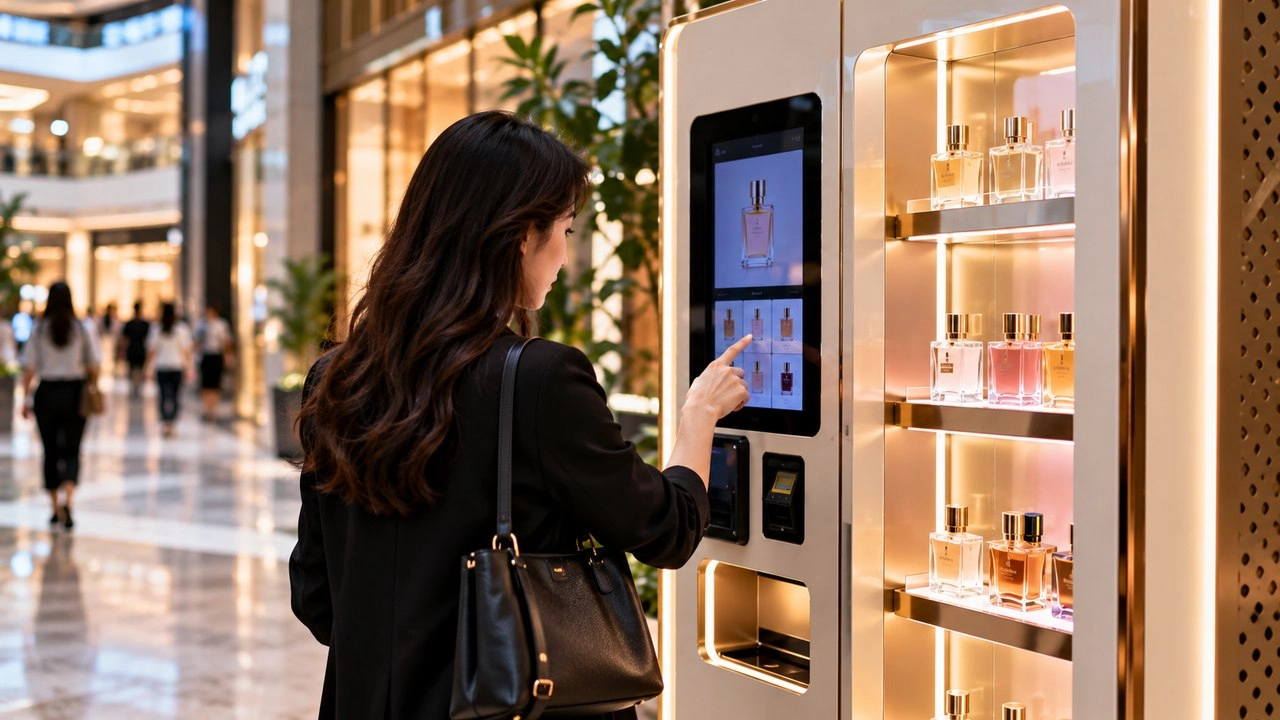
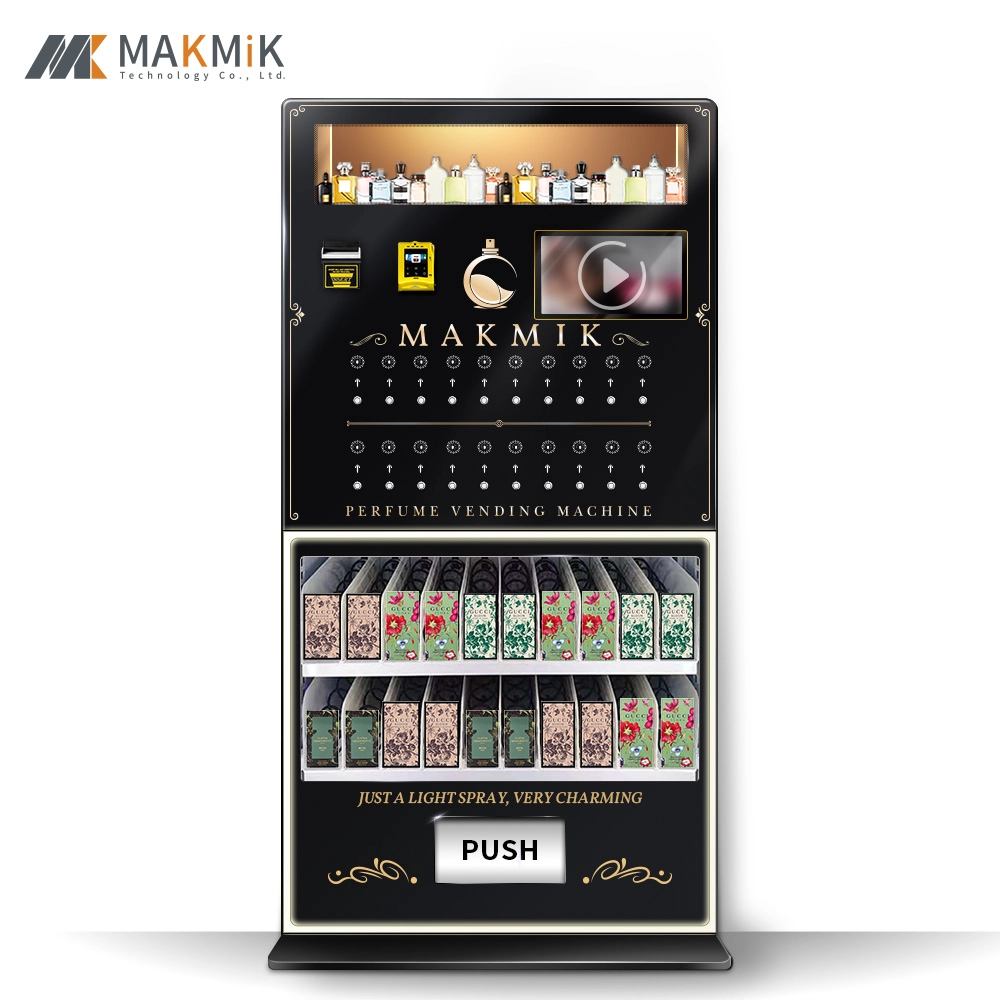
A five-nozzle wall-mounted model, a ten-nozzle model and a standing unit with a display can create different fragrance management and servicing needs. The published MAKMIK models below illustrate genuine machine formats; they do not demonstrate identical tank capacities, remote monitoring capabilities or component interchangeability. Confirm the exact bill of materials and service-access requirements for the equipment ordered.


8. Use a Simple Route Worksheet to Assign Visits and Record Costs
A spreadsheet, maintenance system or approved operations application can hold the route schedule. Start with a small table that can be checked in the field before adding complex optimization tools. The goal is to know which machine needs attention, why, and at what cost.
| Worksheet Field | Example Data Type | Operational Use |
|---|---|---|
| Route / technician | Territory, technician, route date, shift hours | Accountability and labor allocation |
| Machine / venue | Site ID, address, access contact and service window | Confirms the correct visit and entry plan |
| Consumable forecast | Channel ID, estimated remaining stock, reorder flag | Sets refill urgency |
| Visit results | Arrival/departure, stock added, cleaning, faults, follow-up | Confirms productive work |
| Cost and exception | Travel time, staff cost, failed access, emergency visit | Tests route economics |
For a growing operation, common key performance indicators include productive visits per technician hour, refill labor cost per machine, fragrance-channel stockout incidents, unplanned service journeys, and planned versus actual visit time. Review trends together: a lower labor cost is not a win if stockouts and customer complaints rise.
9. Make Route Planning Part of Your Fleet Expansion Decision
Operators sometimes buy the next machine before confirming they can service the existing fleet efficiently. Expansion should therefore use route capacity and documented operating costs as approval criteria. A cluster of accessible machines may be easier to support than the same number scattered across distant venues.
Link the refill schedule to the business plan for scaling from one to twenty perfume vending machines. Before each new installation, estimate the added route minutes, technician coverage, fragrance buffer, payment oversight and downtime response. Include those costs in the site contribution forecast rather than assuming all new sales become incremental profit.
A supplier quote should also describe the exact machine format, consumable service method, supported monitoring features and spare parts. Confirm these requirements for the target market and installation conditions. A system that provides transaction data may still require manual stock reconciliation or manual route planning.
Final Refill Route Checklist Before the Next Dispatch
- Latest machine/channel inventory and abnormal usage reviewed
- Site access confirmed and route order checked
- Required fragrance, authorized tools and approved service parts prepared
- Technician time, travel allowance and emergency capacity budgeted
- Refill and cleaning records assigned to responsible staff
- Stockout causes, failed access and fault escalation documented
- Route cost and next service trigger reviewed after completion
The best refill route is not always the shortest. It is the one that maintains fragrance availability, respects venue access rules and delivers a measurable service cost. Start with trustworthy inventory and route records, validate each visit, and adjust the plan as your machine network evolves.
Planning a Multi-Machine Perfume Vending Operation?
Compare Equipment and Service Requirements Before Scaling
Share your expected machine count, preferred formats, installation markets and fragrance assortment. MAKMIK can help review published equipment options and prepare a project-specific product inquiry.



Facebook
Linkedlin
YouTube
Instagram