






Energy Use and Cost Savings of Multi-Nozzle Fragrance Machines

- Why energy matters in unmanned retail and scent delivery
- Operational cost is still a competitive factor
- Regulatory and sustainability expectations
- How multi-nozzle fragrance vending machines consume energy
- Primary electrical loads
- Idle vs active duty cycles
- Practical energy and cost calculations (verifiable examples)
- Assumptions and methodology
- Example scenarios and calculations
- Where extra costs come from
- Strategies to maximize energy and cost savings
- Design-level choices
- Operational tactics driven by IoT
- Quantifying savings from IoT scheduling
- Implementation considerations and compliance
- Measurement and verification
- Standards and safety
- Real-world case insights and ROI
- Fleet-level perspective
- Customer-facing benefits and tenant relations
- MAKMIK: technology, production capacity, and product fit
- FAQ: Energy Use & Cost Savings for Multi-Nozzle Fragrance Machines
- 1. How much electricity does a commercial multi-nozzle fragrance vending machine use per year?
- 2. Will adding more nozzles increase energy costs proportionally?
- 3. Are IoT and scheduling features worth the extra cost?
- 4. How can I accurately measure a machine’s energy consumption?
- 5. What power-saving design features should I prioritize?
- 6. How do electricity prices affect my decision?
As a consultant with years of experience in smart vending and IoT-enabled retail, I’ve evaluated dozens of deployments of commercial multi-nozzle fragrance vending machines. In this article I summarize how these multi-nozzle scent dispensers consume energy, where the real costs lie, and how operators can reduce operating expenses through design choices, scheduling, and IoT energy management. I also provide concrete example calculations and cite authoritative sources so you can verify the estimates and apply them to your projects.
Why energy matters in unmanned retail and scent delivery
Operational cost is still a competitive factor
Unmanned retail economics often focuses on hardware cost, location revenue, and maintenance. But energy expenses, albeit modest for fragrance-only units, accumulate across fleets and can affect profitability—especially when units include supplementary features (lighting, refrigeration, or heated atomizers). Understanding and minimizing energy use helps preserve margins and supports sustainable operations.
Regulatory and sustainability expectations
Retailers and landlords increasingly expect low-energy operations and environmental transparency. Energy-smart machines align with corporate sustainability targets and may simplify site approvals in malls, airports, and office buildings. For general background on vending machine types and historical context, see the vending machine overview on Wikipedia (https://en.wikipedia.org/wiki/Vending_machine).
How multi-nozzle fragrance vending machines consume energy
Primary electrical loads
Commercial multi-nozzle fragrance vending machines typically draw power from a few subsystems:
- Control electronics and networking (microcontroller, touchscreen, payment terminal, Wi-Fi/4G): low continuous draw, often 3–10 W.
- Dispensing actuators (micro pumps, piezo atomizers, solenoid valves): short-duration higher power per active nozzle (5–30 W depending on technology and whether multiple nozzles fire simultaneously).
- Fans or blowers used to distribute scent: typically 10–40 W when active, depending on airflow design.
- Auxiliary loads (lighting, heaters for viscous formulations, refrigeration if present): variable and can dominate total consumption if included.
Idle vs active duty cycles
The energy profile is determined by duty cycle. A fragrance vending machine that remains idle most of the day but briefly energizes pumps and fans for dispensing will have very low daily kWh consumption. Conversely, units that use continuous aerosolization, heating, or refrigeration can consume orders of magnitude more energy. Designing for event-based dispensing and low-power standby is therefore critical.
Practical energy and cost calculations (verifiable examples)
Assumptions and methodology
I build a conservative, easily reproducible model based on measured power bands. For wider energy cost context, see U.S. Energy Information Administration average electricity price guidance (https://www.eia.gov/tools/faqs/faq.php?id=97&t=3). Use local utility rates to adapt figures.
Example scenarios and calculations
Below are three representative scenarios for a commercial multi-nozzle fragrance vending machine. The model parameters are intentionally simple so you can plug in local numbers.
| Parameter / Scenario | Single-nozzle baseline | Multi-nozzle (6 nozzles) | Multi-nozzle with IoT scheduling |
|---|---|---|---|
| Control electronics (continuous) | 5 W | 5 W | 5 W (with aggressive sleep modes) |
| Dispense event power (typical) | Pump 10 W, fan 15 W (one nozzle) | 2 nozzles average per event: pumps 20 W, fan 20 W | Same as multi-nozzle but fewer events due to optimized scheduling |
| Avg dispense duration | 5 sec / event | 5 sec / event | 5 sec / event |
| Events per day (example) | 400 | 500 | 300 (after demand smoothing & scheduling) |
| Calculated daily energy (kWh) | 0.12 kWh/day | 0.15 kWh/day | 0.09 kWh/day |
| Annual energy | ~44 kWh/year | ~55 kWh/year | ~33 kWh/year |
| Annual cost (@ $0.12/kWh) | $5.28 | $6.60 | $3.96 |
Notes: The model assumes pumps and fans only run during 5-second dispense events, and the rest of time the control electronics remain in low-power standby. Even in higher-traffic locations, annual electricity costs for dedicated fragrance units are typically under $20 per unit unless refrigeration/heating is added.
Where extra costs come from
If your machine includes refrigeration (for fresh goods), heated scent delivery, continuous diffusion, or always-on advertising screens, these features can increase consumption dramatically. For comparison, a small commercial refrigerator may draw several hundred kWh/year, dwarfing the fragrance system’s consumption. Choose feature sets deliberately based on site economics.
Strategies to maximize energy and cost savings
Design-level choices
I recommend these hardware and system design approaches:
- Use efficient piezo or diaphragm micro-pumps instead of power-hungry compressed-air systems.
- Design nozzle arrays to target zones so you can use fewer nozzles per event while covering area effectively.
- Implement low-power standby modes for controllers and communication modules, waking only for scheduled tasks or events.
Operational tactics driven by IoT
IoT connectivity enables demand-driven scheduling and remote monitoring. Practical tactics include:
- Adaptive dispensations: increase frequency during high footfall windows and reduce it at night.
- Remote diagnostics to minimize unnecessary service visits (preventive maintenance based on telemetry saves travel energy and time).
- Firmware updates that improve airflow control algorithms and reduce fan runtime without compromising scent performance.
Quantifying savings from IoT scheduling
Returning to the example table, reducing daily dispense events from 500 to 300 saved ~40% of annual energy in that scenario. The saving in absolute dollars is modest per machine, but across a fleet of 1,000 units, annual electricity savings could exceed $2,600 plus operational efficiencies in maintenance and stock management.
Implementation considerations and compliance
Measurement and verification
I always advise clients to measure actual draw with inline meters for a sample of machines in representative locations for at least one full week. Real-world duty cycles vary with foot traffic, location HVAC interactions, and user behavior. Use meters from reputable manufacturers and log data through your IoT backend for analysis.
Standards and safety
When integrating electronics and connectivity, adhere to relevant safety and EMC standards. For product-level guidance and claims, industry standards bodies such as ISO provide frameworks for quality and environmental management—see ISO standards catalog for relevant certifications (https://www.iso.org/home.).
Real-world case insights and ROI
Fleet-level perspective
From projects I led, the ROI from energy-only optimizations in fragrance-only vending fleets is mild because baseline consumption is already low. The stronger ROI comes from combining energy management with reduced refill trips (telemetry-driven refill optimization), fewer on-site interventions, and improved sales per location due to better scent strategies. Energy savings are therefore one component of a larger operational optimization.
Customer-facing benefits and tenant relations
Store operators and mall managers appreciate low-energy devices that don't add to building load or require special electrical circuits. Machines that demonstrate low kWh/year and remote management capabilities often get preferential placement and longer contract terms.
MAKMIK: technology, production capacity, and product fit
MAKMIK is a high-tech enterprise focused on providing software and hardware solutions for smart vending machines in the new retail field. With more than 10 years of R&D and production experience in the Internet of Things and unmanned retail industries, MAKMIK designs systems with energy-efficient control strategies and robust IoT backends that enable the scheduling and telemetry approaches described above. Learn more at https://www.makmiktech.com/.
Our product range includes perfume vending machines, beauty vending machines, beverage vending machines, and fresh food vending machines. Our perfume vending machines and perfume spray vending machine models are widely adopted by customers globally. MAKMIK has over 300 skilled technical workers and advanced production equipment—fully automatic assembly lines, CNC machining centers, laser cutting machines, and automatic welding equipment. Our production area exceeds 20,000 square meters and we can produce thousands of vending machines per year under strict quality control.
What sets MAKMIK apart in the fragrance vending segment:
- Integrated IoT platforms optimized for low-power operation and remote scheduling, enabling energy and refill optimizations.
- Customizable multi-nozzle hardware that balances coverage and power usage through targeted nozzle firing.
- Proven manufacturing scale and quality control, supporting large rollouts with predictable lead times.
Our vision is to become a global leader in unmanned vending machine solutions, combining hardware efficiency, software intelligence, and manufacturing excellence.
FAQ: Energy Use & Cost Savings for Multi-Nozzle Fragrance Machines
1. How much electricity does a commercial multi-nozzle fragrance vending machine use per year?
Typical fragrance-only units with event-based dispensing usually use between 30 and 80 kWh/year depending on traffic and features. Machines with additional loads (refrigeration, continuous diffusion, large screens) consume substantially more. Measure a pilot unit to get precise local data.
2. Will adding more nozzles increase energy costs proportionally?
Not necessarily. Well-designed multi-nozzle arrays can improve coverage by firing 1–2 nozzles selectively rather than running a single nozzle at higher duty cycles. Energy impact depends on nozzle actuation strategy and whether multiple nozzles fire simultaneously.
3. Are IoT and scheduling features worth the extra cost?
Yes, often. While per-unit energy savings may be modest, IoT adds value through refill optimization, remote health monitoring, and targeted dispensing that increases sales and reduces service costs—yielding better overall ROI.
4. How can I accurately measure a machine’s energy consumption?
Use an inline power meter to log real-time watts and kWh for at least 7 days in a representative location. Correlate logs with event timestamps from the vending machine’s telemetry to separate standby vs active consumption.
5. What power-saving design features should I prioritize?
Prioritize low-power controllers with sleep modes, efficient pumps/atomizers, targeted nozzle arrays, and demand-driven fan control. Avoid unnecessary always-on features like bright screens or continuous diffusion unless required by your use case.
6. How do electricity prices affect my decision?
Higher local electricity prices make energy optimization relatively more valuable, though for fragrance-only units energy is rarely the dominant operational cost. Use local kWh rates to calculate fleet-level savings to assess impact.
If you’d like help modeling your specific sites or evaluating MAKMIK’s perfume vending machine and perfume spray vending machine options for energy and operational performance, contact me or view MAKMIK’s product pages at https://www.makmiktech.com/. I can provide sample energy logs, recommend hardware configurations, and help forecast fleet-level ROI.
Contact & product inquiry: visit https://www.makmiktech.com/ to request technical specifications, production lead times, and pilot program support.
The B2B Buyer’s Guide to small office vending machine
Tips for buy small cigarette vending machine in US
Buying Guide: Choosing the Best Fragrance Vending Machine
What are the application scenarios of beverage vending machine?
FAQ
What is the lead time for manufacturing and delivery?
Lead times vary based on the type and quantity of vending machines ordered, but we strive to deliver within 6-8 weeks from the date of order confirmation.
Can your vending machines be customized?
Yes, we offer customization options to meet specific client requirements, including branding, product selection, and payment systems.
Do you offer warranties on your vending machines?
Yes, we provide warranties on all our vending machines, covering parts and labor for a specified period to ensure peace of mind for our clients.
How do you ensure the quality of your vending machines?
We adhere to strict quality control processes and use high-quality materials and components to ensure durability and reliability.
Are your vending machines energy-efficient?
Yes, our vending machines are designed with energy-efficient technologies to reduce power consumption and minimize environmental impact.
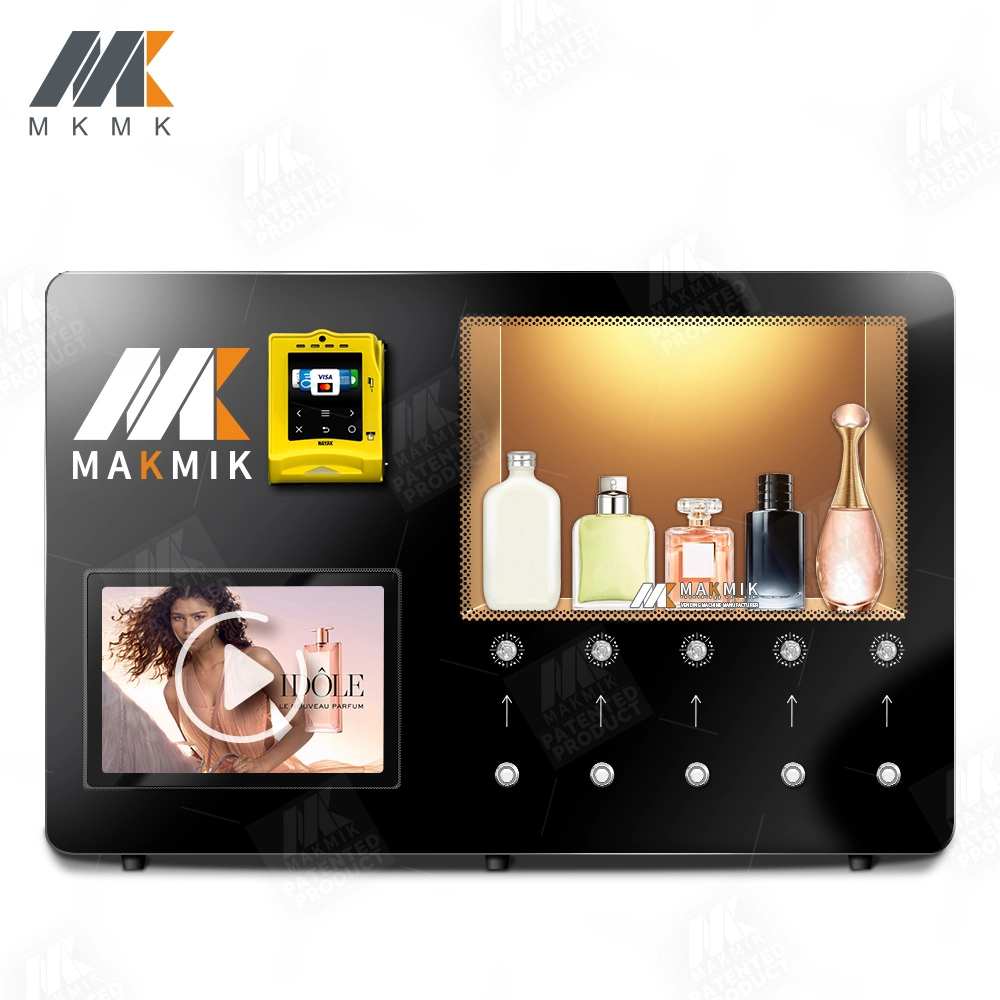
Perfume Spraying Vending Machine Small Perfume Dispenser MK-PM001
Introducing the MAKMIK Small Perfume Spray Vending Machine MK-PM001, designed for ultimate convenience and efficiency. This compact, innovative solution dispenses your favourite fragrances at the touch of a button. Enhance any space with this sleek, user-friendly dispenser. Perfect for offices, retail outlets, and more.
Customisable look and functionality to suit your needs, multiple combination options, fast customer acquisition
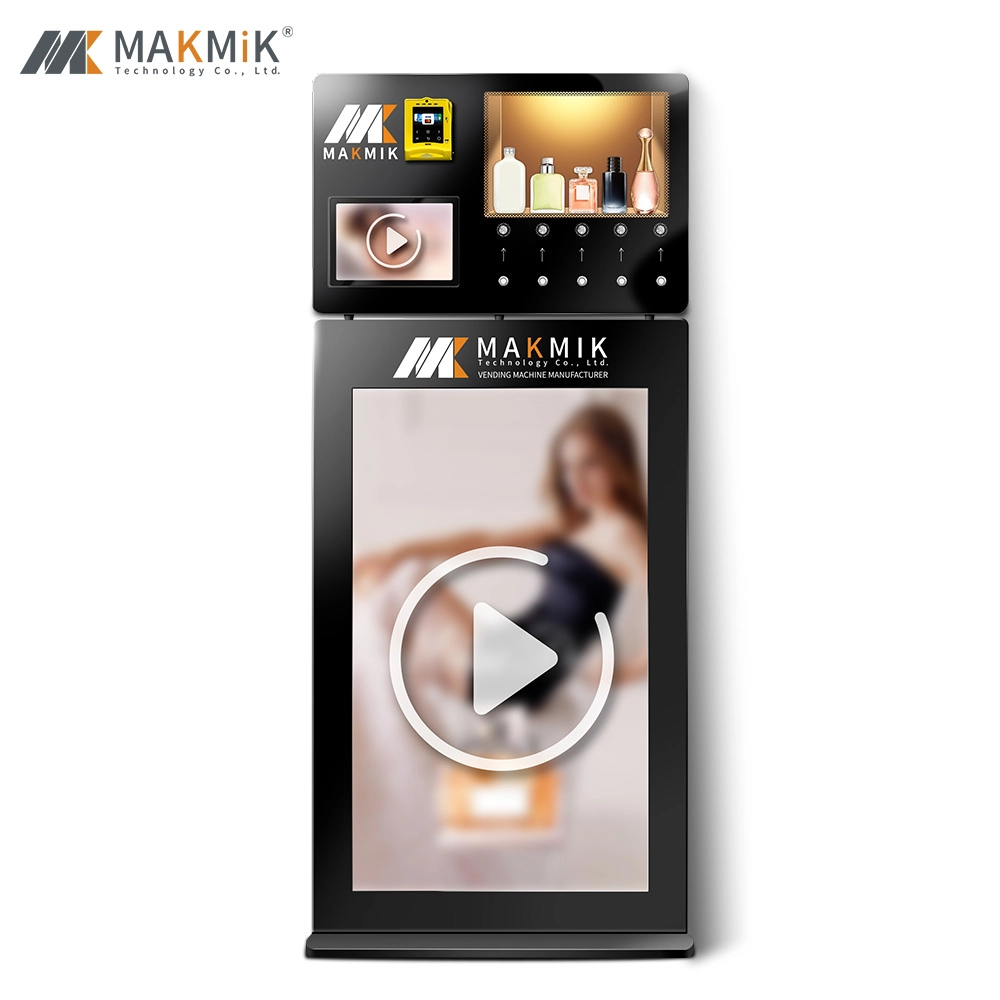
Perfume Vending Machine Split Base Model MK-PMT003
Introducing the MAKMIK Split Base Model MK-PM001, a cutting-edge perfume vending machine designed for modern convenience. This smart vending solution offers seamless operation and a sleek design, bringing the latest in fragrance technology to your fingertips. Elevate your space with the perfume vending machine by MAKMIK.
Customisable appearance and functions according to actual needs, multiple ways to combine, fast customer acquisition.
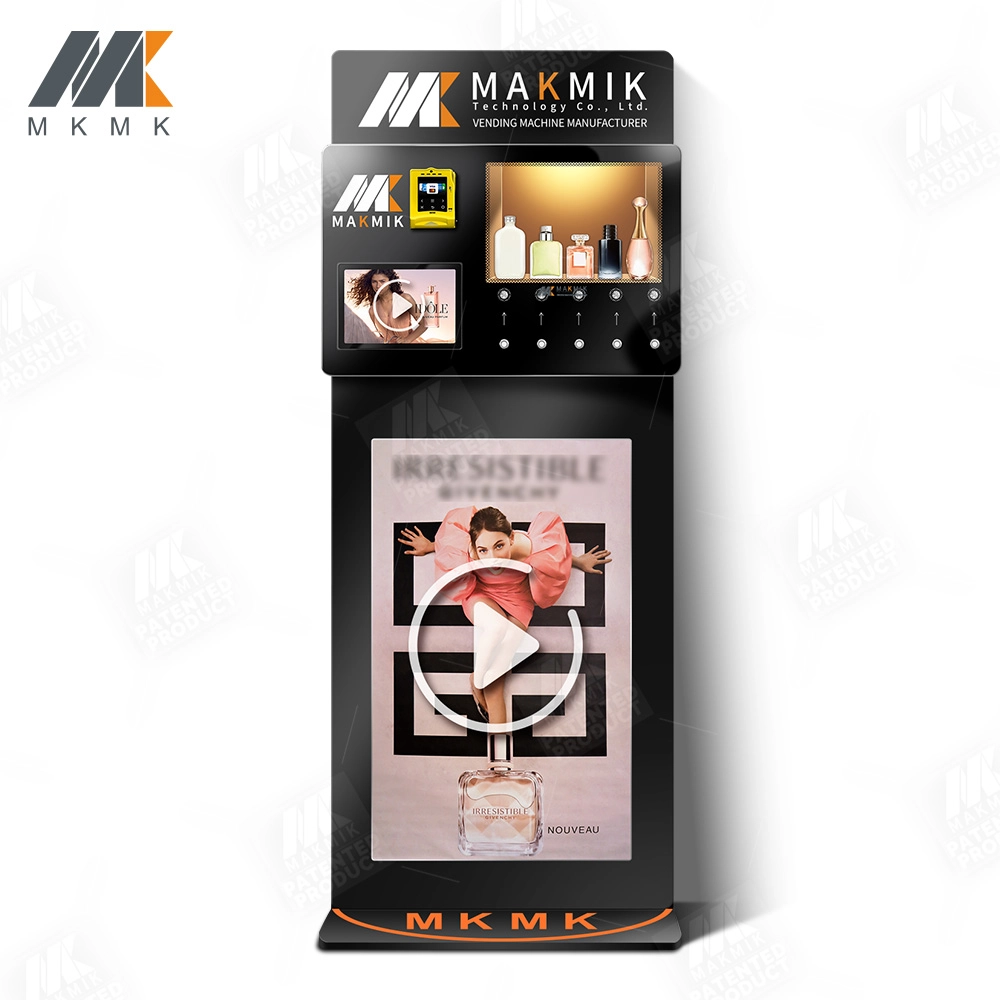
Perfume Vending Machine Wall-Mounted Cabinet Model MK-PM-bs002
Discover the MAKMIK Perfume Vending Machine Wall-Mounted Cabinet Model MK-PM-bs002, an innovative perfume dispenser vending machine. Designed with convenience and style in mind, it integrates seamlessly into any space, offering an unparalleled fragrance experience. It is ideal for enhancing environments with a touch of luxury.
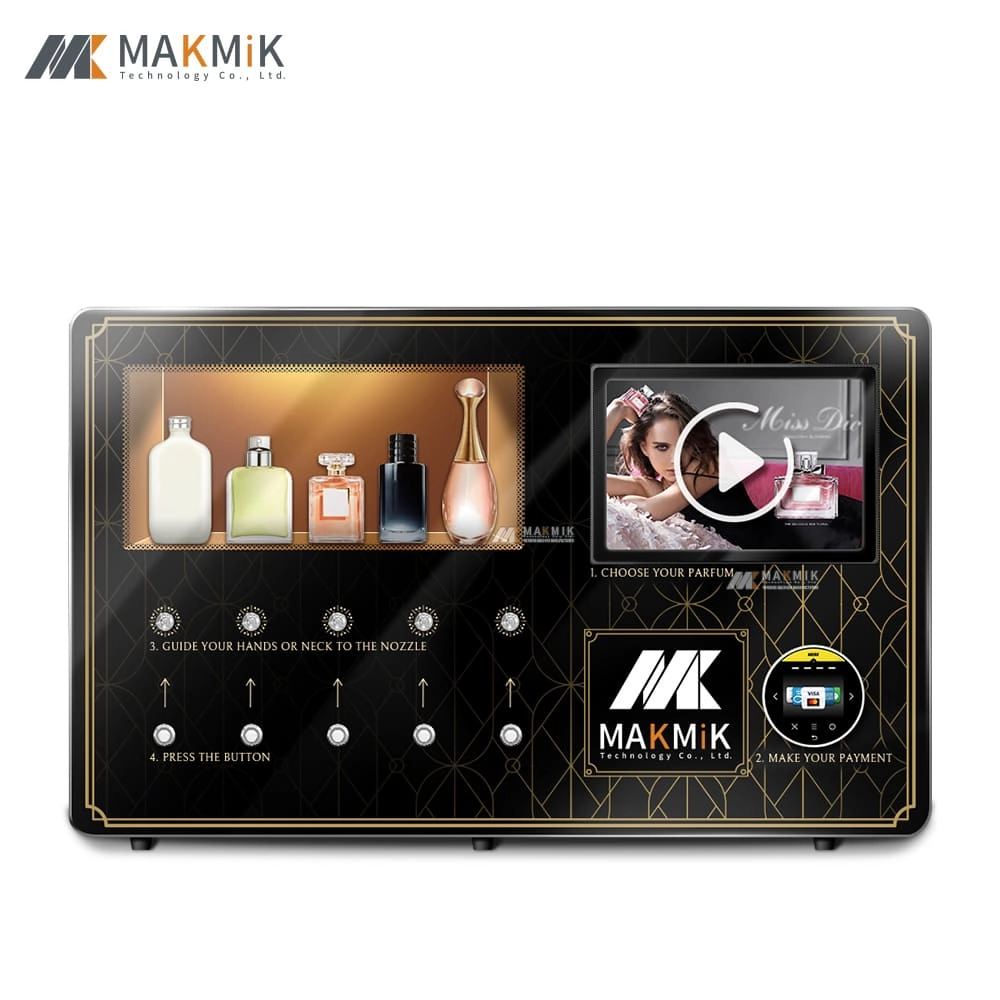
Perfume Vending Machine Small Perfume Dispenser MK-PM002
Introducing the MAKMIK Small Perfume Vending Machine MK-PM002: a compact, innovative solution for fragrance lovers. This sleek, small perfume dispenser offers a convenient and stylish way to access your favourite fragrances anytime, anywhere. Ideal for retail environments and events. Discover the future of fragrance with MAKMIK.
Customisable appearance and functions according to actual needs, multiple combination possibilities, fast customer acquisition.
© 2025 MAKMIK | All Rights Reserved.
Facebook
Linkedlin
YouTube
Instagram