






Installation Tips for Multi-Nozzle Fragrance Vending Units

- Pre-installation assessment and planning
- Understand your site requirements
- Verify structural and accessibility considerations
- Regulatory and safety pre-checks
- Mounting, power, and environmental setup
- Mounting strategies and anchoring
- Power: options, placement, and surge protection
- Environmental controls: ventilation, temperature, and humidity
- Power and mounting comparison
- Nozzle configuration, product handling, and network integration
- Designing nozzle maps and scent zones
- Cartridge and pump selection; refill workflow
- Network connectivity and IoT security
- Testing, validation, maintenance, and compliance
- Commissioning and scent profiling
- Routine maintenance schedule and troubleshooting
- Health, safety, and documentation
- Vendor selection, scalability, and commercial considerations
- Choosing the right supplier
- Scaling deployments and supply chain
- Why MAKMIK is a strong partner
- FAQs
- 1. How close should a fragrance vending unit be to HVAC vents?
- 2. What maintenance frequency do you recommend for multi-nozzle systems?
- 3. Are there regulatory limits on indoor fragrance dispensing?
- 4. How do you prevent cross-contamination between fragrances?
- 5. What security measures are essential for networked vending machines?
- 6. How can I measure scent footprint effectiveness?
I have installed and advised on dozens of deployments of commercial multi-nozzle fragrance vending machines across retail, hospitality, and transit environments. In this article I summarize proven, verifiable installation practices—covering site assessment, mounting and anchoring, electrical and network integration, nozzle mapping and product management, safety and compliance, and post-installation validation—to help operators minimize downtime, ensure scent consistency, and comply with safety and accessibility standards. Wherever appropriate, I reference industry guidance and standards to support best practices.
Pre-installation assessment and planning
Understand your site requirements
Before you bring a unit on site, I always perform a structured walkthrough. Ask: where are high foot-traffic corridors, HVAC outlets, and customer touchpoints? For a commercial multi-nozzle fragrance vending machine, scent dispersion is influenced by local airflow, ceiling height, and proximity to entrances or open windows. Map these variables so nozzle placement and output scheduling can be tuned appropriately.
Verify structural and accessibility considerations
Check wall composition, floor loading, and mounting clearances. If you plan a wall- or column-mounted vending machine, ensure the substrate supports the cabinet weight and user interaction forces. For public locations, confirm ADA-compliant reach and operability: controls, payment readers, and product retrieval should be within accessible ranges. I rely on local building codes and accessibility guidelines to define these clearances; where relevant, consult your local authority.
Regulatory and safety pre-checks
Confirm local regulations that could affect fragrance dispensing (e.g., indoor air quality, aerosol rules, and fire codes). General vending machine background is available for context on operational considerations: Wikipedia - Vending machine. For electrical and machine safety guidance, OSHA provides useful baseline standards for machine guarding and electrical safety: OSHA - Machine Guarding and OSHA - Electrical. Incorporating these references into your plan reduces risk during installation.
Mounting, power, and environmental setup
Mounting strategies and anchoring
Commercial multi-nozzle fragrance vending machines come in freestanding, floor-anchored, and wall-mounted variants. For permanent installations I favor floor-anchored systems bolted to concrete or heavy-duty anchors on composite floors. When anchoring to walls, use through-bolts into structural members. Ensure vibration isolation if adjacent equipment generates oscillation—this protects pumps and nozzle alignment.
Power: options, placement, and surge protection
Plan dedicated circuits when possible. Many fragrance vending units use low-voltage DC for pumps and 110–240V AC for ancillary systems (lighting, heaters). I specify an uninterrupted power supply (UPS) or at minimum surge protection for all networked machines to avoid data corruption and pump misfires during transient events. Follow OSHA electrical standards and consult local electrical codes when designing circuits: OSHA - Electrical.
Environmental controls: ventilation, temperature, and humidity
Fragrance stability and nozzle performance are sensitive to temperature and humidity. Place units away from direct sunlight, HVAC supply vents, or humidifiers. Ideal indoor conditions are typically 15–25°C with relative humidity between 30% and 60%. If your site falls outside these ranges, consider local enclosures with passive ventilation or integrate HVAC balancing to stabilize the micro-environment around the unit.
Power and mounting comparison
| Mount Type | Recommended Substrate | Typical Power Needs | Installation Notes |
|---|---|---|---|
| Freestanding | Level concrete or tile floor | 110–240V AC, optional 12V/24V DC | Easy relocation, needs floor anchors for high-traffic areas |
| Floor-anchored cabinet | Concrete or structural slab | 110–240V AC, UPS recommended | Most stable; best for high-volume retail |
| Wall-mounted | Stud or masonry | Low-voltage DC or hidden AC conduit | Space-saving; requires structural verification |
Nozzle configuration, product handling, and network integration
Designing nozzle maps and scent zones
Commercial multi-nozzle fragrance vending machine setups often support multiple fragrance outputs that can be assigned to specific nozzles. I create a nozzle map aligned with the physical store plan: proximity nozzles for immediate scent experience, and ambient nozzles for diffuse coverage. Use low-flow settings near entrances to prevent overwhelming first-time customers.
Cartridge and pump selection; refill workflow
Choose cartridges and pump mechanisms compatible with your fragrance formulations—ethanol-heavy solutions require compatible seals and tubing. Design a refill workflow that minimizes exposure and cross-contamination: color-code cartridges by fragrance family, maintain batch logs, and use RFID or barcode scanning for inventory control. For hygiene and consistency, implement a single-use nozzle cap policy or cleaning protocol between refills.
Network connectivity and IoT security
Modern fragrance vending units are network-enabled for telemetry, payments, and remote scent scheduling. I follow NIST recommendations when implementing IoT security hygiene—strong device identity, encrypted communication, and over-the-air (OTA) update procedures. See NIST IoT guidance for baseline practices: NIST - Internet of Things (IoT). Isolate vending machines on a segmented VLAN where possible, require mutual TLS for cloud communication, and monitor logs for anomalies.
Testing, validation, maintenance, and compliance
Commissioning and scent profiling
Once installed, I run a commissioning checklist: mechanical fastening, electrical verification, nozzle output calibration, and network registration. Perform a scent profile test at different times and traffic levels to tune output schedules. Keep records of initial baseline readings (e.g., nozzle run-time, pump pressure) to detect drift over time.
Routine maintenance schedule and troubleshooting
Implement preventive maintenance: weekly visual checks, monthly nozzle cleaning or replacement schedule depending on usage, and quarterly pump inspection. Track mean time between failures (MTBF) for components so you can predict spare parts needs. For troubleshooting, common causes of poor spray quality include clogged or misaligned nozzles, degraded tubing, low pump voltage, or incorrect cartridge formulation—address them in that order.
Health, safety, and documentation
Keep material safety data sheets (MSDS/SDS) for every fragrance and ensure staff handling refills have PPE and training. For machine safety and guard compliance refer to OSHA guidelines: OSHA - Machine Guarding. Maintain documentation for installation, electrical certification, and periodic inspections to demonstrate due diligence and for insurance purposes.
Vendor selection, scalability, and commercial considerations
Choosing the right supplier
When evaluating vendors for a commercial multi-nozzle fragrance vending machine, I score proposals on technical fit, service-level agreements (SLA), spare parts availability, and cybersecurity posture. Ask vendors for references, uptime statistics, and firmware update policies. Compare warranties and on-site service options, because rapid parts replacement materially affects revenue and customer satisfaction.
Scaling deployments and supply chain
For multi-site rollouts, standardize unit configuration (nozzle map, scheduling templates, and network profiles) to streamline deployment and remote management. Build redundancy into the supply chain for cartridges and critical components; I recommend keeping a 3–6 month parts buffer based on projected throughput. Where possible, use batch-tracked consumables for recall traceability.
Why MAKMIK is a strong partner
MAKMIK is a high-tech enterprise focusing on providing software and hardware solutions for smart vending machines in the new retail field. It has more than 10 years of R&D and production experience in the Internet of Things and unmanned retail industries. Our products cover perfume vending machines, beauty vending machines, beverage vending machines, and fresh food vending machines. Our perfume vending machines are loved by customers all over the world.
We have more than 300 skilled technical workers and are equipped with advanced production equipment, including fully automatic assembly lines, CNC machining centers, laser cutting machines, and automatic welding equipment. Our production capacity covers an area of more than 20,000 square meters and can produce thousands of vending machines each year while adhering to strict quality control standards. Our vision is to become a global leader in unmanned vending machine solutions.
Specifically for fragrance vending, MAKMIK offers robust hardware (including modular multi-nozzle manifolds and precision micro-pumps), cloud-based management software for scheduling and telemetry, and global after-sales support. Our perfume vending machine and perfume spray vending machine product lines are engineered for consistent output, easy maintenance, and strong IoT security practices—helping operators scale deployments with confidence. Visit our website to learn more: https://www.makmiktech.com/.
FAQs
1. How close should a fragrance vending unit be to HVAC vents?
Avoid placing the unit directly under or in front of HVAC supply vents. If a vent is within 1–2 meters, expect rapid dilution or directional scent drift. I recommend at least 2–3 meters from major supply diffusers; for precise siting, perform a smoke or fog test to observe airflow patterns during commissioning.
2. What maintenance frequency do you recommend for multi-nozzle systems?
Weekly visual checks, monthly nozzle cleaning or swap (depending on throughput), and quarterly pump and tubing inspections. High-use locations may need more frequent nozzle replacements. Track usage data to refine schedules.
3. Are there regulatory limits on indoor fragrance dispensing?
Regulations vary by jurisdiction. While there are no universal limits specific to fragrance vending, indoor air quality ordinances and building codes may apply. I advise retaining SDS documents and checking local rules; OSHA guidance on machine and electrical safety is a useful baseline: OSHA.
4. How do you prevent cross-contamination between fragrances?
Use dedicated tubing and cartridges per fragrance family, and adopt a cleaning or single-use cap protocol at each refill. If switching formulations in the same pump, perform a validated flushing routine and log batch IDs.
5. What security measures are essential for networked vending machines?
Implement device authentication, encrypted communications (TLS), network segmentation (VLANs), secure OTA updates, and logging/monitoring. Refer to NIST IoT guidance for device baseline controls: NIST - Internet of Things (IoT).
6. How can I measure scent footprint effectiveness?
Combine customer feedback with objective measurements: anemometer profiles for airflow and periodic air-sampling if precise concentrations are required. For retail ROI, correlate scent campaigns with dwell time and conversion metrics from point-of-sale or analytics platforms.
If you want assistance selecting, installing, or scaling commercial multi-nozzle fragrance vending machine deployments, I can help assess sites, design nozzle maps, and create maintenance and security plans. For turnkey solutions and product details, contact MAKMIK or view our perfume vending machine product lines at https://www.makmiktech.com/. Reach out for a site assessment or quote—we offer deployment packages that include commissioning, training, and spare parts planning.
Custom cosmetic vending machine for sale Manufacturers and Suppliers in France
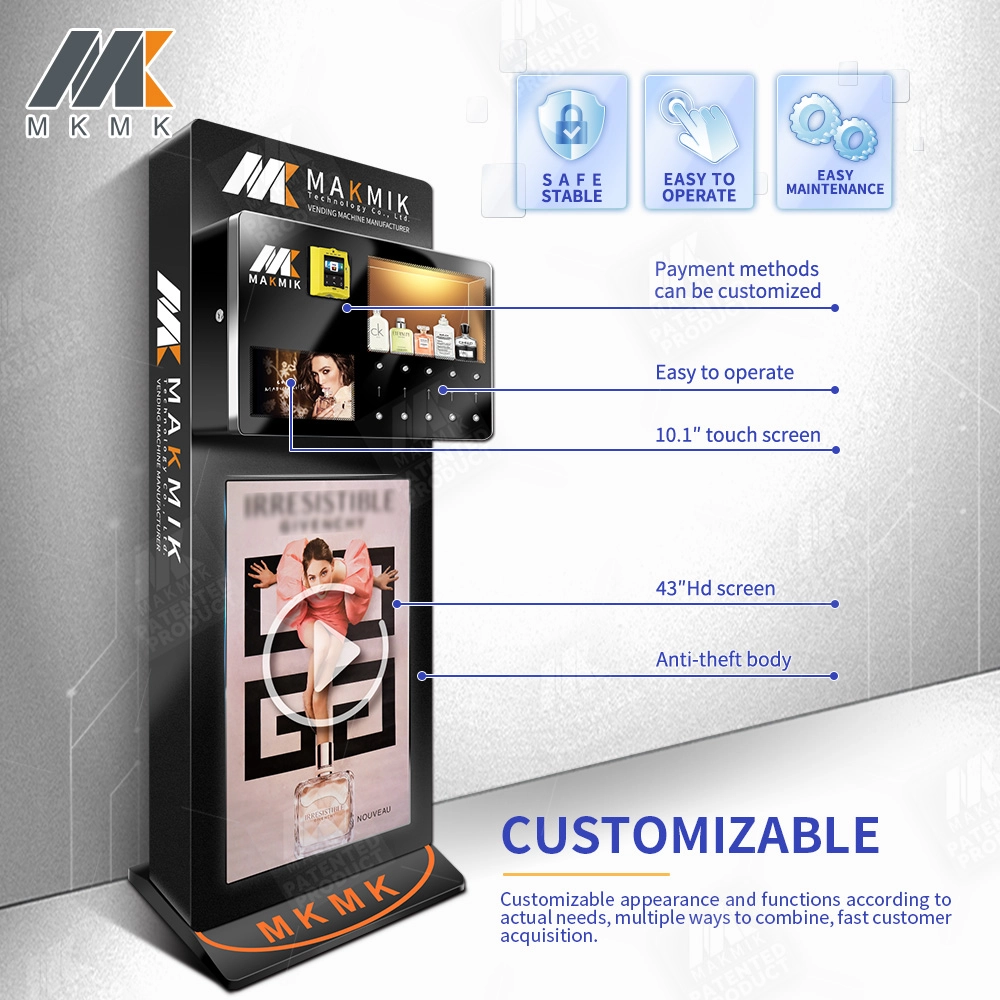
Wall-Mounted Perfume Vending Machine MK-PM-BS002 — Compact, Smart Retail Solution
Fragrance Vending Machine ROI: Calculations and Profit Tips
Why choose MAKMIK as your vending machine beauty supplier
FAQ
Do you provide installation and maintenance services?
Yes, we offer comprehensive installation and maintenance services to ensure your vending machines operate smoothly.
Are your vending machines energy-efficient?
Yes, our vending machines are designed with energy-efficient technologies to reduce power consumption and minimize environmental impact.
How can I monitor and manage my vending machines remotely?
Our vending machines come with advanced telemetry systems that allow remote monitoring and management through a web-based platform or mobile app.
Do you offer warranties on your vending machines?
Yes, we provide warranties on all our vending machines, covering parts and labor for a specified period to ensure peace of mind for our clients.
Can your vending machines be customized?
Yes, we offer customization options to meet specific client requirements, including branding, product selection, and payment systems.
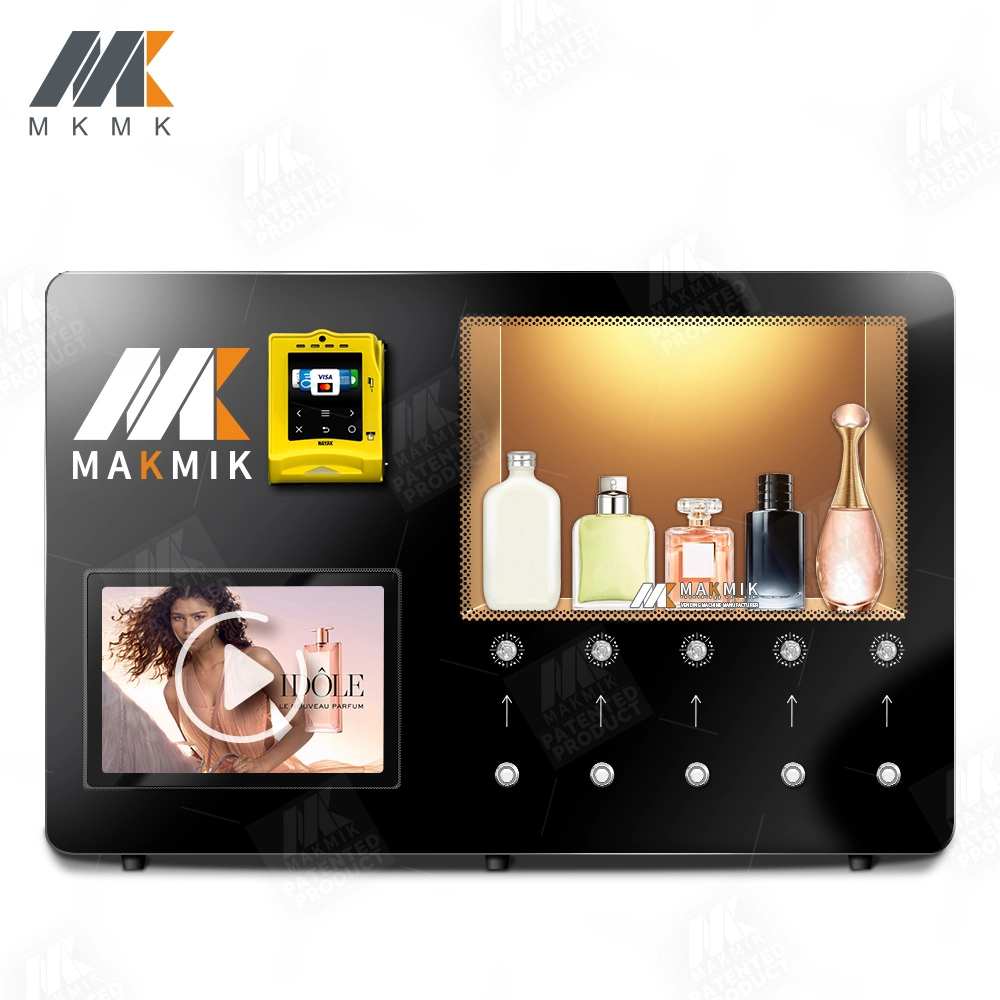
Perfume Spraying Vending Machine Small Perfume Dispenser MK-PM001
Introducing the MAKMIK Small Perfume Spray Vending Machine MK-PM001, designed for ultimate convenience and efficiency. This compact, innovative solution dispenses your favourite fragrances at the touch of a button. Enhance any space with this sleek, user-friendly dispenser. Perfect for offices, retail outlets, and more.
Customisable look and functionality to suit your needs, multiple combination options, fast customer acquisition
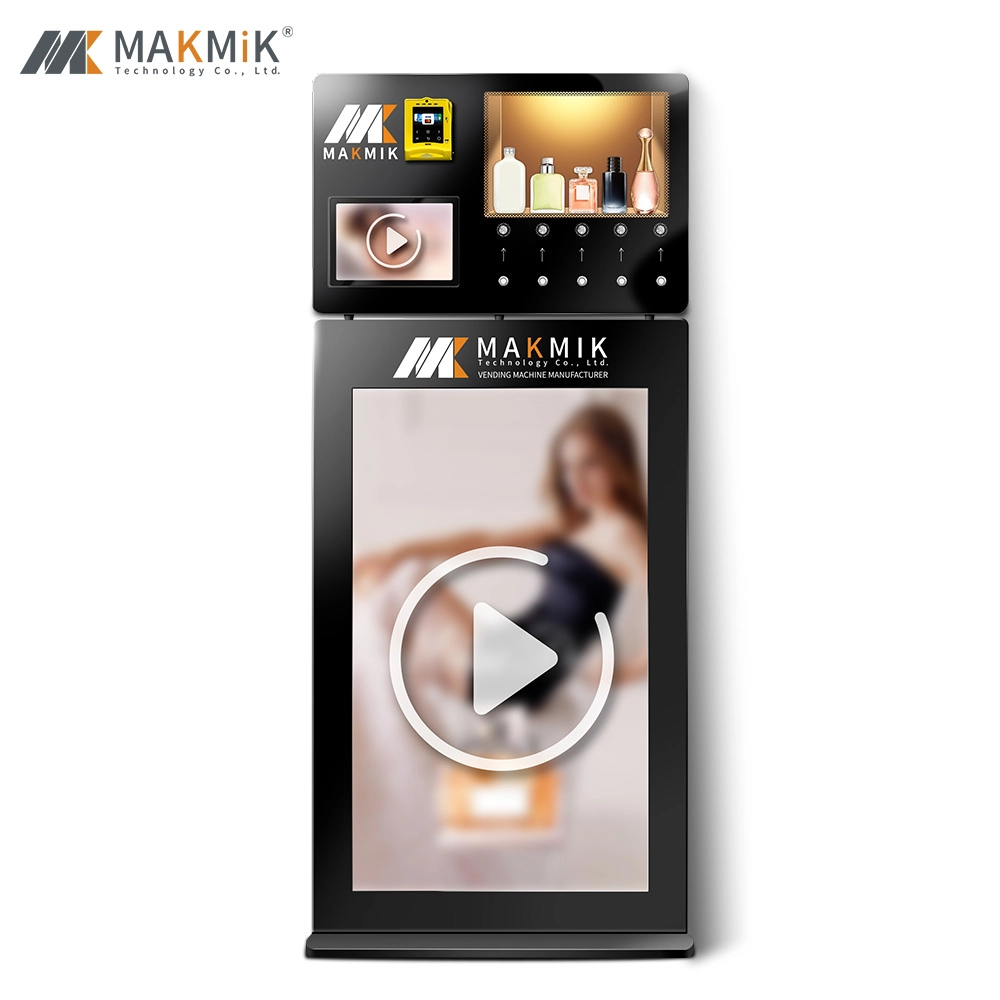
Perfume Vending Machine Split Base Model MK-PMT003
Introducing the MAKMIK Split Base Model MK-PM001, a cutting-edge perfume vending machine designed for modern convenience. This smart vending solution offers seamless operation and a sleek design, bringing the latest in fragrance technology to your fingertips. Elevate your space with the perfume vending machine by MAKMIK.
Customisable appearance and functions according to actual needs, multiple ways to combine, fast customer acquisition.
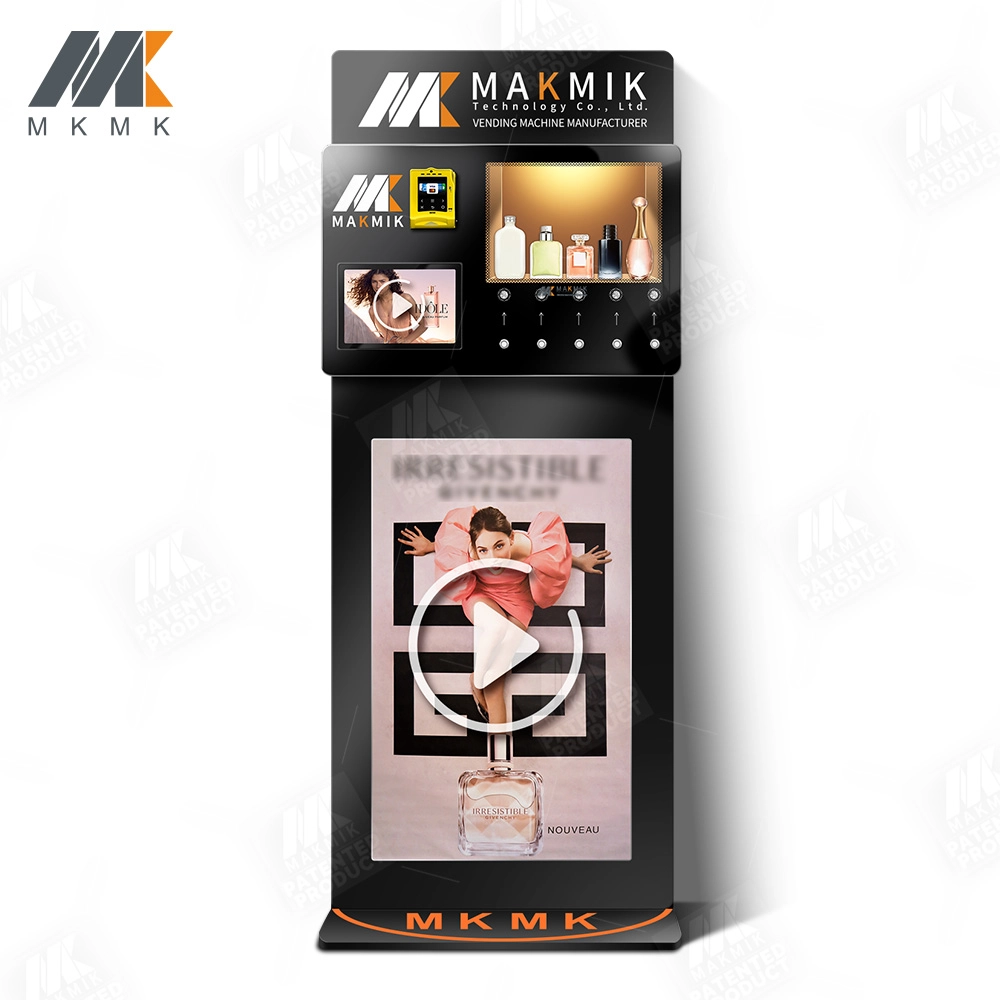
Perfume Vending Machine Wall-Mounted Cabinet Model MK-PM-bs002
Discover the MAKMIK Perfume Vending Machine Wall-Mounted Cabinet Model MK-PM-bs002, an innovative perfume dispenser vending machine. Designed with convenience and style in mind, it integrates seamlessly into any space, offering an unparalleled fragrance experience. It is ideal for enhancing environments with a touch of luxury.
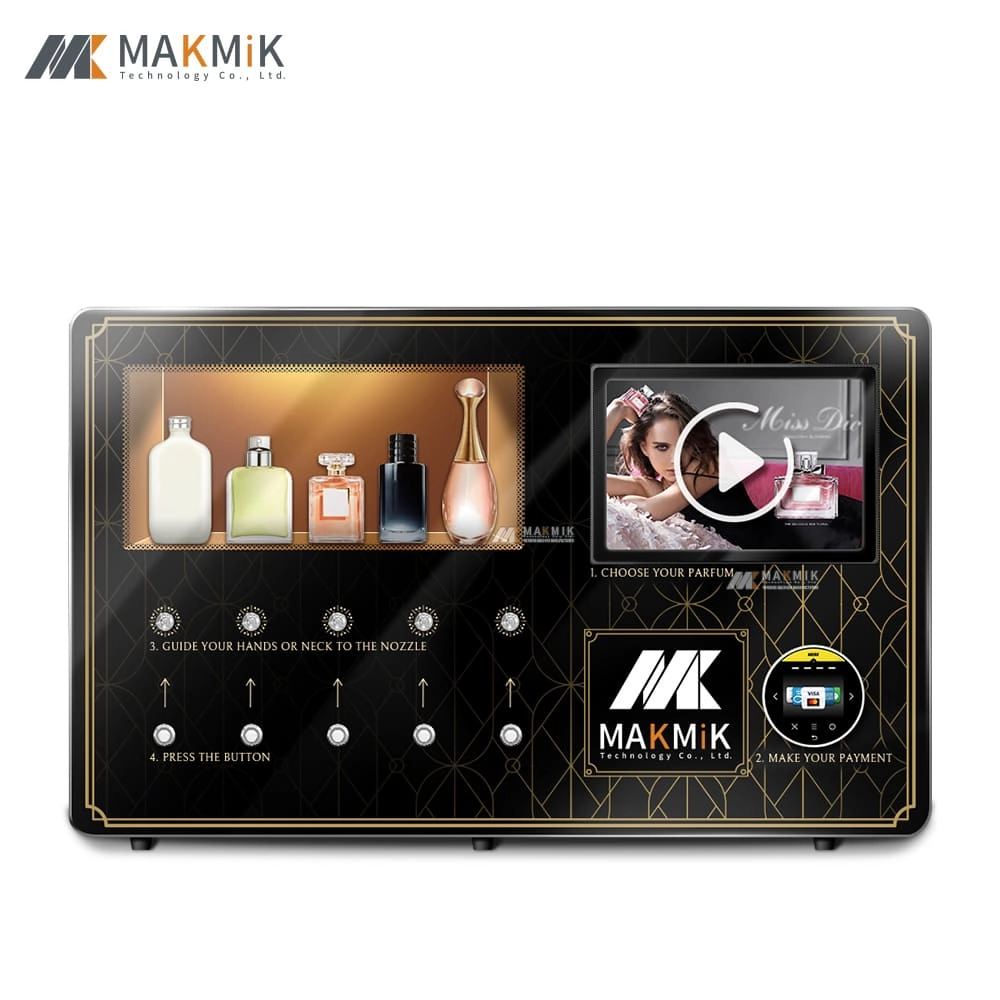
Perfume Vending Machine Small Perfume Dispenser MK-PM002
Introducing the MAKMIK Small Perfume Vending Machine MK-PM002: a compact, innovative solution for fragrance lovers. This sleek, small perfume dispenser offers a convenient and stylish way to access your favourite fragrances anytime, anywhere. Ideal for retail environments and events. Discover the future of fragrance with MAKMIK.
Customisable appearance and functions according to actual needs, multiple combination possibilities, fast customer acquisition.
© 2025 MAKMIK | All Rights Reserved.
Facebook
Linkedlin
YouTube
Instagram