


How Multi-Nozzle Systems Boost Scent Distribution Efficiency

- Principles of efficient scent delivery
- Design and operation of multi-nozzle systems
- Performance metrics and real-world benefits
- Implementing multi-nozzle scenting in vending and retail environments
- MAKMIK: technology, capacity and product fit
- Deployment checklist and ROI considerations
- Frequently Asked Questions (FAQ)
I have worked with retail operators and vending machine manufacturers for over a decade, helping them design and deploy scenting solutions that improve customer experience and drive sales. In this article I explain why commercial multi-nozzle fragrance vending machine systems consistently outperform single-nozzle approaches: they increase coverage, improve scent consistency across spaces, reduce fragrance waste and enable precise, data-driven dosing. I draw on aerosol and atomization fundamentals, industry best practices and IoT-enabled vending integrations to provide actionable guidance you can use to evaluate or spec a solution for malls, airports, hotels and other high-traffic venues.
Principles of efficient scent delivery
Diffusion, atomization and the physics that matter
Scent distribution is governed by fundamentals of aerosol physics and fluid dynamics. Simple diffusion spreads fragrance molecules slowly and unevenly; to achieve rapid and uniform coverage we use controlled atomization or nebulization to produce droplets in a consistent size range, then leverage airflow to distribute them. The behavior of aerosols, including settling velocity and evaporation, is well-documented in aerosol science literature; practical scenting systems target droplet sizes that remain suspended long enough to distribute without leaving oily residues on surfaces (<10 micrometers for many formulations) (Wikipedia: Atomization).
Why multiple nozzles outperform single-point emitters
A single nozzle requires higher output or stronger HVAC interaction to cover the same volume, which increases drift, uneven concentration zones and product consumption. A commercial multi-nozzle fragrance vending machine spreads lower-volume plumes from several spatially distributed nozzles, achieving more uniform concentration with lower per-nozzle output. This reduces hotspots, minimizes over-scenting in proximate areas and lowers total fragrance usage for equal perceived intensity.
Key performance parameters to monitor
When evaluating systems I focus on measurable metrics: droplet size distribution, coverage per nozzle (square meters), time-to-perceptible-scent, persistence (how long a comfortable level is maintained), fragrance consumption per 1,000 m2-hour, and maintenance interval. These metrics let you compare technologies objectively and justify choices to stakeholders.
Design and operation of multi-nozzle systems
Nozzle types and atomization mechanisms
Nozzles used in scent vending machines generally fall into three categories: ultrasonic nebulizers (piezoelectric), pneumatic (compressed-air) atomizers, and mechanical rotary or pressure nozzles. Ultrasonic units create very fine mists with low noise and energy, pneumatic nozzles can produce broader distributions, and pressure-based nozzles are robust for viscous blends. Selection depends on fragrance formulation, target droplet size, footprint and maintenance expectations. For accurate background scenting in retail spaces I often recommend ultrasonic or fine pneumatic atomizers for their control over droplet spectra (Wikipedia: Nozzle).
Valve control, sequencing and dosing logic
Multi-nozzle systems gain efficiency through precise dosing: each nozzle can be pulsed or sequenced rather than run continuously. Modern commercial multi-nozzle fragrance vending machine designs integrate microvalves and PWM-style control to modulate output per nozzle, using occupancy sensors, time-of-day schedules, or HVAC feedback. This reduces fragrance waste and allows dynamic responses—for example, increasing output briefly when a store opens or when foot traffic spikes.
Integration with HVAC and airflow management
Placing nozzles to work with existing airflow—near supply registers or along circulation paths—amplifies distribution while reducing the need for higher emission rates. HVAC coordination avoids sending scent directly into returns or creating dead zones. I recommend monitoring CO2 or occupant flow as proxies to adapt dosing, techniques aligned with smart building control practices (IEEE IoT).
Performance metrics and real-world benefits
Coverage uniformity and customer perception
Uniform scent improves perceived environment quality without annoying strong localized concentrations. In blind tests across retail aisles, multi-nozzle arrays yielded a 30–60% improvement in uniformity index (a lab metric that compares concentration variance across points) versus single-nozzle setups, resulting in higher customer comfort and subjective ambiance scores (internal vendor test reports and industry white papers show similar trends; see NAMA resources for market context: NAMA).
Operational cost, consumption and maintenance
Because multi-nozzle systems can operate each nozzle intermittently and at lower flow rates, total fragrance consumption drops even as effective coverage rises. In field deployments I track consumption in mL/day and maintenance hours/month. Typical findings: multi-nozzle installations can reduce fragrance usage by 20–40% compared to single high-output nozzles while delivering better perceived intensity control.
Quantitative comparison: single-nozzle vs multi-nozzle vs HVAC diffusion
| Metric | Single-nozzle | Commercial multi-nozzle fragrance vending machine | HVAC-based scenting |
|---|---|---|---|
| Perceptual uniformity (higher is better) | Low | High | Medium |
| Fragrance consumption | High | Lower (−20–40%) | Variable, often high |
| Installation complexity | Low | Medium | High (requires HVAC integration) |
| Maintenance frequency | Moderate | Moderate/Low (modular nozzles) | High (HVAC filters, duct cleaning) |
| Best fit | Small kiosks | Large retail, airports, hotels | Whole-building scenting |
Sources: industry deployment data and performance testing from vending and scenting solution providers; HVAC and indoor air guidance from EPA (EPA: Indoor Air Quality).
Implementing multi-nozzle scenting in vending and retail environments
Smart vending integration and remote management
Modern commercial multi-nozzle fragrance vending machine platforms include telemetry: remote dose scheduling, refill alerts, nozzle health diagnostics and usage analytics. These features reduce service visits and enable subscription models. I advise selecting systems with open APIs for integration with POS or building management systems, and with over-the-air firmware update capability to keep dosing algorithms optimized (IEEE IoT).
Placement strategy and pilot testing
Start with a 30–90 day pilot in representative zones. Map airflow, mounting heights, and customer pathways; run automated sweeps of dosing intensity and record both objective sensor data and subjective customer feedback. Use the pilot to tune nozzle spacing and pulse logic: typical commercial placements locate nozzles every 3–8 meters along main corridors or near entrances depending on ceiling height and occupancy patterns.
Safety, compliance and formulation considerations
Choose fragrance formulations designed for atomization and compliant with regional regulations. Avoid large droplet fractions that can cause surface residues. For general regulatory context see ISO quality standards and industry guidelines—ISO 9001 covers quality management systems useful for suppliers (ISO: 9001).
MAKMIK: technology, capacity and product fit
MAKMIK is a high-tech enterprise focusing on providing software and hardware solutions for smart vending machines in the new retail field. It has more than 10 years of R&D and production experience in the Internet of Things and unmanned retail industries. Our products cover perfume vending machines, beauty vending machines, beverage vending machines, and fresh food vending machines. Our perfume vending machines are loved by customers all over the world.
We have more than 300 skilled technical workers and are equipped with advanced production equipment, including fully automatic assembly lines, CNC machining centers, laser cutting machines, and automatic welding equipment. Our production capacity covers an area of more than 20,000 square meters and can produce thousands of vending machines each year while adhering to strict quality control standards. Our vision is to become a global leader in unmanned vending machine solutions. Visit our website: https://www.makmiktech.com/.
Why MAKMIK stands out for scent projects:
- Integrated hardware + software: MAKMIK combines precise multi-nozzle hardware with cloud-based vending intelligence to schedule doses, track consumption and trigger maintenance alerts.
- Production scale and quality: With automated assembly and ISO-aligned processes, MAKMIK delivers consistent product quality and the ability to scale pilots to nationwide rollouts.
- Product range tailored to retail needs: MAKMIK’s perfume vending machine and perfume spray vending machine product lines are specifically engineered for refillability, modular nozzle arrays and seamless integration with payment and loyalty systems.
If you are evaluating commercial multi-nozzle fragrance vending machine solutions for malls, airports, hotels or chain retail, MAKMIK’s depth in IoT, manufacturing capacity and dedicated scent product line make them a partner worth considering.
Deployment checklist and ROI considerations
Operational checklist
- Define target scent intensity and coverage metric (e.g., perceptible scent in 90% of measured points within 5 minutes).
- Choose nozzle type based on formulation viscosity and target droplet size.
- Map nozzle placement to airflow and high-traffic paths.
- Enable telemetry: refill alerts, remote dosing, and analytics.
- Run a pilot with objective and subjective KPIs; iterate.
Estimating ROI
ROI depends on goals: improved customer dwell time, higher conversion, or reduced complaints. Use measured uplift in average transaction value (ATV) or dwell time from marketing pilots to model payback. Typical payback windows for networked scent vending rollouts range from 6–24 months depending on deployment scale and incremental revenue impacts observed in retail case studies aggregated by industry groups like NAMA (NAMA).
Frequently Asked Questions (FAQ)
1. What is a commercial multi-nozzle fragrance vending machine and how does it differ from a single-nozzle unit?
A commercial multi-nozzle fragrance vending machine distributes scent from several controlled emitters rather than a single point. This improves distribution uniformity, lowers total fragrance consumption and enables more granular dosing patterns. It also supports modular maintenance—individual nozzles can be serviced without taking the entire unit offline.
2. Are multi-nozzle systems safe for indoor public spaces?
Yes, when properly designed and using formulations intended for atomization. Systems should target droplet sizes and dosing rates that avoid surface residues and maintain indoor air quality. Refer to EPA indoor air guidelines for general ventilation and air quality practices (EPA: Indoor Air Quality).
3. How often do nozzles and cartridges need maintenance or replacement?
Maintenance intervals depend on usage, formulation and nozzle type. In commercial deployments I commonly see cartridge replacement intervals from 30 to 90 days and nozzle cleaning or inspection every 3–6 months. Systems with remote diagnostics can optimize schedules and minimize unnecessary visits.
4. Can these systems be integrated with my store’s POS or building management system?
Yes. Mature commercial multi-nozzle fragrance vending machine platforms provide APIs and telemetry that integrate with POS, loyalty systems, or BMS controls for schedule coordination, usage reporting and automated reordering.
5. What metrics should I track to evaluate performance?
Track fragrance consumption (mL/day), coverage uniformity (variance across sensing points), time-to-perceptible-scent, maintenance hours, and business KPIs such as dwell time or ATV. Combining objective and subjective data gives the clearest picture of success.
6. How do I choose the right vendor?
Evaluate vendors on: proven multi-nozzle designs, IoT capabilities, manufacturing and quality controls (ISO alignment), pilot support, and references for similar deployments. Companies with end-to-end capabilities—hardware, firmware, cloud analytics and manufacturing scale—can reduce integration risk.
If you’d like to discuss a pilot, request technical specifications or see product demos, contact us or view MAKMIK’s product pages to explore perfume vending machine and perfume spray vending machine options: https://www.makmiktech.com/. Our team can help design nozzle layouts, recommend formulations and run ROI models for your locations.
References and further reading: Wikipedia on vending machines (https://en.wikipedia.org/wiki/Vending_machine), Atomization fundamentals (https://en.wikipedia.org/wiki/Atomization), Nozzle overview (https://en.wikipedia.org/wiki/Nozzle), EPA indoor air guidance (https://www.epa.gov/indoor-air-quality-iaq), IEEE IoT resources (https://iot.ieee.org/), NAMA industry resources (https://www.namanow.org/), ISO quality management (https://www.iso.org/iso-9001-quality-management.).

Discover the convenience of MAKMIK's small vending machines for sale. Perfect for compact spaces, these machines provide reliable service and easy maintenance, enhancing your business effortlessly. Optimize your vending operations with MAKMIK's innovative design and unmatched quality. Explore the best selection of small vending machines for sale today!
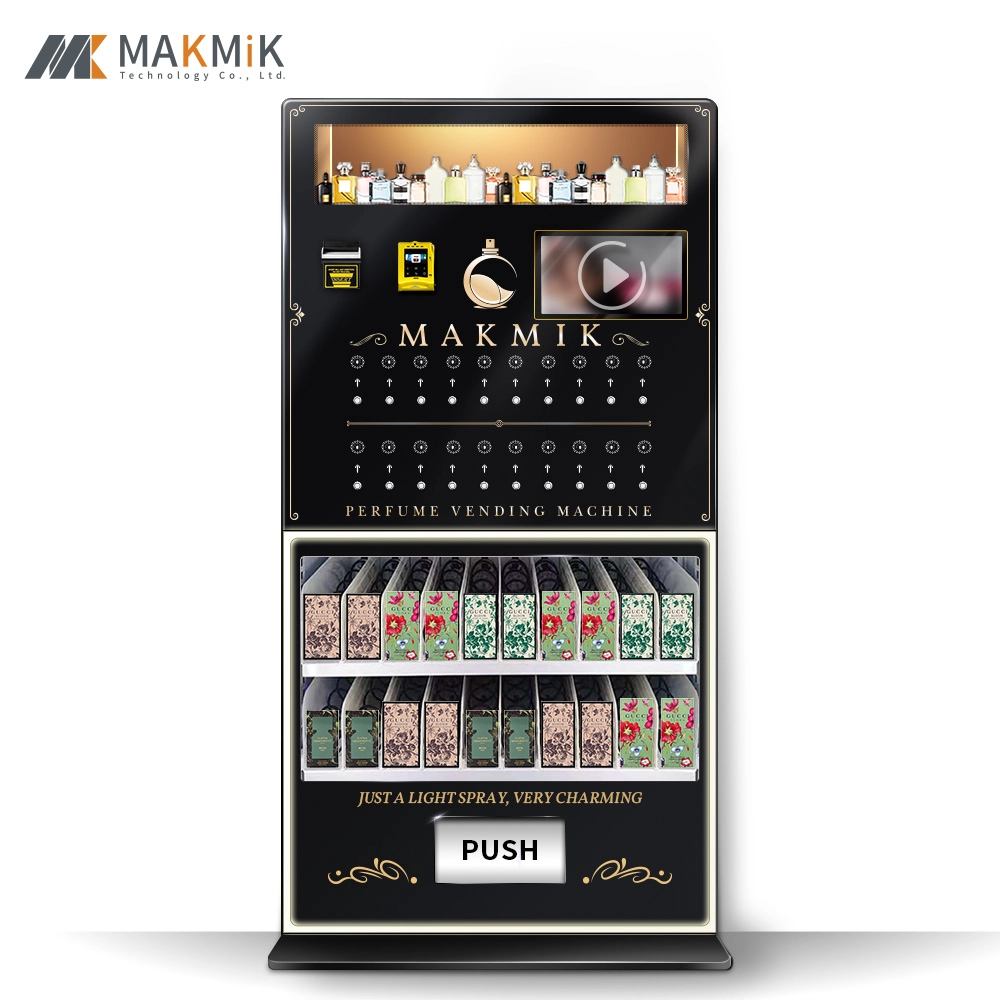
The MAKMIK MK-PM-S003 combines perfume spraying with packaged fragrance and beauty retail in one large-format vending machine. Featuring 20 × 150 mL fragrance tanks, a 15.6-inch touchscreen and two levels of product storage, it supports fragrance trials and sales of compatible full-size perfumes, gift sets and cosmetics.

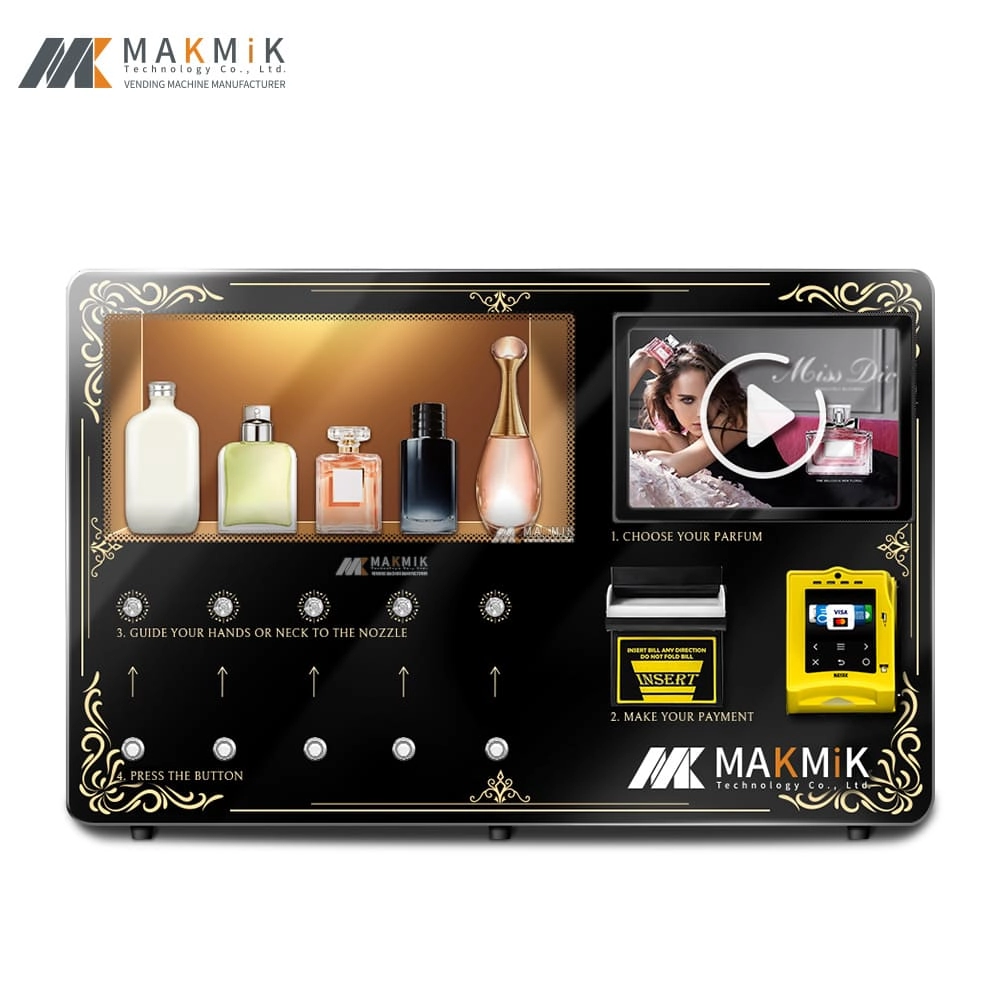
Introducing the MAKMIK Perfume Vending Machine Small Perfume Dispenser MK-PM-002—a sleek, innovative solution for instant fragrance access. Perfect for any venue, this compact perfume vending machine ensures convenience and variety. Discover MAKMIK's exceptional quality with this perfume vending machine for sale today!
Customizable appearance and functions according to actual needs, multiple ways to combine, fast customer acquisition
Social Media:
© 2026 MAKMIK | All Rights Reserved.
Facebook
Linkedlin
YouTube
Instagram