


How to start the Perfume Vending Machine business in 2026 ?

- Unmanned Retail and Vending Market Trends
- Consumer demand and the opportunity for on-the-go fragrance
- Technology driving modern vending: IoT, payments, and AI
- Regulatory context affecting fragrance vending
- How to Start a Perfume Vending Machine Business
- Business planning and model selection
- Selecting machine type and supplier
- Permits, safety, and fragrance regulations
- Operations, Supply Chain and Marketing
- Inventory sourcing and supplier relationships
- Location strategy and partnership development
- Marketing, UX and data analytics
- Financial Planning, ROI and Scaling
- Cost breakdown and example ROI model
- Scaling, multi-site operations and franchising
- Maintenance, warranties and service-level agreements
- Practical Checklist and Launch Plan
- Pre-launch checklist
- Launch and optimization
- Conclusion
- Frequently Asked Questions (FAQ)
- Is a permit required to operate a perfume vending machine?
- Are perfumes sold in vending machines subject to special regulations?
- How much can I expect to sell from one machine?
- What maintenance is required for perfume vending machines?
- Where can I get compliant fragrance products?
Start a Perfume Vending Machine business with a focus on high-traffic urban locations (malls, airports, transit hubs, hotels) and smart retail technology. This guide covers market signals for unmanned retail, product selection, regulatory requirements for fragrances (US FDA, EU cosmetics regulation and IFRA guidelines), operational setup, payment and IoT integration, cost and ROI modeling, and scaling strategies to build a resilient, location-aware perfume vending network.
Unmanned Retail and Vending Market Trends
Consumer demand and the opportunity for on-the-go fragrance
The perfume category benefits from impulse purchases and gifting behaviour. Consumers seek convenience, sampling, and discovery—needs that perfume vending machines satisfy in places where visitors have limited time or want a last-minute gift. Unmanned retail has expanded since the COVID-19 pandemic as shoppers favor touchless, fast checkout solutions. Placing perfume vending machines in strategic locations—airports, shopping malls, tourist attractions, and large office complexes—captures both tourists and commuters who value convenience and novelty.
Technology driving modern vending: IoT, payments, and AI
Smart vending machines now use Internet of Things (IoT) for remote monitoring, telemetry, and inventory alerts; cashless and contactless payments (NFC, QR, Apple/Google Pay); and AI for dynamic merchandising and demand prediction. These technologies reduce downtime, allow remote pricing/promotions, and enable data-driven location optimization. For background on vending machine history and evolution, see the Vending machine — Wikipedia.
Regulatory context affecting fragrance vending
Perfumes are typically regulated as cosmetics in major markets. In the United States, the FDA oversees cosmetics safety and labeling, though most cosmetics do not require premarket approval. In the European Union, cosmetics are governed by Regulation (EC) No 1223/2009, which requires safety assessments and proper labeling. Additionally, fragrance ingredients are subject to IFRA (International Fragrance Association) standards—consult IFRA for guidance on ingredient restrictions and exposure limits.
How to Start a Perfume Vending Machine Business
Business planning and model selection
Begin with a clear business model: direct retail (you own inventory and revenue), revenue share with location partners (you split sales with property owners), or franchise/license model. Each model affects cash flow, inventory risk, and required capital. Develop a business plan that includes target locations, projected daily footfall, average transaction value, break-even timeframe, and marketing strategy. Estimate conservative conversion rates (for novel vending concepts, a 0.5–2% conversion of footfall to purchase is reasonable in early stages; refine with pilot tests).
Selecting machine type and supplier
Perfume vending machines range from compact single-category dispensers to large multi-brand smart kiosks with sample testing, refrigeration (if needed for certain formulations), and interactive displays. Key technical features to consider:
- IoT connectivity and remote telemetry for stock/diagnostics.
- Payment flexibility: cashless, contactless NFC, mobile wallets, and EMV card support.
- Security and theft prevention mechanisms.
- Modular trays or dispensers to accommodate bottles and sample vials.
- Branding/LED displays for marketing and upsell prompts.
Work with experienced suppliers that provide after-sales support, spare parts, and software updates. For a supplier example and product range, review manufacturers such as MAKMIK, which offers perfume vending machines and full-stack unmanned retail solutions.
Permits, safety, and fragrance regulations
Before deployment, verify local business licensing and vending permits for each municipality. Comply with cosmetics regulations for labeling (ingredient disclosures, warnings) in each jurisdiction you operate in—this is especially important for exports. Ensure your product formulations meet IFRA standards where applicable. Maintain Material Safety Data Sheets (MSDS) and ensure staff/partners know handling procedures in case of spills or leaks. For regulatory references, check the FDA cosmetics guidance, EU cosmetics legislation, and IFRA.
Operations, Supply Chain and Marketing
Inventory sourcing and supplier relationships
Decide between carrying well-known brands, private-label perfumes, or a curated mix. Well-known brands attract customers but have higher wholesale costs and manufacturer distribution restrictions. Private label can yield higher margins and differentiation but requires investment in product development and safety testing. Build relationships with distributors and manufacturers that can meet lead times and provide batch-level safety documentation. Use first-in-first-out (FIFO) inventory practices and track lot numbers for quality control.
Location strategy and partnership development
Location is the single most important factor for vending success. Prioritize sites with high dwell time and footfall such as airports, large shopping centers, tourist attractions, hotels, and High Quality office lobbies. Negotiate revenue-sharing or flat-rent deals with property managers; offer revenue guarantees or pilot periods to secure prime placements. Use A/B testing across different site types to identify best-performing locations and scale those placements.
Marketing, UX and data analytics
Use the machine interface and surrounding signage to tell a short brand story, highlight bestsellers, and promote limited-time offers. Collect anonymized sales data and payment analytics to understand SKU performance and customer preferences. Implement loyalty or voucher codes to track repeat customers and cross-promote via social media. Use remote software to modify pricing and promotions in real time based on inventory levels and local events.
Financial Planning, ROI and Scaling
Cost breakdown and example ROI model
Initial investment and running costs vary by machine features and deployment model. Below is a conservative example table to help build your financial model. Values are indicative ranges; use supplier quotes for precise planning.
| Item | Typical Range (USD) | Notes |
|---|---|---|
| Smart Perfume Vending Machine (mid-range) | $10,000–$30,000 | IoT-enabled, cashless payments, multi-SKU modules. High-end kiosks cost more. |
| Initial Inventory | $2,000–$8,000 | Depends on brand mix and SKU depth. |
| Installation & Site Prep | $500–$3,000 | Electrical, signage, custom mounting or enclosures. |
| Monthly Connectivity & Software | $20–$150/month | Depends on data plans and software license. |
| Maintenance & Consumables | $50–$300/month | Cleaning, dispensers, parts. |
| Location Fee / Revenue Share | 10–40% of sales or fixed rent | Negotiable with property owners. |
Example ROI scenario (simplified): assume mid-range machine cost $18,000, initial inventory $5,000, monthly running cost $500, average sale $18, and 15 sales/day (conservative for a good location). Monthly revenue = 15 x 30 x $18 = $8,100. Monthly gross margin after cost of goods sold (COGS 50%) = $4,050. Subtract monthly running cost and location share (assume 25% of revenue = $2,025) leaves approx $1,525/month before tax. Payback on initial capital (~$23,000) ≈ 15 months. Real outcomes vary by location, pricing, and selection.
Scaling, multi-site operations and franchising
After validating the model with 3–10 machines, focus on replicable site-acquisition processes, standardized installation packages, and centralized inventory management. Consider franchising or master-distributor models for rapid geographic scale. Use remote monitoring to minimize on-site visits—dispatch technicians only for critical issues and routine restocking with optimized routes.
Maintenance, warranties and service-level agreements
Plan for preventive maintenance schedules, spare parts inventory, and SLAs with your machine vendor. Ensure software is upgradable remotely and that there is a secure mechanism for payment reconciliation and firmware updates. Negotiate warranty terms with suppliers and consider third-party service contracts in regions without local vendor support.
Practical Checklist and Launch Plan
Pre-launch checklist
- Create a detailed business plan with financial model and sensitivity analysis.
- Choose machine supplier and confirm warranty, support, and spare parts availability.
- Secure site agreements with clear revenue/rent terms and installation permissions.
- Ensure product compliance with local cosmetics regulations and IFRA standards.
- Set up payment processing, cloud telemetry, and inventory management software.
- Pilot 1–3 locations, collect data, refine SKU mix and pricing, then scale.
Launch and optimization
Run promotions during launch (discount codes, sample giveaways) and gather feedback. Analyze performance weekly for the first 3 months: sales per day, conversion rate, SKU sell-through, and uptime. Use learnings to optimize product assortment, messaging, and locations.
Conclusion
Launching a Perfume Vending Machine business combines retail strategy, compliance with cosmetics and fragrance standards, and the right technology stack. Success depends on choosing high-potential locations, partnering with reliable suppliers (for hardware and fragrances), and leveraging IoT and payment technologies for efficient operations. Begin with a focused pilot, validate assumptions with real sales data, then scale using repeatable processes and robust vendor support. For manufacturer and solution options, explore providers like MAKMIK, and consult regulatory resources such as the FDA, EU cosmetics legislation, and IFRA.
Frequently Asked Questions (FAQ)
Is a permit required to operate a perfume vending machine?
Permits vary by city and country. You typically need a business license and permission from the property owner. Check municipal vending and retail regulations before installation.
Are perfumes sold in vending machines subject to special regulations?
Perfumes are generally regulated as cosmetics. Ensure product labeling meets local requirements and consult IFRA for any ingredient restrictions. High-concentration alcohol-based products may have additional transport or flammability considerations—confirm with local fire code authorities.
How much can I expect to sell from one machine?
Sales depend on location, product mix, price point, and visibility. Early pilots often yield modest daily sales (single digits to a few dozen transactions). With optimized placement in high-traffic locations, mid-range machines can reach double-digit daily sales. Use pilot data to forecast scale.
What maintenance is required for perfume vending machines?
Regular maintenance includes cleaning dispensing mechanisms, refilling inventory, software updates, and occasional mechanical repairs. Remote monitoring reduces downtime by alerting operators to low stock or faults.
Where can I get compliant fragrance products?
Work with established fragrance houses, distributors, or develop private-label products with experienced perfumers. Ensure safety assessments and documentation are in place to satisfy FDA/EU/IFRA requirements.
Ready to explore turnkey perfume vending solutions and global manufacturing capacity? Contact us to discuss machines, customization, and deployment strategies.
Why choose MAKMIK perfume vending machine manufacturer manufacturer
Why choose MAKMIK as your vape vending machine manufacturer in UK
Wholesale can drink vending machine manufacturer and supplier in USA
Custom cosmetic vending machine for sale Manufacturers and Suppliers in France
FAQ
What types of vending machines do you manufacture?
We manufacture a wide range of vending machines, including snack, beverage, combo, fresh food, and specialty vending machines.
How do you ensure the quality of your vending machines?
We adhere to strict quality control processes and use high-quality materials and components to ensure durability and reliability.
What kind of technical support do you offer?
We provide 24/7 technical support, including troubleshooting, repair services, and remote assistance to resolve any issues promptly.
Can your vending machines be customized?
Yes, we offer customization options to meet specific client requirements, including branding, product selection, and payment systems.
Are your vending machines energy-efficient?
Yes, our vending machines are designed with energy-efficient technologies to reduce power consumption and minimize environmental impact.
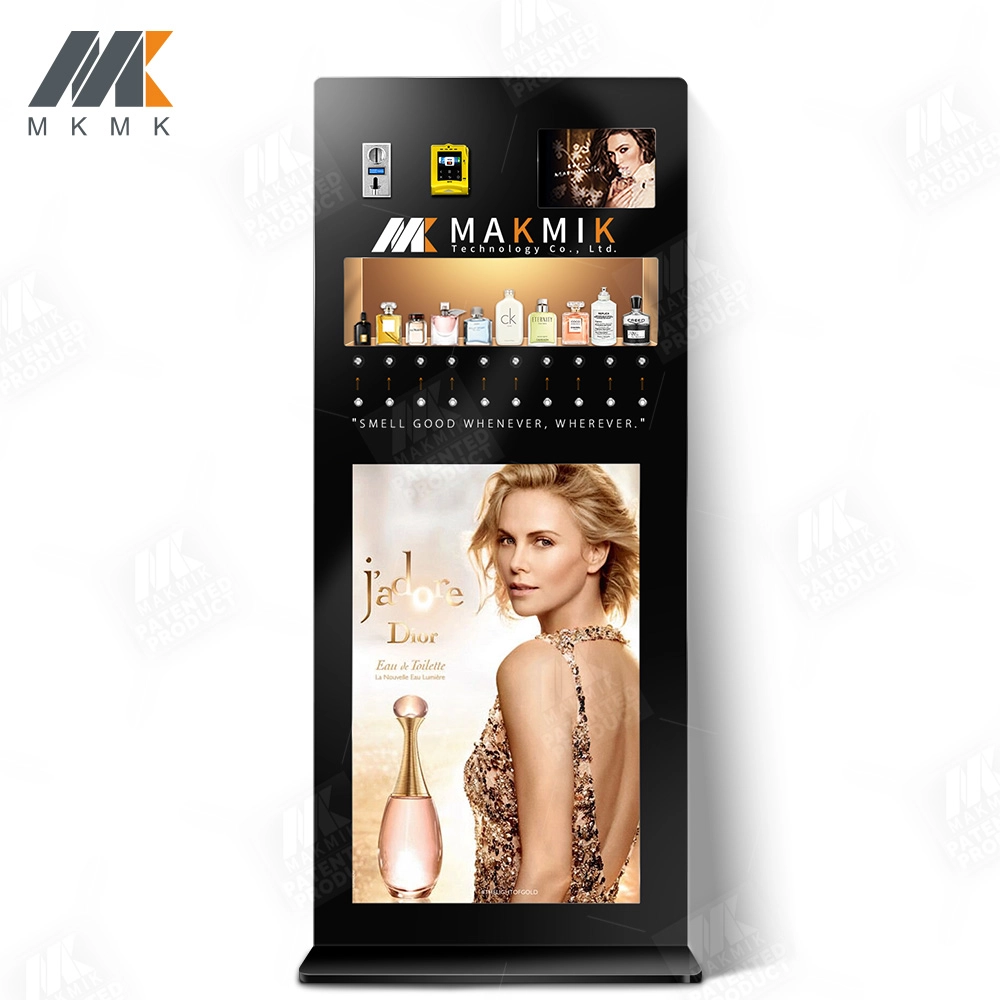
Perfume Vending Machine Ten-Hole Integrated Model MK-PMS001
Introducing the MAKMIK Perfume Vending Machine, the Ten-Hole Integrated Model MK-PMS001. Designed to revolutionise fragrance accessibility, this cutting-edge perfume spray vending machine offers a seamless, user-friendly experience. Perfect for high-traffic areas, it will enhance your environment with convenient, on-demand scents. It will elevate your space with elegance and efficiency.
The machine can be customised in terms of appearance and functions according to actual needs, and there are multiple ways to combine. It will also acquire customers quickly.
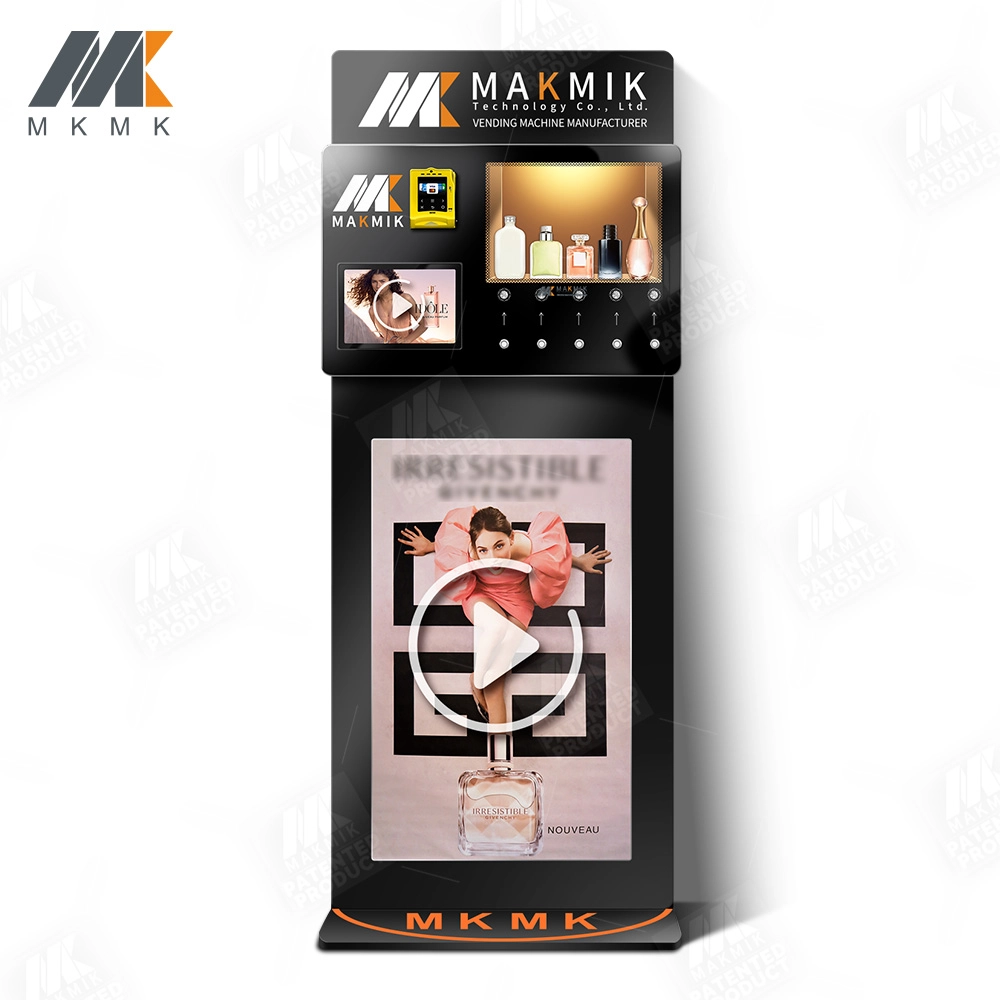
Perfume Vending Machine Wall-Mounted Cabinet Model MK-PM-bs002
Discover the MAKMIK Perfume Vending Machine Wall-Mounted Cabinet Model MK-PM-bs002, an innovative perfume dispenser vending machine. Designed with convenience and style in mind, it integrates seamlessly into any space, offering an unparalleled fragrance experience. It is ideal for enhancing environments with a touch of luxury.
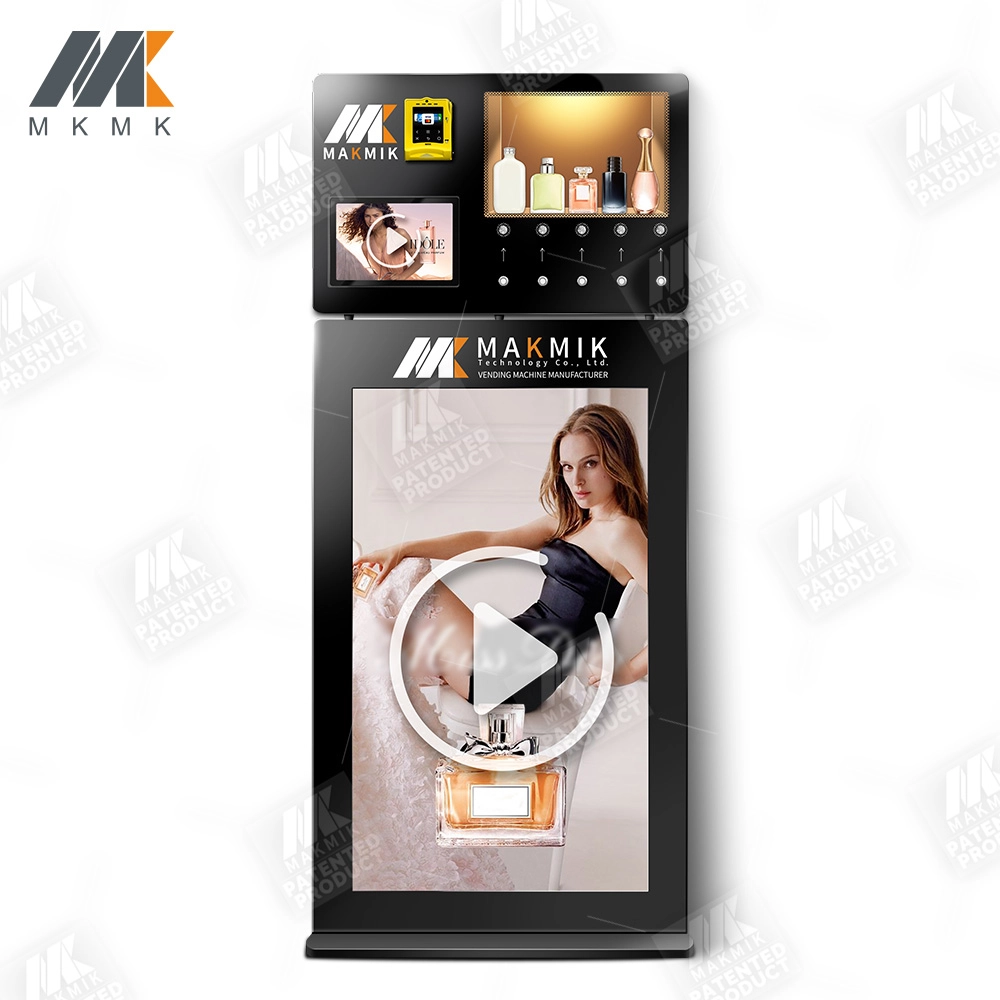
Perfume Vending Machine Split Base Model MK-PMT003
Introducing the MAKMIK Split Base Model MK-PM001, a cutting-edge perfume vending machine designed for modern convenience. This smart vending solution offers seamless operation and a sleek design, bringing the latest in fragrance technology to your fingertips. Elevate your space with the perfume vending machine by MAKMIK.
Customisable appearance and functions according to actual needs, multiple ways to combine, fast customer acquisition.
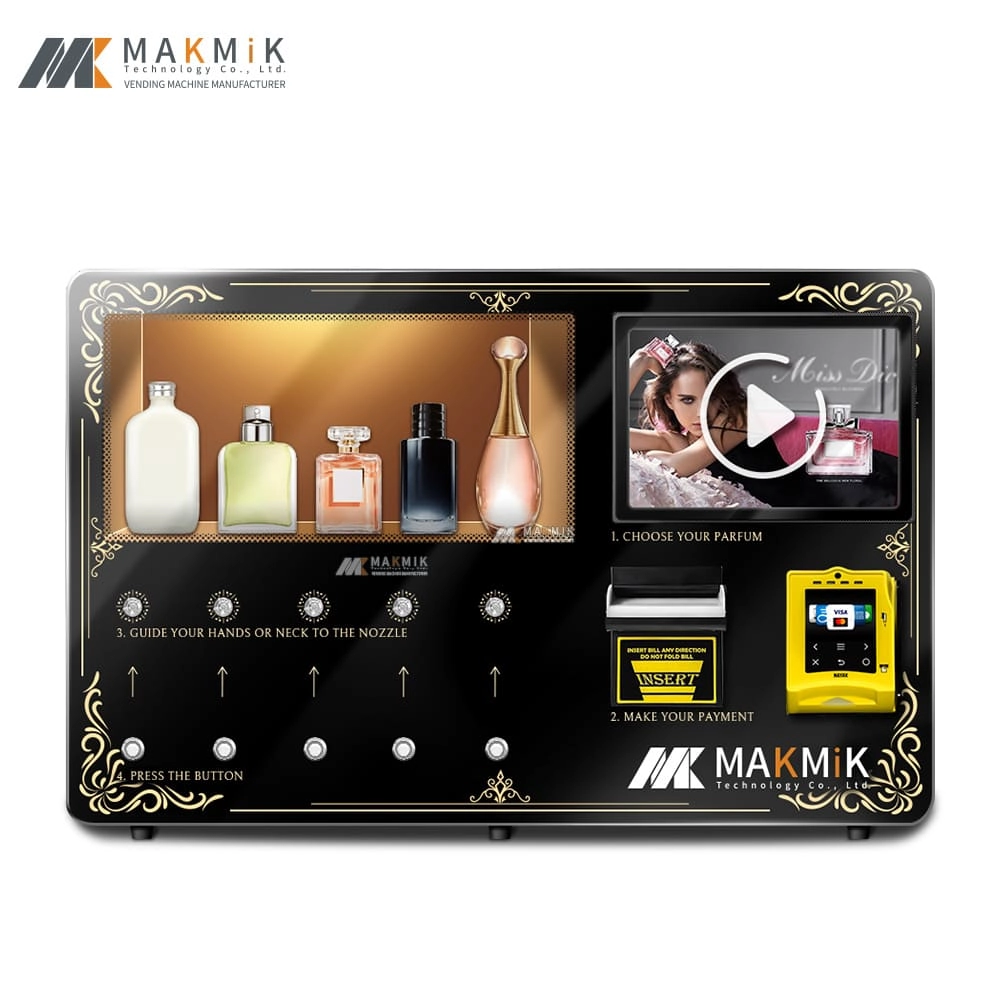
Perfume Vending Machine Small Perfume Dispenser MK-PM-002
Introducing the MAKMIK Perfume Vending Machine Small Perfume Dispenser MK-PM-UT002—a sleek, innovative solution for instant fragrance access. Perfect for any venue, this compact perfume vending machine ensures convenience and variety. Discover MAKMIK's exceptional quality with this perfume vending machine for sale today!
Customizable appearance and functions according to actual needs, multiple ways to combine, fast customer acquisition
© 2025 MAKMIK | All Rights Reserved.
Facebook
Linkedlin
YouTube
Instagram