





What regulations affect perfume vending machines and sales?
- 1) Can I legally dispense high-ethanol perfumes (>60% alcohol) from an unattended vending machine in a mall or train station?
- 2) What labeling, safety documentation and product files must appear for EU sales when perfume is sold from a vending machine?
- 3) Which electrical and product certifications do I need to place perfume vending machines in the EU and the US (CE, UL, EMC, ATEX, PCI)?
- 4) How should I calculate and mitigate insurance and liability exposure for unattended perfume vending machines?
- 5) What rules apply to vending perfume in airports, duty-free areas and on trains? Can I operate an unmanned perfume kiosk in a secure terminal?
- 6) Can I operate refillable perfume stations in vending machines without breaching cosmetics GMP or increasing contamination risk?
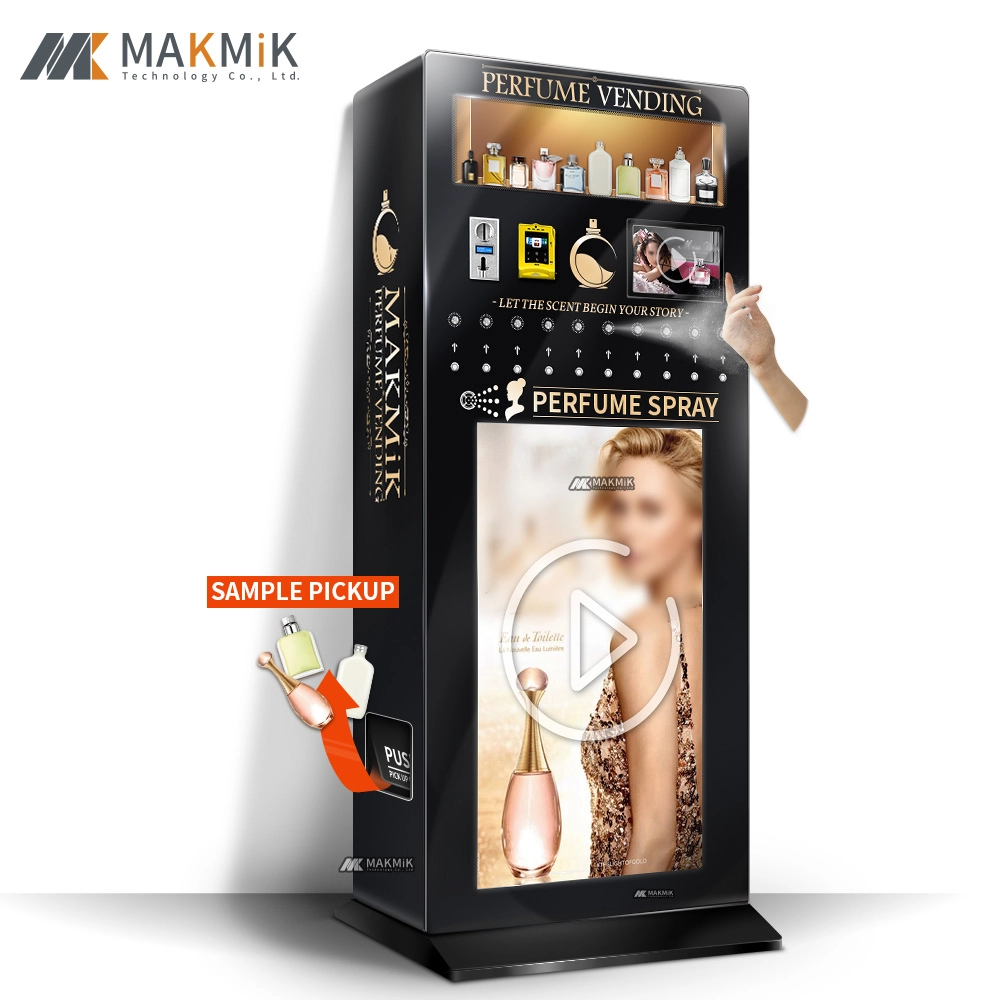
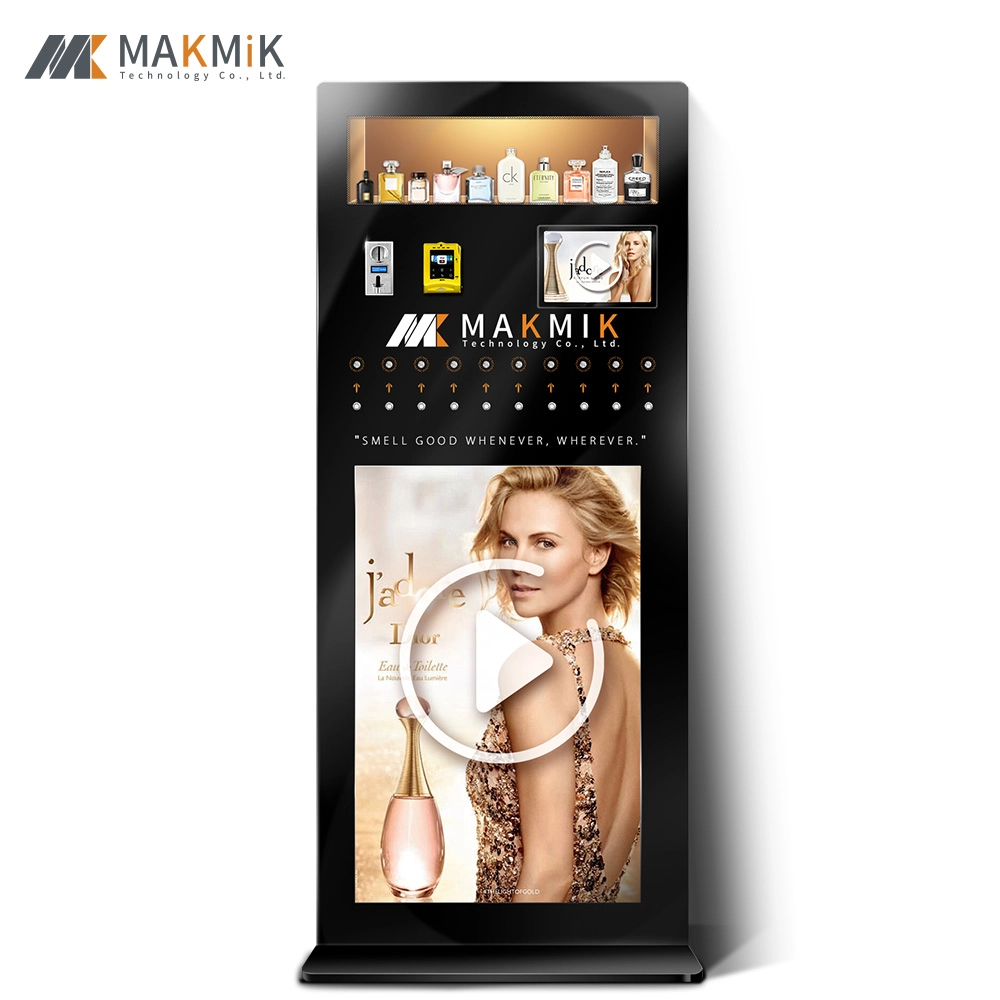
Automated perfume dispensers and fragrance vending kiosks promise higher margins and 24/7 retail convenience — but perfume is a chemically active, often flammable cosmetic product and vending systems must satisfy multiple regulatory, safety and commercial requirements. Below are six specific long-tail questions industry beginners search for but often only find superficial or outdated answers to. Each question includes practical, compliance-first steps you can apply today to a self-service perfume kiosk, cosmetic vending machines or refillable perfume station.
1) Can I legally dispense high-ethanol perfumes (>60% alcohol) from an unattended vending machine in a mall or train station?
Short answer: Not automatically — high-ethanol perfumes are classed as flammable liquids and are subject to building/fire codes, dangerous-goods rules and local authority approval. You must assess flammability classification, storage limits and mitigation measures before deployment.
What to check and do:
- Product classification: Perfumes with high ethanol content are treated as flammable liquids (see UN/ICAO/IATA definitions such as UN 1170 for ethanol solutions). That classification affects storage and transport rules (ADR, IMDG, IATA DGR) and can trigger building/fire code limits.
- Local fire code & building code: In the U.S., consult your local Fire Marshal and NFPA 30 (Flammable and Combustible Liquids Code) requirements; in the EU consult national implementing rules of the Construction Products Regulations and local authority having jurisdiction. Many jurisdictions set maximum allowed quantities of flammable liquids in unattended retail areas and may require specialized cabinets, spill containment or sprinkler modifications if threshold quantities are exceeded.
- Machine design mitigation: Use sealed, pre-filled, tamper-evident cartridges or sell prepackaged bottles rather than open refilling. Limit onboard liquid volume per compartment to stay under local threshold quantities. Provide passive ventilation or meet explosion-hazard classification (if vapour concentrations are a realistic risk) — if there is any possibility of an explosive atmosphere, evaluate ATEX/IECEx requirements in the EU / other regions.
- Site approval: Obtain written approval from property owners and the local fire authority. Even if a national law appears permissive, the local AHJ (authority having jurisdiction) can require restrictions or deny placement.
- Operational controls: Regular service intervals, spill kits on-site, staff-trained emergency response and documented maintenance logs reduce risk and facilitate approvals.
Practical path: For most operators the fastest route is to vend factory-sealed bottles or single-use sealed cartridges with limited onboard volume — this avoids bulk flammable-liquid storage and simplifies compliance.
2) What labeling, safety documentation and product files must appear for EU sales when perfume is sold from a vending machine?
Short answer: EU cosmetics law applies to the product regardless of sales channel. The perfume package must meet Regulation (EC) No 1223/2009 requirements, and sellers must be able to produce safety documentation on demand.
Required documentation & label practices:
- Product labeling: Each container sold (bottle or cartridge) must carry legally required product information: name, nominal content, list of ingredients (INCI), batch code, best-before date if applicable, function, precautions and the Responsible Person’s contact details (Regulation 1223/2009). Electronic displays on the machine can supplement but cannot replace required on-package information.
- Allergen declaration: When fragrances contain any of the 26 EU-declared fragrance allergens above threshold levels, they must be listed on the product label (per EU rules updated since 2003 and reinforced in subsequent guidance).
- CPSR & PIF: A Cosmetic Product Safety Report (CPSR) and a full Product Information File (PIF) must be maintained by the Responsible Person and made available to authorities on request. PIF documentation must include manufacturing method, GMP evidence, stability and preservative efficacy data and safety assessment.
- CLP/REACH considerations: If a fragrance contains hazardous ingredients, Classification, Labelling and Packaging (CLP) (Regulation (EC) No 1272/2008) and REACH obligations may apply for substances. Safety Data Sheets (SDS) remain important for transport and staff safety, even though cosmetics are consumer goods.
- Information access at point of sale: If customers can’t read full label (for example small print), provide a machine-screen QR link or printed leaflet with the full ingredient list, Responsible Person contact, and allergy warnings, but ensure the actual sold unit still carries required on-pack labeling.
Summary: The vending channel does not remove cosmetics obligations; the manufacturer/importer as the Responsible Person must keep CPSR/PIF and ensure every dispensed unit is properly labeled and traceable.
3) Which electrical and product certifications do I need to place perfume vending machines in the EU and the US (CE, UL, EMC, ATEX, PCI)?
Short answer: Multiple directives and standards may apply. For EU market placement you will generally need CE conformity for applicable directives (electrical safety, EMC, machinery directives) and consider ATEX if the device operates in an explosive-atmosphere risk. In the U.S., UL/ETL safety testing and FCC/wireless rules plus PCI/EMV for payment are typically required.
Key certification areas and why they matter:
- Electrical & EMC: In the EU, conformity with Low Voltage and EMC Directives (and associated harmonized standards) is required to affix CE marking. Machines must meet electromagnetic compatibility and electrical safety requirements to avoid interference and hazards.
- Machinery & safety: If the vending kiosk includes mechanical moving parts, apply Machinery Directive principles. For U.S. deployment, manufacturers commonly obtain UL or ETL evaluations for electrical safety and enclosure/environmental suitability.
- ATEX/IECEx: If your device could create or operate in an explosive atmosphere (vapour build-up from flammable perfumes), ATEX (EU) or IECEx classification and suitably certified components are mandatory. Often the safer design choice is to limit onboard quantities and use sealed cartridges to avoid ATEX-classified equipment needs.
- Payment & data security: Card acceptance requires EMV certification for the payment terminal, and back-end processing must meet PCI DSS requirements. If accepting mobile wallets or contactless, ensure the payment module and firmware remain validated.
- Wireless & radio: Any built-in Wi‑Fi, Bluetooth or cellular modem must meet regional radio approvals (FCC in the U.S., CE/RED in EU, IC in Canada, etc.).
- Accessibility & local rules: In the U.S., ADA reach ranges and operability requirements often apply to public vending equipment; in other jurisdictions check national accessibility standards.
What to do: Design to recognized standards from the outset, engage an accredited test lab early for CE / EMC / safety testing, and specify sealed cartridge systems and intrinsically safe components if there’s any flammable vapor risk. For payments, partner with certified payment terminal vendors and an acquiring bank experienced with unattended retail.
4) How should I calculate and mitigate insurance and liability exposure for unattended perfume vending machines?
Short answer: Insurance exposure depends on product risk (flammability, allergen risks), location risk (high foot traffic, airports), and the sales/operational model. You need a layered risk approach: product safety, property protection, cyber/payment security and appropriate insurance lines.
Insurance types and mitigation actions:
- Product liability insurance: Covers claims from customers alleging harm from the perfume (skin reaction, inhalation). Maintain CPSR, ingredient lists, allergen labeling and robust consumer warnings to reduce claims exposure.
- General liability and premises liability: Covers incidents at the machine (slips, burns, spill-related damage). Mount machines securely, use anti-tip hardware, and maintain inspection logs.
- Property & equipment: Covers machine damage, vandalism or theft. Use tamper-evident enclosures, cameras where permitted, and alarms.
- Pollution / environmental: If storing flammable liquids beyond simple consumer packages, consider limited pollution liability for spills or fire damage.
- Cyber / PCI & crime: For card processing and mobile payments, require cyber liability coverage and ensure PCI DSS compliance; consider crime insurance for cash-handling if machines accept coins or bills.
How to calculate: Insurers will underwrite by location risk score, annual sales, product hazard class and loss history. Rather than relying on generic quotes, prepare a risk packet (machine spec, cartridge volumes, maintenance schedule, PIF/CPSR, site approval letters) and work with a broker experienced in unattended retail to obtain competitive terms. Implement documented maintenance and incident reporting — this materially reduces High Qualitys and deductible exposure.
5) What rules apply to vending perfume in airports, duty-free areas and on trains? Can I operate an unmanned perfume kiosk in a secure terminal?
Short answer: Airports and transport hubs impose stricter security, customs and duty rules than public malls. Unmanned vending is possible but requires compliance with liquids-in-cabin rules, duty-free sales procedures, security screening, and airport vendor contracts.
Main constraints and recommended steps:
- Security screening and liquids rules: Passengers bringing liquids in carry-on face the ≤100 ml rules in many jurisdictions. Duty-free exemptions exist if the item is sold and sealed according to airport/security procedures. An unmanned machine must issue a tamper-evident security bag and keep proof of sale that aligns to the airport’s security protocol if selling liquids for carry-on.
- Customs & excise: Duty-free areas are bonded spaces; selling duty-free often requires licensing, bonded stock controls, and customs reporting. Selling retail (non-duty-free) inside the terminal may require different licenses and tax collection.
- Airport tenancy & operator approval: Airports typically require vendor operators to obtain concessions agreements and meet the airport’s safety, security and servicing schedules. Unmanned equipment often needs additional approvals for remote monitoring, emergency response procedures and service visits.
- Transport of refills: Replenishing perfume in airports may be restricted; carriers and airport logistics often treat perfumes as dangerous goods for air transport and require appropriate packaging, documentation and declared shipments (IATA Dangerous Goods Regulations). Plan replenishment logistics with a certified dangerous-goods forwarder.
Practical approach: For airports start with sealed retail bottles in approved security bags and work through the concessionaire/airport procurement team and security office. For duty-free models, partner with an experienced duty-free operator; for secure area vending you will likely need staffed support presence or on-call service level agreements in addition to machine monitoring.
6) Can I operate refillable perfume stations in vending machines without breaching cosmetics GMP or increasing contamination risk?
Short answer: Yes — but only if the refill system is designed and controlled like a cosmetic supply system: single-use sealed cartridges, traceability, preservative efficacy and documented cleaning/service protocols are essential.
Technical and regulatory checklist:
- Use sealed pre-filled cartridges: The best compliance path is a single-use, factory-filled, tamper-evident cartridge or bottle. This preserves the product’s preservative system and maintains the CPSR-backed stability and microbiological safety.
- GMP & supplier controls: Cosmetic Good Manufacturing Practices are required for manufacturing. If you refill onsite or at a central depot, that facility must follow cosmetic GMP, including environmental controls, SOPs, and batch records. Keep supplier audits and certificates of analysis.
- Preservative efficacy and shelf life: Refillable systems that expose perfume to air/water risk microbial contamination. Ensure the perfume formulation has demonstrated preservative efficacy tests and that container/cartridge materials (elastomers, plastics) are compatible and do not leach or adsorb fragrance components.
- Anti-contamination design: Use non-return valves, aseptic connectors or single-direction pumps to prevent backflow and cross-contamination between batches. A documented cleaning validation and scheduled cartridge replacement interval are mandatory.
- Traceability & batch codes: Each dispensed dose must be traceable to a batch and the Responsible Person must be able to locate and recall product batches quickly. Machine logs, barcode/RFID on cartridges and scan-linked service records are useful.
Operational best practices: Avoid open bulk refill reservoirs. If you want a refill experience, implement sealed cartridge swaps by trained technicians, maintain a rigorous cartridge lifecycle policy, and retain challenge-test and stability data in the PIF.
Final compliance checklist (quick): determine flammability classification; limit onboard volumes; use sealed cartridges or factory-sealed bottles; label per cosmetics regulations; maintain CPSR/PIF; obtain AHJ/fire-marshal sign-off; certify electrical and payment systems; meet accessibility requirements; secure appropriate insurance; and document maintenance and incident logs.
Conclusion — Advantages of compliant automated perfume vending machines:
When planned and executed to regulatory and safety standards, self-service perfume kiosks and automated perfume dispensers deliver 24/7 sales, impulse-purchase uplift, lower labor costs, precise stock control and improved analytics for pricing and assortment. By using sealed cartridges, robust labeling, compliance with cosmetics safety (CPSR/PIF), electrical and payment certifications, and working with local authorities and insured brokers, operators can unlock the convenience and margin benefits of fragrance vending while controlling legal and safety exposure.
For a custom compliance assessment, hardware spec or deployment quote, contact us at www.makmiktech.com or info@makmiktech.com — we provide machine design, certification support and site-approval assistance for automated fragrance vending projects.
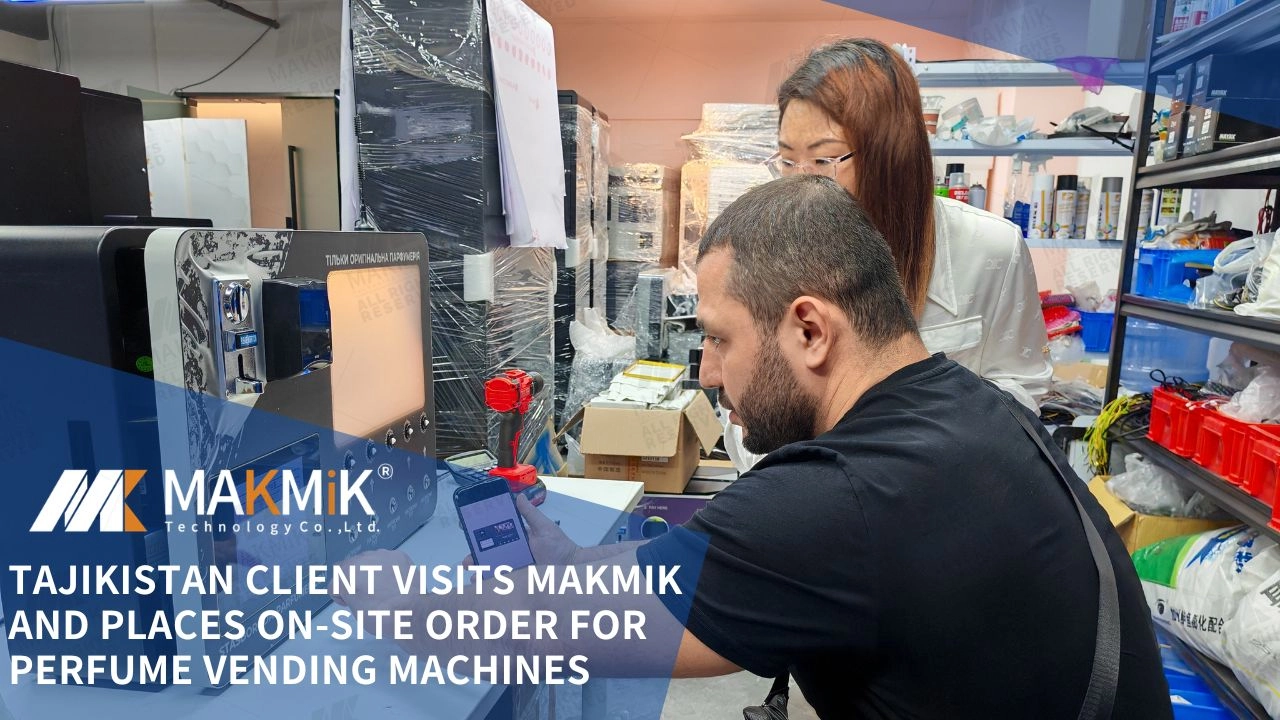
Tajikistan Client Visits MAKMIK and Places On-Site Order for Perfume Vending Machines
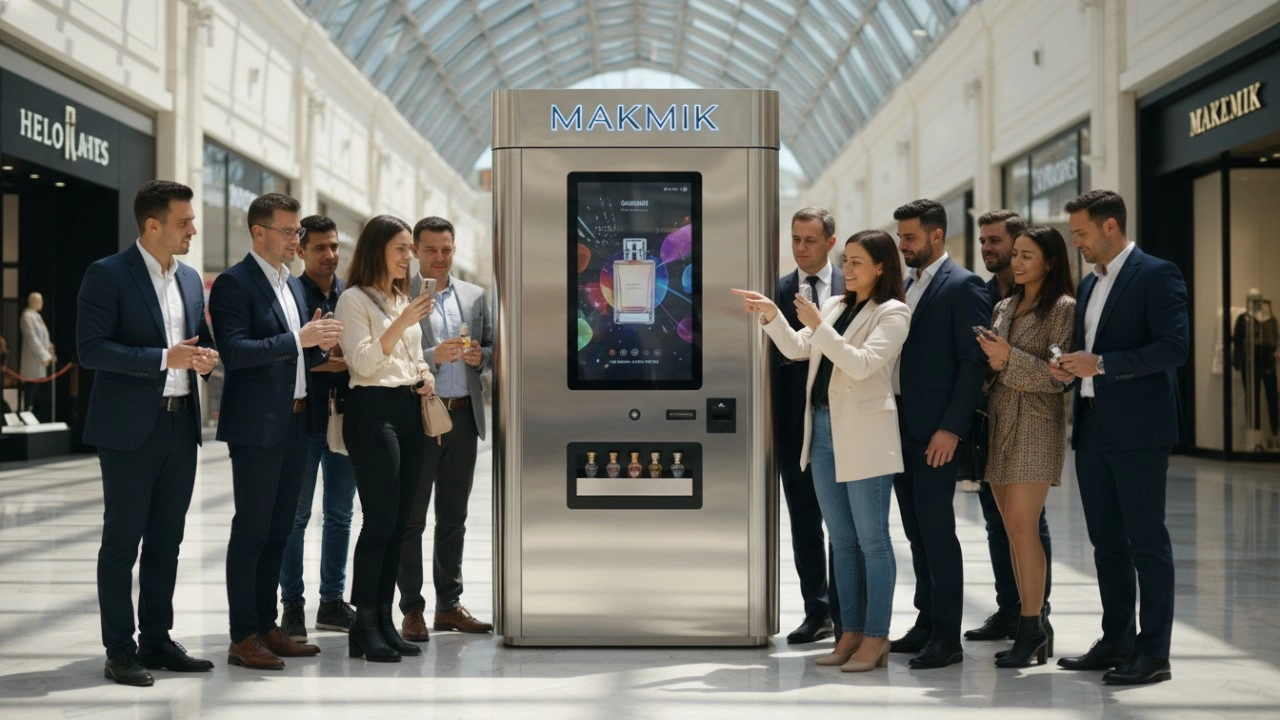
How to Profit from Perfume Vending Machines: Distributor Business Model Guide
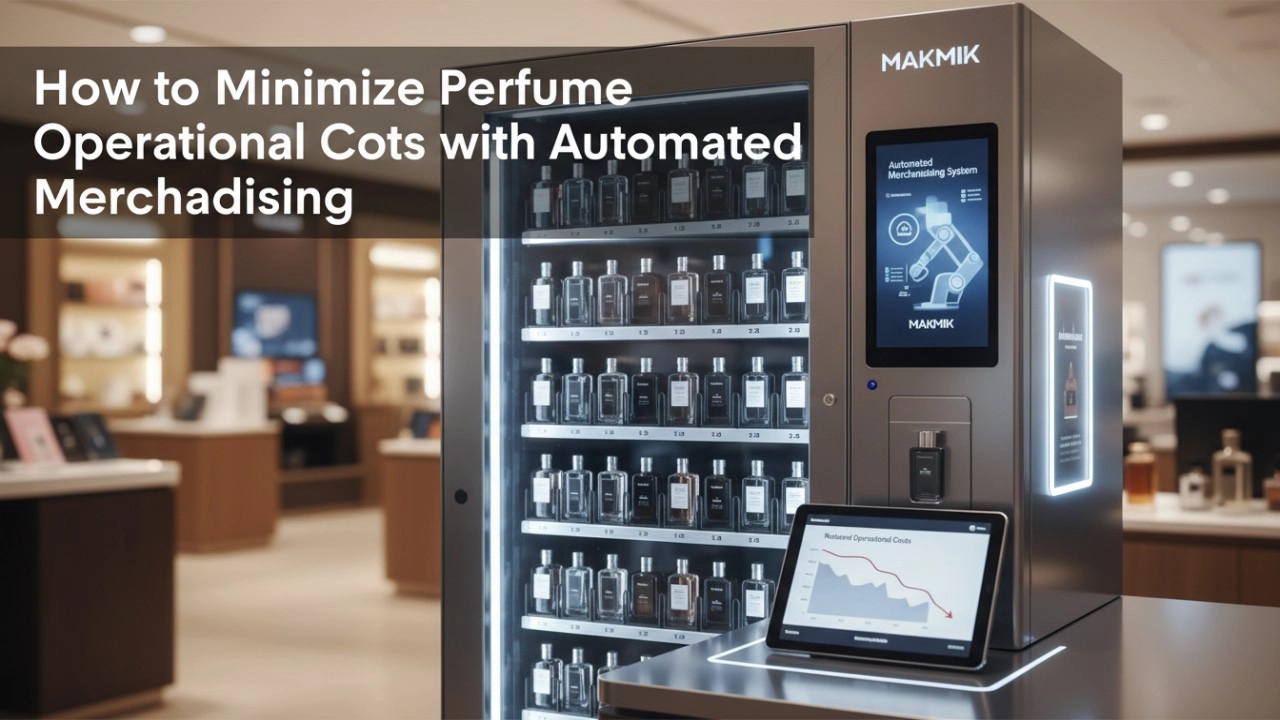
How to Minimize Perfume Operational Costs with Automated Merchandising in 2026
Compliance & Safety: Meeting Perfume Global Standards for Vending Hardware in 2026
Events & Festivals: Mobile Perfume Vending for Short-Term ROI in 2026
FAQ
How do you ensure the quality of your vending machines?
We adhere to strict quality control processes and use high-quality materials and components to ensure durability and reliability.
How can I monitor and manage my vending machines remotely?
Our vending machines come with advanced telemetry systems that allow remote monitoring and management through a web-based platform or mobile app.
Are your vending machines energy-efficient?
Yes, our vending machines are designed with energy-efficient technologies to reduce power consumption and minimize environmental impact.
Do you offer warranties on your vending machines?
Yes, we provide warranties on all our vending machines, covering parts and labor for a specified period to ensure peace of mind for our clients.
What is the lead time for manufacturing and delivery?
Lead times vary based on the type and quantity of vending machines ordered, but we strive to deliver within 6-8 weeks from the date of order confirmation.
Send my request
Connect with us to schedule a consultation, request samples, or arrange a site visit to see our facilities and capabilities firsthand.
Reach out to us via phone, email, or through the contact form below, and we'll get back to you promptly within 24 hours.
© 2025 MAKMIK | All Rights Reserved.
Facebook
Linkedlin
YouTube
Instagram