






Can perfume vending machines integrate with my POS system?
- 1) Can perfume vending machines integrate with my POS system to sync SKU-level inventory in real time across locations?
- 2) How do I ensure secure EMV and PCI-compliant payments on perfume vending machines when connecting them to my store POS?
- 3) What hardware and software interfaces are required to connect a perfume vending machine to cloud POS systems (REST API, MQTT, DEX, MDB)?
- 4) How do I reconcile sales, refunds, and chargebacks from vending machines with my POS and accounting software?
- 5) Can I manage multi-SKU fragrance cartridges, including expiration and lot tracking, through POS-integrated perfume vending kiosks?
- 6) What are realistic timelines and costs for integrating a perfume vending machine with an existing retail POS/ERP (including testing and certification)?
- Concluding paragraph: Advantages of perfume vending machines integrated with POS systems
Perfume Vending Machines: Can They Integrate with My POS System?
As a professional content writer with extensive SEO and experience and a seasoned vending-machine specialist, I address common, under-answered beginner problems operators face when buying or deploying perfume vending machines (scent vending kiosks and fragrance dispensers). Below are six specific, pain-point-oriented questions with practical, technical, and operational answers you can act on.
1) Can perfume vending machines integrate with my POS system to sync SKU-level inventory in real time across locations?
Short answer: Yes — but only with an integration architecture that maps vending SKUs to your POS/ERP SKUs, uses a reliable communications layer (cellular/Wi‑Fi/Ethernet), and implements cloud-based inventory telemetry. Many beginner guides stop at “it’s possible” and don’t explain the practical steps. Here’s a robust approach:
- SKU mapping: Create a canonical product ID in your POS/ERP for each fragrance cartridge, size, and SKU in the vending machine. Perfume vending machines typically dispense multiple SKUs per machine (sample vials, 5–10 ml cartridges). Without exact SKU mapping you’ll get aggregated counts only.
- Telemetry and sync cadence: Use a cloud vending management platform or gateway that sends transactional events (vend successful, vend failed, inventory decrement) as webhooks or via RESTful APIs to your POS. Real-time (within seconds to a minute) sync is possible with cellular/Wi‑Fi-connected telematics. For intermittent connectivity, design for queued events and reconciliation.
- Inventory model: Keep a per-machine, per-SKU on-hand quantity in your POS or a middleware inventory service. Use negative- and zero-stock alerts and automated route replenishment. Ensure the vending firmware tracks both dispensed units and cartridge remaining percentages so you can detect partial-dispense issues.
- Data validation: Implement checksums and time-stamps; reconcile daily totals using DEX or exports if available. If your vending firmware supports DEX (Data EXchange) outputs, you can import audit logs for reconciliation accuracy.
Outcome: With SKU mapping, inventory telemetry, and webhook/API sync, you achieve near real-time SKU-level inventory across locations and minimize stockouts and shrinkage.
2) How do I ensure secure EMV and PCI-compliant payments on perfume vending machines when connecting them to my store POS?
Beginners often worry that integrating vending payments with POS compromises PCI/EMV compliance. The truth: you can integrate safely if you follow tokenization, P2PE, and separation principles.
- Use certified payment modules: Choose a payment terminal or cashless vendor (e.g., Nayax, Cantaloupe, Verifone-class integrations) that provides EMV-certified readers designed for vending. These devices handle card-present EMV flows locally and minimize PCI scope on your side because card data never touches your POS backend.
- Tokenization and P2PE: Ensure the vending payment provider returns a payment token or transaction ID that your POS can consume via API/webhook. That lets you record the sale without storing card PANs. End-to-end P2PE reduces compliance burden and is standard practice for vending cashless acceptance.
- Settlement and reconciliation separation: Keep payment settlement (processor level) separate from item-level fulfillment. Your POS should receive a confirmed transaction ID and amount. The payment provider handles authorization, capture, and settlement to the merchant bank.
- Logging and audit: Store only non-sensitive payment metadata in your POS (transaction ID, masked PAN suffix if needed, authorization codes) and retain logs for reconciliation. Follow PCI DSS and local data-retention laws (GDPR/CCPA where applicable).
Outcome: Use certified hardware + tokenized payment APIs to integrate payment events into your POS without increasing PCI scope, preserving EMV compliance and secure cashless payments for your scent vending kiosks.
3) What hardware and software interfaces are required to connect a perfume vending machine to cloud POS systems (REST API, MQTT, DEX, MDB)?
Many online answers list generic protocols but don’t explain what you actually need. Here’s a practical checklist:
- Machine side (hardware): Ethernet, Wi‑Fi, or cellular (4G/5G) for remote connectivity. Serial or USB for local POS/PDA connections. Standard peripheral buses: MDB (Multi‑Drop Bus) is commonly used for coin/bill acceptors and some cashless peripherals. Expect bill/coin validators to speak MDB; the vending controller will translate sales events into higher level telemetry.
- Machine side (firmware/software): A vending controller that can emit vend events and inventory states. Many modern machines include an on-device gateway to translate low-level events into JSON over HTTPS or MQTT to a cloud endpoint.
- Data export: DEX (Data EXchange) is a traditional audit/export format for vending and can be used for periodic batch reconciliation. For real-time POS sync, use RESTful APIs or MQTT with webhooks.
- Cloud middleware: A vending cloud platform or middleware that normalizes device telemetry, handles retries, maps SKUs, and exposes well-documented REST APIs or webhooks for your POS/ERP. If your POS supports incoming webhooks, it can receive vend confirmations and inventory deltas directly.
- POS adapter: Either native POS integrations (if your POS provider supports vending integrations) or a middleware adapter that translates webhook events into the POS’s internal API calls or into an ERP import format (CSV, SFTP) for batch systems.
Outcome: The minimal viable stack is: vending controller + cellular/Wi‑Fi + vending cloud gateway (REST/webhook) + POS adapter. Using MQTT is optional for lower-latency telemetry but REST + webhooks is the most interoperable approach.
4) How do I reconcile sales, refunds, and chargebacks from vending machines with my POS and accounting software?
Reconciliation is one of the most under-documented pain points. Follow these steps to avoid headaches:
- Record atomic events: For every vend attempt, log an atomic event that contains: device ID, machine location, SKU ID, timestamp, payment transaction ID, vend result (success/failure/refund), and firmware audit ID. This makes later matching deterministic.
- Daily batch reconciliation: Pull two feeds daily — (1) POS/ERP sales ledger (per SKU, per store/machine) and (2) payment processor settlements (transaction-level). Match by transaction IDs and timestamps. Use tolerances (e.g., 1–2 minutes) for clock skew and implement rules for partial matches (e.g., failed vend + reversal).
- Handle refunds and chargebacks: If a customer requests a refund or a chargeback occurs, your POS should accept the payment provider’s reversal webhook and mark the SKU as returned or generate an internal credit memo. For physical returns (rare in vending), combine CCTV logs or on-device sensors. Keep manual reconciliation workflows for disputes.
- Automated exception handling: Build an exceptions queue for mismatches (e.g., payment captured but no vend recorded). Use telemetry (door open, cartridge remaining, actuator sensors) to produce evidence to release or deny refund claims.
Outcome: With atomic events, daily matching, and an exceptions queue, you reduce manual accounting and accelerate settlement of disputes for your fragrance dispenser network.
5) Can I manage multi-SKU fragrance cartridges, including expiration and lot tracking, through POS-integrated perfume vending kiosks?
Yes — but this requires planning for product attributes, firmware support for cartridge telemetry, and POS/ERP fields for lot numbers and expiry dates. Many vendors sell machines capable of identifying cartridges via RFID or barcode; integrate those identifiers into your product master.
- Traceability fields: In your POS/ERP, add lot number, manufacture date, expiry date, and cartridge serial number. When a cartridge is installed, the vending controller should read the cartridge ID (barcode/RFID/QR) and transmit an install event to the cloud.
- Cartridge life model: For perfumes, remaining doses often depend on both dispensations and evaporation. Use firmware counters for dispenses; where possible, add weight sensors or cartridge-level telemetry so the system can predict remaining volume and send alerts for preemptive replacement.
- Expiration enforcement: Configure the vending controller/cloud to block sales of expired lots or to place cartridges in ‘quarantine’ in the POS. This ensures compliance with retailer safety and quality processes.
- Regulatory and recall readiness: If you ever need to recall a lot, having cartridge IDs tied to vend events and customer transactions (if traceable) lets you identify impacted units quickly. For purely anonymous vending sales, you can still locate and remove remaining stock by lot across machines.
Outcome: With cartridge ID capture, telemetry, and product master fields in your POS/ERP, you achieve lot-level traceability and expiry control for multi-SKU fragrance dispensers.
6) What are realistic timelines and costs for integrating a perfume vending machine with an existing retail POS/ERP (including testing and certification)?
Beginners often get surprised by integration effort. Realistic expectations depend on existing POS capabilities, available APIs, and the vending vendor’s maturity.
- Timeline estimates (typical range):
- Basic inventory + sales event (webhook to POS, no payment passthrough): 4–6 weeks (requirements, mapping, development, QA).
- Full payment integration (tokenized EMV, settlement workflows, refunds): 8–12 weeks including cert testing with payment provider.
- Enterprise-grade integration (multiple POS endpoints, ERP sync, lot tracking, automated route replenishment): 12–20 weeks, plus pilot deployment and regional certification.
- Cost drivers:
- Hardware: vending machine with integrated telemetry and certified card reader (typically $5,000–$25,000 per unit depending on configuration and dispenser complexity).
- Integration development: $5,000–$30,000 depending on API availability, middleware use, and custom POS adapters.
- Payment and connectivity: monthly cashless provider fees, payment processor fees (card transaction fees), and cellular/Wi‑Fi data plans per machine (usually $10–$50/month per machine depending on plan and telemetry frequency).
- Certifications and compliance: testing with payment providers and possible POS vendor certification fees; budget time and a few thousand dollars depending on provider requirements.
- Best practices to reduce cost and time:
- Use an off-the-shelf vending cloud provider with existing POS connectors to avoid custom middleware.
- Start with a pilot (1–5 machines) to validate SKU mapping, payment flows, and reconciliation before rolling out network-wide.
- Prioritize tokenized payment flows to reduce PCI scope and speed certification.
Outcome: Expect a phased project: a short pilot in 4–8 weeks and a broader rollout over months. Budget for hardware, integration development, and ongoing connectivity and payment fees.
Concluding paragraph: Advantages of perfume vending machines integrated with POS systems
Integrating perfume vending machines with your POS and ERP unlocks SKU-level inventory telemetry, automated replenishment, accurate revenue attribution, improved customer experience with contactless payment options, and full lifecycle traceability for cartridges and lots. When deployed with certified EMV cashless modules, tokenized payments, and cloud vending management, fragrance dispensers become reliable retail extensions that reduce manual labor, prevent stockouts, and provide actionable sales analytics. For retailers and operators who prioritize compliance and scalability, POS-integrated scent vending kiosks are a strategic channel for higher-margin impulse purchases and brand-controlled sampling programs.
If you want a tailored integration plan or a quote for perfume vending machines and POS integration services, contact us for a quote at www.makmiktech.com or email info@makmiktech.com.
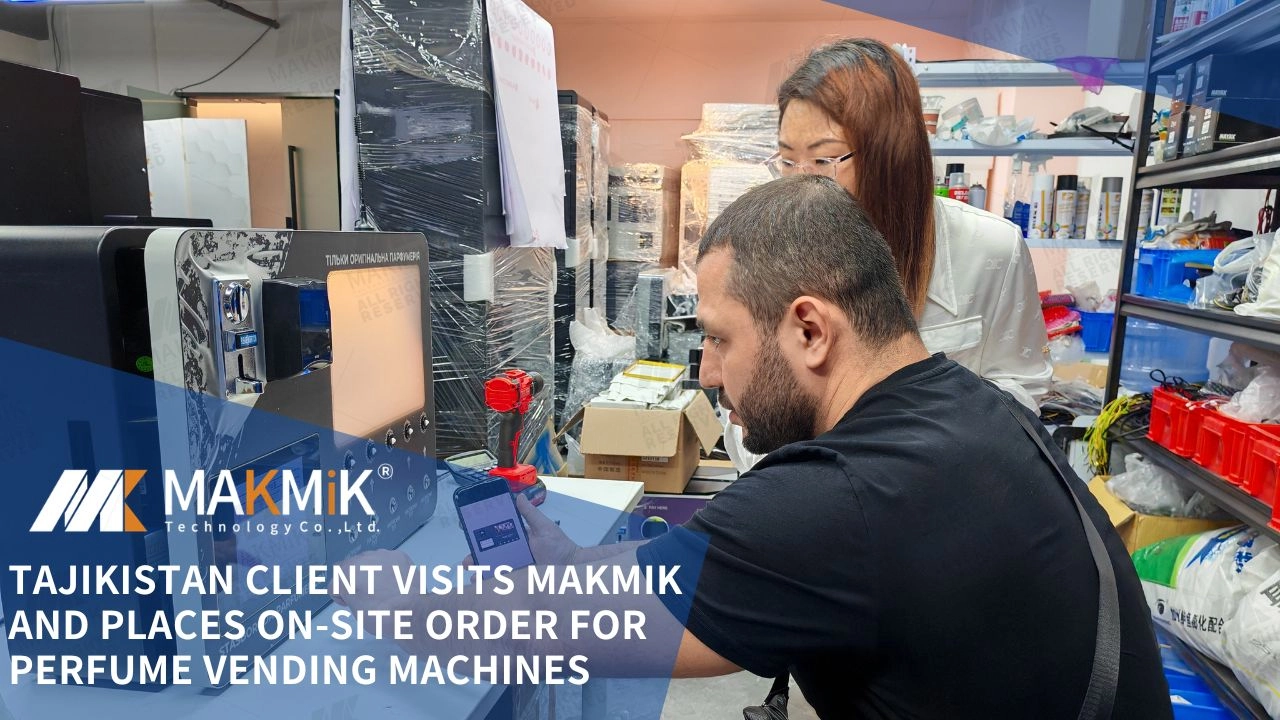
Tajikistan Client Visits MAKMIK and Places On-Site Order for Perfume Vending Machines
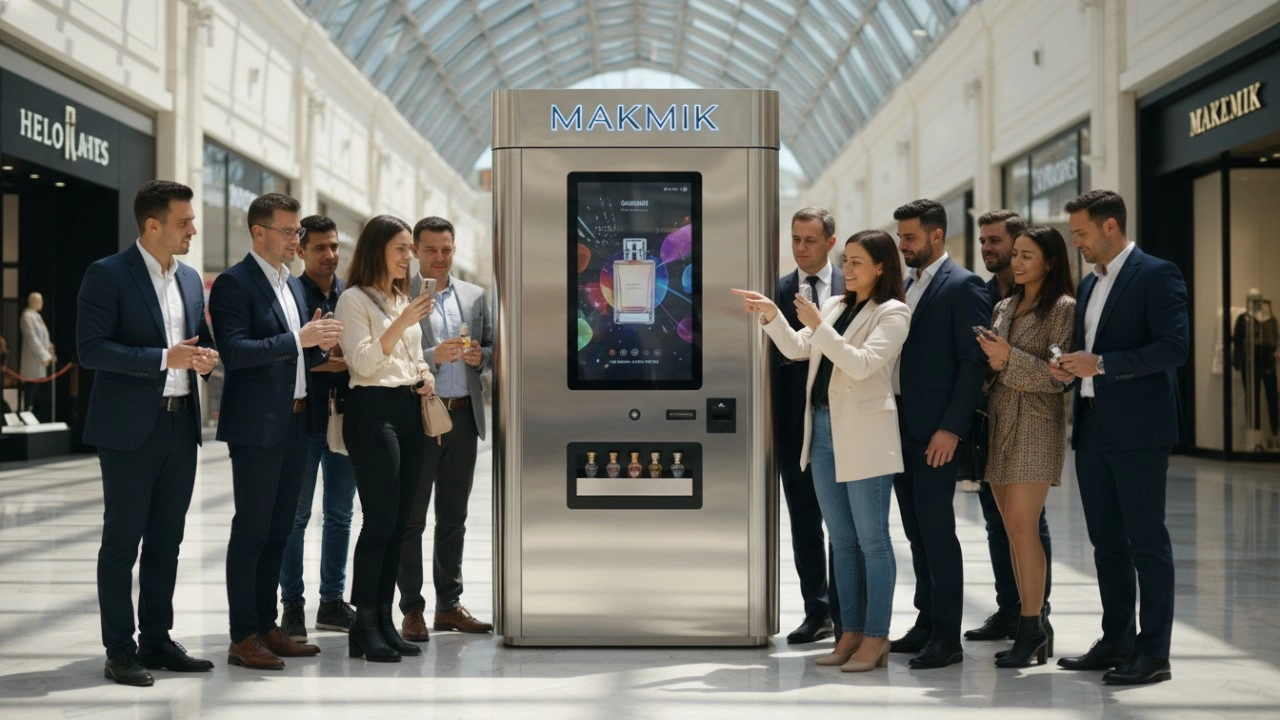
How to Profit from Perfume Vending Machines: Distributor Business Model Guide
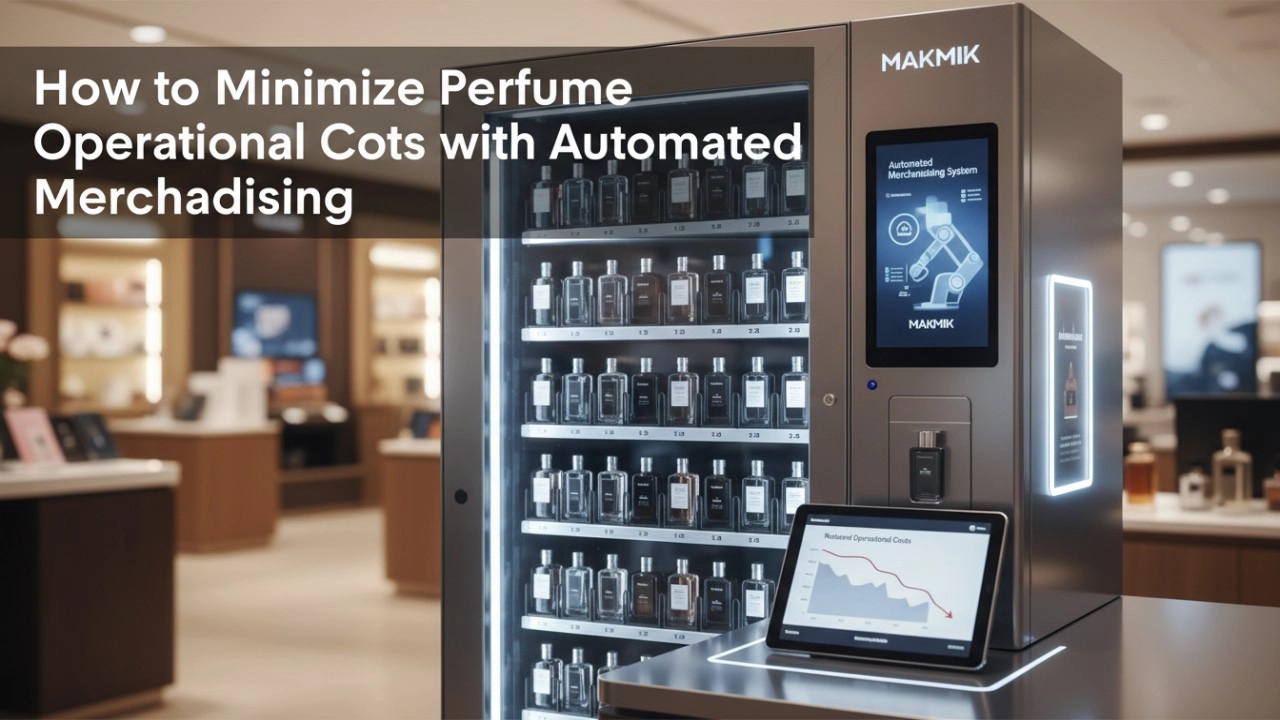
How to Minimize Perfume Operational Costs with Automated Merchandising in 2026
Compliance & Safety: Meeting Perfume Global Standards for Vending Hardware in 2026

Events & Festivals: Mobile Perfume Vending for Short-Term ROI in 2026
FAQ
Do you offer warranties on your vending machines?
Yes, we provide warranties on all our vending machines, covering parts and labor for a specified period to ensure peace of mind for our clients.
What is the lead time for manufacturing and delivery?
Lead times vary based on the type and quantity of vending machines ordered, but we strive to deliver within 6-8 weeks from the date of order confirmation.
What types of vending machines do you manufacture?
We manufacture a wide range of vending machines, including snack, beverage, combo, fresh food, and specialty vending machines.
How can I monitor and manage my vending machines remotely?
Our vending machines come with advanced telemetry systems that allow remote monitoring and management through a web-based platform or mobile app.
Can your vending machines be customized?
Yes, we offer customization options to meet specific client requirements, including branding, product selection, and payment systems.
Send my request
Connect with us to schedule a consultation, request samples, or arrange a site visit to see our facilities and capabilities firsthand.
Reach out to us via phone, email, or through the contact form below, and we'll get back to you promptly within 24 hours.
© 2025 MAKMIK | All Rights Reserved.
Facebook
Linkedlin
YouTube
Instagram