






How to negotiate bulk purchase terms for vending machines?
- 1. How can I verify perfume scent quality and consistency in vending machine cartridges before approving a bulk order?
- 2. What realistic tactics lower MOQ for perfume vending machines or scent cartridges without sacrificing price or quality?
- 3. How do I write acceptance tests, warranty clauses, and spare-part commitments to avoid disputes after delivery?
- 4. How do I calculate true landed cost per unit for perfume vending machines, including cartridges, refill logistics, taxes, customs, and storage?
- 5. How to negotiate lead times, production schedules, and penalties for delayed delivery on vending machine bulk orders?
- 6. How should I structure payment terms, sample orders, and IP protection when buying OEM perfume vending machines from overseas suppliers?
- Concluding summary: Advantages of negotiating robust bulk terms for perfume vending machines
Perfume Vending Machines: How to Negotiate Bulk Purchase Terms
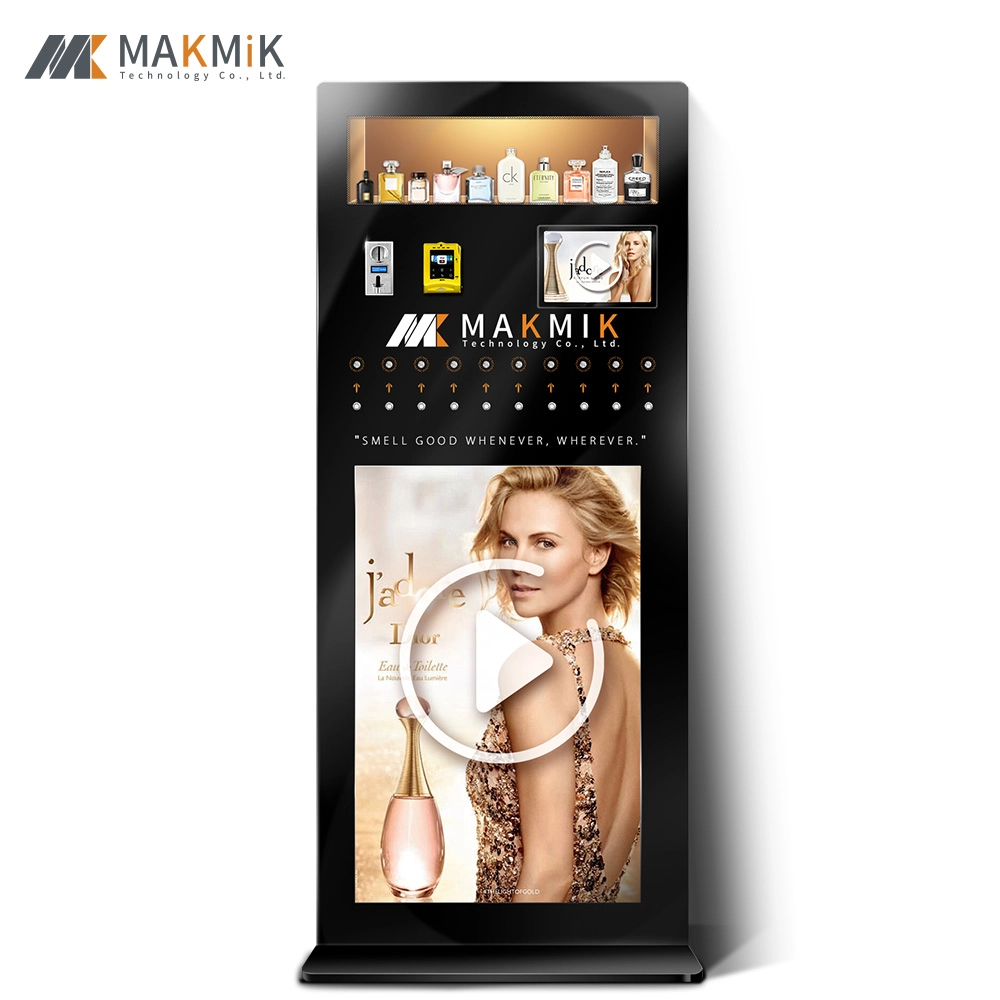
As vending automation experts at MakMik Tech (www.makmiktech.com), this guide answers six specific, under-covered beginner questions about buying perfume vending machines and negotiating bulk purchase terms. Embedded here are practical contract language samples, checklist items for scent quality, landed-cost modeling, and tactics to reduce MOQ, secure warranty coverage, and protect IP when ordering fragrance dispenser kiosks and scent vending machines from overseas suppliers.
1. How can I verify perfume scent quality and consistency in vending machine cartridges before approving a bulk order?
Problem: Buyers often receive a single “sample” vial that does not represent batch-level scent variability. Without reliable checks, you face customer complaints and wasted inventory.
Step-by-step verification workflow:
- Request production-stage samples, not just R&D samples. Ask the supplier for 3–5 cartridge samples taken from separate production lots (beginning, middle, end of a pilot run).
- Set objective acceptance criteria. Create a sensory specification that includes fragrance family, top/middle/base note targets, strength range (e.g., measured in mg scent per dispense or relative intensity using GC-MS profiles where available), and maximum variation tolerance between samples.
- Use third-party lab testing where possible. Have one cartridge from each lot analyzed with gas chromatography–mass spectrometry (GC-MS) or headspace analysis to confirm volatile organic compound (VOC) fingerprints. Labs can also measure solvent residues and flammability limits relevant to shipping/regulatory compliance.
- On-site blind panel testing. Organize a 5–10 person trained panel (retail staff or regular customers) to score scent match and intensity using a c-v test (consumer verification test) and record percentage passing thresholds (e.g., minimum 85% acceptability).
- Specify packaging and storage conditions. Perfume cartridges degrade with heat and light — require supplier to ship cartridges cold-chain or in insulated cartons if ambient temps exceed recommended ranges. Define maximum storage time between fill and shipping.
- Include contract remedies. Contract should allow rejection or rework if >x% of sampled cartridges fail lab or panel testing, and specify replacement or refund terms.
Practical contract clause example (short): Seller will provide three (3) production-line cartridge samples and corresponding GC-MS reports. If more than 10% of a production lot fails the agreed fragrance fingerprint or intensity parameters, Seller shall replace nonconforming units at Seller’s cost within 30 days or issue a pro rata refund.
2. What realistic tactics lower MOQ for perfume vending machines or scent cartridges without sacrificing price or quality?
Problem: Suppliers set high MOQs (minimum order quantities) for custom machines, tooling, or fragrance cartridges, pricing out new entrants.
Negotiation levers and tactics:
- Offer a staged purchase commitment. Propose a pilot order (e.g., 10–25 units) with a clearly defined follow-on purchase schedule (e.g., additional 100 units within 12 months) in exchange for a lower initial MOQ or price break after the pilot.
- Share tooling or design costs. Ask supplier to amortize tooling cost over a longer contract period. Offer to co-invest in tooling if you receive exclusivity for a market or pay a small High Quality per unit until tooling is recouped.
- Accept slightly longer lead times. Suppliers will often lower MOQ if they can consolidate production batches; offer a flexible delivery window in exchange for smaller batch sizes.
- Bundle non-core items. Combine machine orders with consumable fragrance cartridges or spare-parts packages to reach a supplier’s MOQ for total revenue while keeping machine quantities lower.
- Negotiate prototype/sample fees credited to first bulk order. If supplier charges for custom molds or firmware customization, get that fee credited when you place the bulk order.
- Use a local distributor or partner. Sometimes domestic distributors can aggregate smaller orders from multiple customers to meet manufacturer MOQ while you retain favorable pricing.
Sample negotiation phrasing: We request an initial MOQ of 20 units for the fragrance dispenser kiosk with a binding commitment to purchase an additional 200 units within 12 months. Tooling fees of $X will be invoiced now and fully credited against the 2nd shipment invoice.
3. How do I write acceptance tests, warranty clauses, and spare-part commitments to avoid disputes after delivery?
Problem: Buyers receive machines that function initially but show systematic defects later; weak contracts leave them with expensive repairs.
Key elements to include and why:
- Factory Acceptance Test (FAT) and Site Acceptance Test (SAT). Define FAT scope (software version, dispense volume accuracy, payment integration, Wi‑Fi/4G connectivity, sensor calibration). Require video-recorded FAT and a signed FAT certificate. SAT should be performed within 7–14 days of installation to confirm operation in your environment.
- Detailed acceptance criteria. Set numerical tolerances (e.g., dispense volume ±5%, payment success rate ≥99% over 24h test). Include cold-start, high-temperature, and low-power recovery tests for reliability.
- Warranty duration and coverage. Standard minimum: 12 months on parts and labor. For critical components (dispense pumps, control boards), negotiate 18–24 months or a spare-parts replacement timeline. Define RMA process (response time, advance replacement, on-site repair windows).
- Spare parts & obsolescence. Require a minimum availability period (e.g., five years) for spare parts and a parts pricing guarantee (e.g., not exceeding X% annual increase). Include clause for last-time buy notice and lead time for replacements.
- Service-level agreements (SLAs). Define response times (e.g., 24-hour technical response, 72-hour onsite repair for critical outages) and credits or penalties for missed SLAs.
- Acceptance holdback. Retain 5–10% of final payment until SAT completion; release within 30 days of successful acceptance test.
Contract example excerpt: Seller warrants the machines shall conform to FAT specifications. Buyer will perform SAT within 14 days of installation. Seller will provide a 12-month warranty for parts and labor, 24-month warranty for control electronics. Seller shall maintain spare parts for 5 years and respond to priority repair requests within 72 hours.
4. How do I calculate true landed cost per unit for perfume vending machines, including cartridges, refill logistics, taxes, customs, and storage?
Problem: Price per machine hides shipping, import duties, hazardous-goods surcharges (for alcohol-based fragrances), and refill supply chain costs—making ROI estimates inaccurate.
Stepwise landed-cost model (fields and guidance):
- EXW or FOB unit price (A). Obtain your base price from supplier under named Incoterm.
- Manufacturing-related extras (B). Add tooling amortization per unit, customization fees, and inspection costs (pre-shipment QC).
- Freight & insurance (C). For machines: container freight, port handling, inland transport. For cartridges: check hazardous goods classification (most fragrances are flammable alcohol-based) — this can add HAZMAT surcharges and special packing requirements.
- Import duties & VAT/GST (D). Use HS codes for vending machines and for fragrance cartridges; contact a customs broker for accurate tariff codes. Duties vary by destination; VAT/GST is typically recoverable but affects cashflow.
- Customs clearance & brokerage fees (E). Include inspection, fumigation, or testing fees if required (e.g., chemical compliance checks).
- Local handling & storage (F). Port storage, warehouse rent, and distribution to deployment sites. For cartridges, include climate-controlled storage costs if required.
- First-fill cost and reorder frequency (G). Calculate cost per dispense by dividing cartridge cost by expected dispenses; include wastage and expiry rates (fragrances may degrade).
- After-sales & spare-parts reserves (H). Set aside a per-unit budget for spares, expected maintenance, and extended warranties.
Formula (simplified): Landed unit cost = A + (B / units) + (C / units) + (D + E + F)/units + (G per first-fill) + H.
Action items:
- Request HS codes from supplier and validate with your customs broker before negotiating final price.
- Ask supplier for hazardous-material declarations for cartridges and for special packing certificates to avoid surprise HAZMAT fees at the port.
- Model scenarios (best/worst case) for cartridge replacement frequency to understand recurring costs and margin per dispense.
5. How to negotiate lead times, production schedules, and penalties for delayed delivery on vending machine bulk orders?
Problem: Delays disrupt marketing launches and stock forecasting. Many contracts lack enforceable schedule remedies.
Negotiation & contract tactics:
- Define milestones and delivery windows. Break order into milestones (prototype, pilot shipment, production batches) with calendar dates and acceptance criteria for each.
- Use rolling schedules. Agree to weekly or biweekly production updates and a change control procedure for adjustments affecting lead time and cost.
- Incentives for on-time delivery. Offer modest bonus (e.g., 1–2% of order value) for meeting aggressive timelines or early delivery. Positive incentives can be more effective than penalties.
- Liquidated damages (LD) versus cure periods. If applying LD, make them reasonable and tied to demonstrable losses (e.g., 0.5% per week up to 5%). Allow a short cure period (e.g., 7–14 days) for supply-chain issues beyond supplier's control, but require timely notice and mitigation plans.
- Force majeure clarity. Define what constitutes FM events, require timely notification, and mandate mitigation efforts. Be specific about pandemics, port blockages, and raw-material shortages.
- Staggered shipments and expedited options. Negotiate partial shipments to meet launch deadlines and reserve an option for air transport for replacement units at Seller’s cost if failure is on Seller’s side.
Sample schedule clause: Seller will deliver 20 pilot units by , then monthly batches of 50 units. Late delivery shall incur LD equal to 0.5% of the delayed batch value per calendar week, capped at 5% overall, unless Seller provides written mitigation and an expedited shipment at Seller’s expense.
6. How should I structure payment terms, sample orders, and IP protection when buying OEM perfume vending machines from overseas suppliers?
Problem: Buyers face risks of non-delivery, reverse engineering of proprietary dispensing mechanisms, or suppliers using buyer-specific branding to sell elsewhere.
Practical approaches and contract language:
- Payment structure. Typical split: 30% deposit, 60% upon shipment (or against B/L), 10% post-SAT acceptance. For higher-risk suppliers, use escrow (third-party) or confirmed irrevocable letter of credit (LC) to protect funds.
- Sample and pilot payments. Pay for pre-production prototypes and insist those fees be credited to the first bulk order. Accept non-refundable sample fees only if matched with rapid delivery timelines and clear technical objectives.
- IP & confidentiality. Sign a mutual non-disclosure agreement (NDA) before sharing designs. Include an express clause that Seller will not re-use Buyer-specific branding, firmware, or custom circuitry for other clients without written permission for a defined exclusivity period or geographical market.
- Source-code and firmware protections. If supplier retains firmware IP, require a machine-readable firmware escrow or release conditions if supplier goes bankrupt or fails to update for critical security patches. Alternatively, negotiate a perpetual, non-exclusive license for the specific firmware version used in your machines.
- Audit and factory visit rights. Reserve the right to audit production processes, subcontractors, and supply-chain traceability, or to require third-party inspections prior to shipment.
- Dispute resolution and governing law. For cross-border purchases, choose arbitration in a neutral venue or local legality in the supplier’s country only if you have strong legal representation there. Consider trade credit insurance for very large orders.
Suggested payment clause: Buyer will pay 30% deposit upon PO, 60% against copy of Bill of Lading, and 10% upon SAT sign-off. Payments may be made via LC at Buyer's election. Prototype fees of $X are payable now and credited to first bulk invoice. Seller agrees to keep Buyer designs confidential and not to sell Buyer-branded machines in for 36 months.
Concluding summary: Advantages of negotiating robust bulk terms for perfume vending machines
Negotiating detailed acceptance tests, realistic MOQs, transparent landed-cost calculations, enforceable lead-time commitments, and protective payment/IP clauses reduces commercial and technical risk when deploying fragrance dispenser kiosks and scent vending machines at scale. Proper upfront contracts lower lifecycle costs (better margins per dispense), shorten time-to-market via staged commitments and partial shipments, and improve customer experience by ensuring consistent scent quality, spare-part availability, and reliable after-sales support. These measures turn a risky first bulk purchase into a scalable, repeatable program for retail automation, pop-up activations, and experiential marketing.
For a tailored quote, production timeline, or help drafting purchase terms for perfume vending machines, contact us at www.makmiktech.com or email info@makmiktech.com — we provide contract templates, QC checklists, and landed-cost modeling for bulk orders.
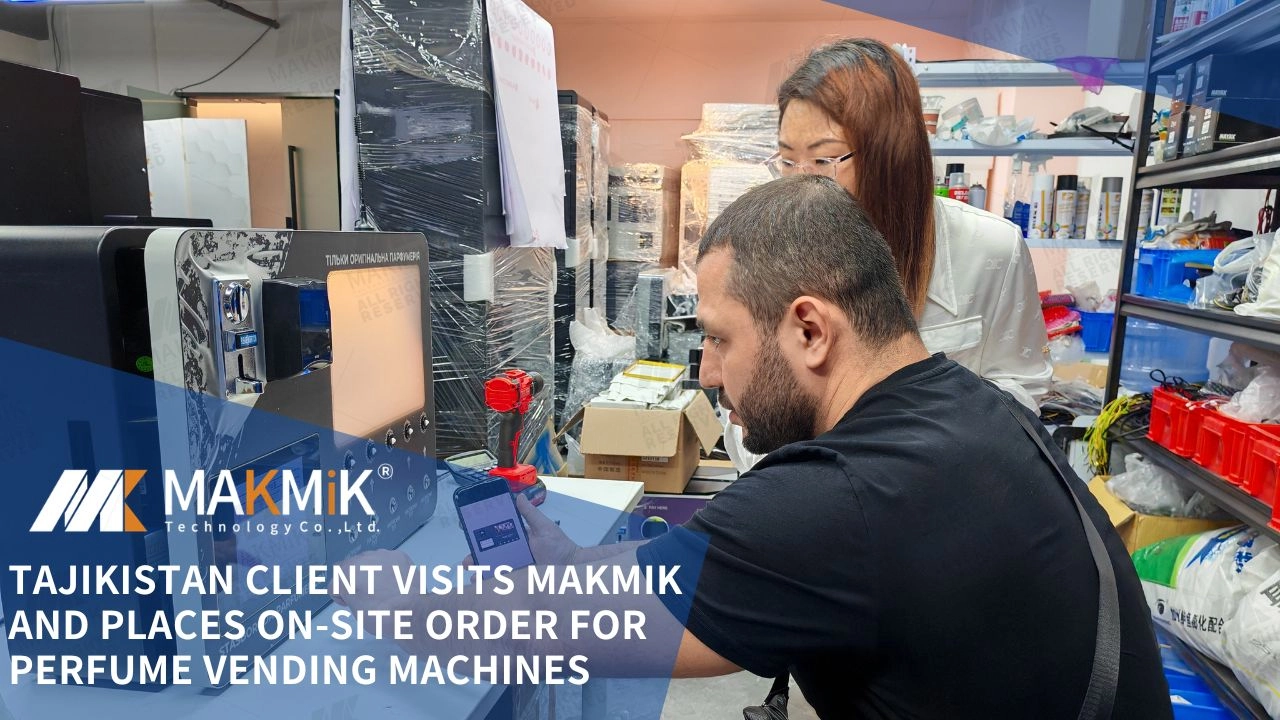
Tajikistan Client Visits MAKMIK and Places On-Site Order for Perfume Vending Machines
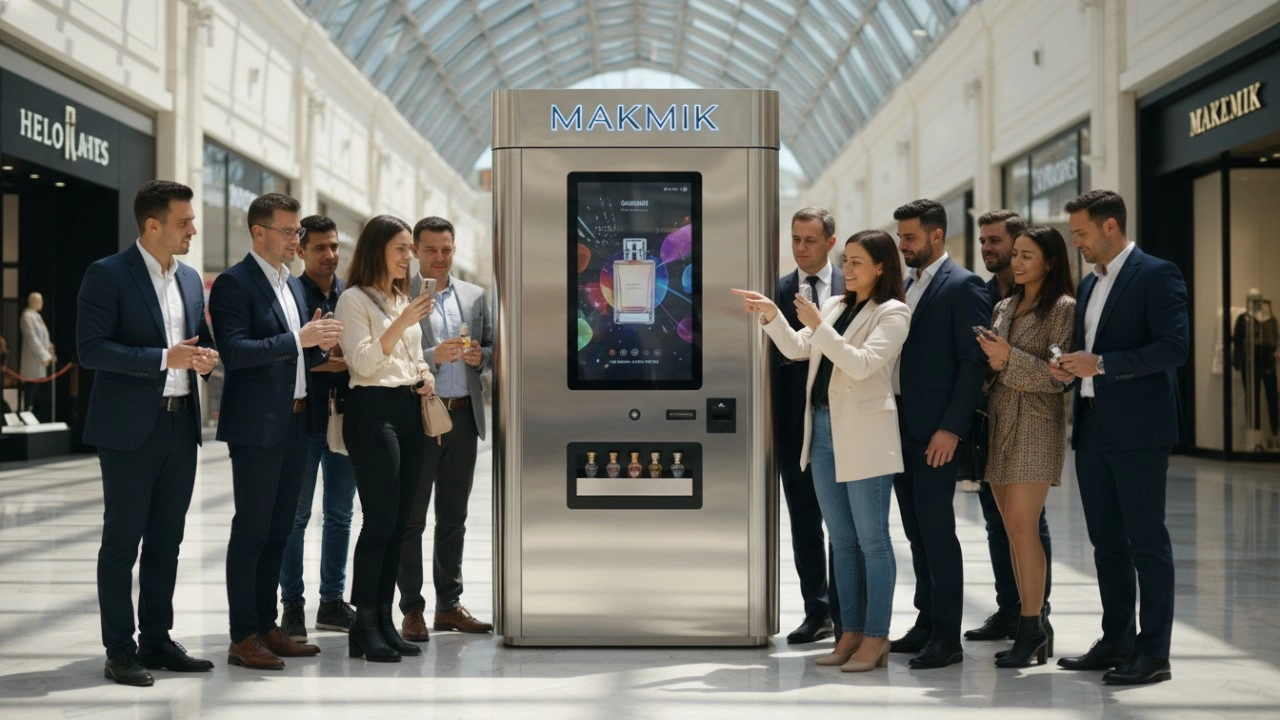
How to Profit from Perfume Vending Machines: Distributor Business Model Guide
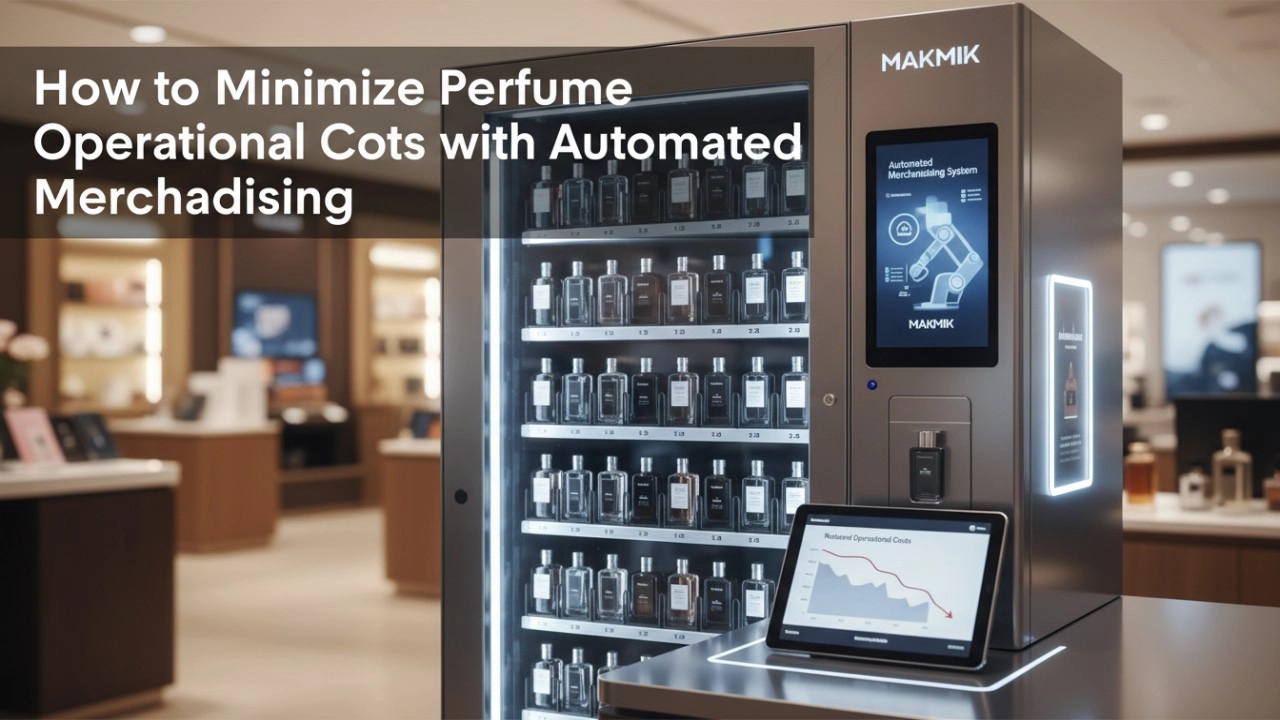
How to Minimize Perfume Operational Costs with Automated Merchandising in 2026
Compliance & Safety: Meeting Perfume Global Standards for Vending Hardware in 2026
Events & Festivals: Mobile Perfume Vending for Short-Term ROI in 2026
FAQ
Do you offer warranties on your vending machines?
Yes, we provide warranties on all our vending machines, covering parts and labor for a specified period to ensure peace of mind for our clients.
What payment options do your vending machines support?
Our vending machines support various payment methods, including cash, credit/debit cards, mobile payments, and contactless payments.
Are your vending machines energy-efficient?
Yes, our vending machines are designed with energy-efficient technologies to reduce power consumption and minimize environmental impact.
What types of vending machines do you manufacture?
We manufacture a wide range of vending machines, including snack, beverage, combo, fresh food, and specialty vending machines.
How do you ensure the quality of your vending machines?
We adhere to strict quality control processes and use high-quality materials and components to ensure durability and reliability.
Send my request
Connect with us to schedule a consultation, request samples, or arrange a site visit to see our facilities and capabilities firsthand.
Reach out to us via phone, email, or through the contact form below, and we'll get back to you promptly within 24 hours.
© 2025 MAKMIK | All Rights Reserved.
Facebook
Linkedlin
YouTube
Instagram