






What maintenance and servicing do perfume vending machines need?
- 1) How often should I replace atomizer nozzles and how can I detect micro-clogs before they spoil a SKU?
- 2) What cleaning fluids and procedures prevent fragrance cross-contamination between SKUs?
- 3) How do I calibrate and verify dispense volume so each spray is consistent across a fleet?
- 4) What firmware and payment-terminal servicing is required to keep EMV/contactless compliance and secure telemetry?
- 5) How do I manage inventory rotation, expiry tracking and batch recall for fragrance oils in vending machines?
- 6) What preventive maintenance schedule and SLA reduce downtime to under 2% annually for high-traffic locations?
- Concluding summary: Advantages of perfume vending machines and final purchase servicing guidance
This technical guide answers six specific, frequently under-covered questions beginners and procurement teams ask before buying or operating perfume vending machines. The content embeds operational terms like fragrance dispenser, atomizer, peristaltic pump, IoT telemetry, EMV payment terminal, SKU tracking, and refill cartridges to help you make purchase, service and SLA decisions.
1) How often should I replace atomizer nozzles and how can I detect micro-clogs before they spoil a SKU?
Signs of nozzle deterioration or micro-clogs: inconsistent spray pattern, visible spraying mist change, reduced mass per dose, and customer complaints about weak scent. Detection and replacement guidance:
- Daily automated checks: configure the machine’s firmware to run a nozzle-test cycle (1–3 sprays) and report deviations in spray-count or flow via IoT telemetry.
- Weekly visual and functional checks: inspect nozzle tips for residue build-up and run a 10-spray gravimetric test (collect sprays on a weigh boat) to quantify average dose; a deviation greater than ±8–10% versus baseline indicates cleaning or replacement.
- Deep clean cadence: perform nozzle ultrasonic cleaning (or soak) every 2–4 weeks in high-traffic locations; monthly for medium-traffic sites. Use fragrance-compatible solvents recommended by the machine manufacturer — typically ethanol (70–95%) for alcohol-based perfumes or proprietary degreasers for oil-heavy formulations.
- Replacement frequency: nozzles are wear items. Typical replacement cycles are 6–12 months under normal use; high-traffic sites or heavily oily formulations may require replacements every 3–6 months.
- Spare kit and diagnostics: keep a field kit with 2–3 spare nozzle assemblies per dispenser head, an ultrasonic cleaner, lint-free wipes, filtered compressed air, and a small analytical balance or calibrated graduated syringe for on-site dose checks. Log each replacement to correlate with SKU and formulation to identify problem fragrances.
2) What cleaning fluids and procedures prevent fragrance cross-contamination between SKUs?
Cross-contamination is a primary quality and branding risk for multi-SKU fragrance dispensers. Follow a validated flush-and-isolate procedure:
- Use compatible solvents: ethanol (food-grade) is the common first-line solvent for volatile alcohol-based perfumes. For oilier concentrates, use manufacturer-approved solvents (avoid bleach or chlorinated solvents that react with fragrance oils and seals). Consult the fragrance supplier’s compatibility data sheet.
- Flush protocol when changing SKUs: 1) run three full-volume solvent flushes through the pump and nozzle, 2) run 5–10 blank sprays (air or solvent) to clear residual aroma in the aerosol path, 3) finish with a short clean-water rinse if the solvent requires it. For cartridges or sealed refill modules, replace the cartridge and run 3–5 blank sprays to condition the nozzle.
- Dedicated lines for High Quality SKUs: where brand integrity is critical, install dedicated dispensing lines/nozzles per SKU to eliminate cross-path residues. Modular cartridge systems with one-way seals are the best practice for High Quality sampling jets.
- Validation and documentation: after cleaning, perform an olfactory and gravimetric test and record results in the maintenance log. For multi-language / cross-border deployments, include Material Safety Data Sheet (MSDS) references and cleaning certificates in your service records.
3) How do I calibrate and verify dispense volume so each spray is consistent across a fleet?
Consistent dose volume is essential for cost control and customer experience. Use a repeatable gravimetric calibration process and store per-machine profiles centrally:
- Baseline setup: define target dose in microliters (µL). Industry sample-dispenser ranges commonly sit between ~50–120 µL per spray depending on nozzle type. Choose a target based on product positioning (sampling vs full micro-spray).
- Calibration method—gravimetric (recommended): 1) use an analytical balance (precision 0.001 g), 2) collect a set number of sprays (e.g., 10), 3) weigh the collected liquid to compute average µL per spray using fluid density. Repeat three times and record mean and standard deviation. Alternatively, use a calibrated micro-pipette or certified flowmeter for direct volume checks.
- Tolerance and adjustment: accept ±8% tolerance as an operational threshold; if outside, adjust valve open time or pump RPM in the machine’s dosing parameters. Re-test after each adjustment.
- Verification frequency: weekly checks for high-volume locations; monthly for moderate traffic. After any nozzle change, SKU swap, cleaning cycle, or firmware update, re-verify dosing.
- Fleet management: upload calibration profiles and historical dosing logs to your cloud dashboard so remote technicians can spot drift and push calibration changes OTA (over the air).
4) What firmware and payment-terminal servicing is required to keep EMV/contactless compliance and secure telemetry?
Payment and connectivity are mission-critical; non-compliance or insecure telemetry risks fines and customer data exposure. Key servicing actions:
- Payment modules: ensure payment terminals receive timely security patches (monthly/quarterly depending on vendor). Maintain EMV Level 2 kernels and contactless NFC/contactless kernel versions as required by your payment provider and acquirer. Keep payment terminal certificates up-to-date and ensure PCI DSS considerations are applied to backend systems.
- Firmware and secure OTA updates: sign firmware images and distribute via TLS 1.2+ or higher. Maintain versioning and rollback capabilities. Patch known vulnerabilities immediately—have a staged test before fleet-wide rollout.
- Telemetry security: use VPNs or secure tunnels between the machine and backend; enforce mutual TLS, certificate pinning, and periodic key rotation. Log remote sessions for audit trails.
- Service cadence: check payment module health daily via remote monitoring; schedule a physical check with a certified technician quarterly. Keep replacement dongles and spare SD/eSIM modules on hand for rapid swap-outs.
- Compliance records: maintain a log of firmware versions, payment config changes, and security patches for audits and acquirer reviews. Engage with your payment processor for required recertifications after significant updates.
5) How do I manage inventory rotation, expiry tracking and batch recall for fragrance oils in vending machines?
Traceability and FIFO rotation reduce spoilage and recall risk. Implement the following processes:
- Batch-level tagging: require refill cartridges or bottles be labeled with batch codes, manufacture date, and expiry. Use barcode or RFID tags scanned into the machine at install to record lot installation in the machine’s inventory log.
- SKU rotation rules: enforce FIFO (first-in, first-out). Machine firmware or backend should track remaining volume and automatically prefer older lots for dispensing where the hardware supports multi-cartridge feeding.
- Expiry thresholds and alerts: set automatic alerts at 90 and 30 days before expiry; generate replenishment orders and supervisor alerts. For opened cartridges, follow supplier guidance—many consumer fragrances remain stable unopened for 2–5 years; opened systems typically show functional life of 6–18 months depending on formulation and storage conditions.
- Recall readiness: design the system to remotely disable specific batch codes or SKUs immediately, export batch-use logs (timestamp, location, serial number), and notify affected sites/operators. Regularly test the recall workflow in tabletop exercises.
- Storage and temperature control: perfumes are sensitive to heat and light. Avoid sustained storage above ~25–30°C; where ambient control is not possible, use insulated enclosures or operate in shaded indoor locations. Inventory sensors (temperature/humidity) with telemetry help enforce safe storage and trigger removal if thresholds are exceeded.
6) What preventive maintenance schedule and SLA reduce downtime to under 2% annually for high-traffic locations?
To achieve low annual downtime (<2%), combine remote monitoring, local preventive service, and robust spares & field technician networks. Practical SLA and maintenance program:
- Remote health monitoring (continuous): monitor telemetry for dispenser errors, low levels, temperature excursions, connectivity, payment failures, and battery health. Automatic alerts should trigger a remote diagnostic and, if needed, a field dispatch.
- Daily automated checks: machine self-test including nozzle-test cycle, payment terminal handshake, and connectivity check.
- Weekly light service (local operator/technician): clean visible residues, run conditioning sprays, verify fluid levels and cartridges, check locks and exterior condition.
- Monthly technical service: inspect pumps, valves, filters, replace pre-filters, tighten mechanical fasteners, verify dispense calibration, and update logs.
- Quarterly intermediate service: change wear items likely to fail (O-rings, small seals), test payment terminal certification, perform firmware review, and check battery/UPS health.
- Annual overhaul: replace main pumps or retrofit high-wear modules, full nozzle refurbishment, and comprehensive software and security audit.
- SLA targets and logistics: define an uptime target (example operational target: ≥98–99% uptime). Use local spare-part depots and certified field technicians to meet MTTR (mean time to repair) targets—aim for remote diagnosis within 1 hour and on-site repair within 4–24 hours depending on urban density. For remote or rural locations, pre-position exchangeable dispenser modules to reduce on-site repair time.
- Spare-parts kit: maintain cartridges/nozzles, pump heads (peristaltic or diaphragm), O-rings, filter cartridges, payment terminal dongles, ethernet/cellular modules, fuses, and LED panels to enable quick swaps.
Operational note: predictive/prescriptive maintenance driven by IoT telemetry (error codes, vibration, temperature trends, dispense variability) is the most effective way to push unplanned downtime below 2% annually. Establish KPIs (uptime, MTTR, number of emergency dispatches, cost per transaction) and review them monthly.
Concluding summary: Advantages of perfume vending machines and final purchase servicing guidance
Perfume vending machines deliver 24/7 sampling and impulse sales, reduce staffing costs, and provide precise dispensing and SKU-level analytics that increase conversion and reduce waste. With a documented preventive maintenance plan (nozzle care, solvent-compatible cleaning, dosing calibration, payment/firmware governance, batch traceability, and SLA-driven field response), operators can maintain product integrity, brand experience and regulatory compliance while keeping downtime and shrinkage low.
If you’re preparing to buy or deploy a fleet, contact us for a tailored quote and maintenance plan: visit www.makmiktech.com or email info@makmiktech.com.
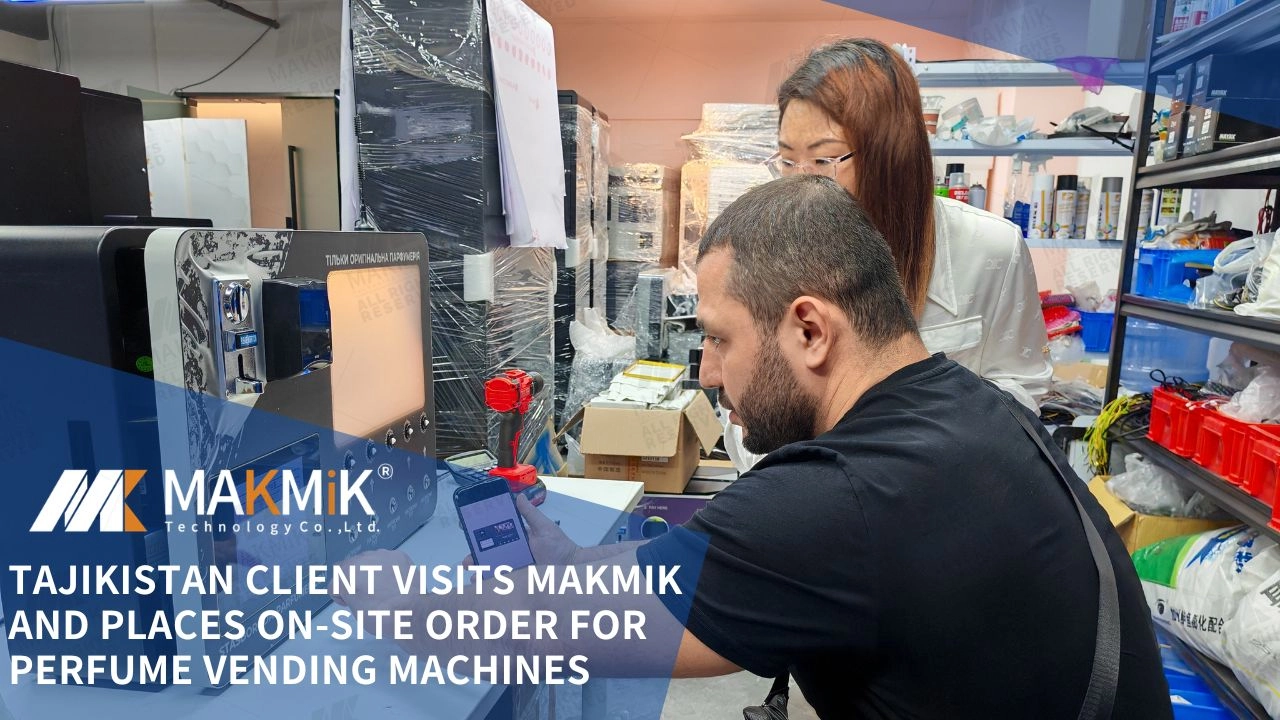
Tajikistan Client Visits MAKMIK and Places On-Site Order for Perfume Vending Machines
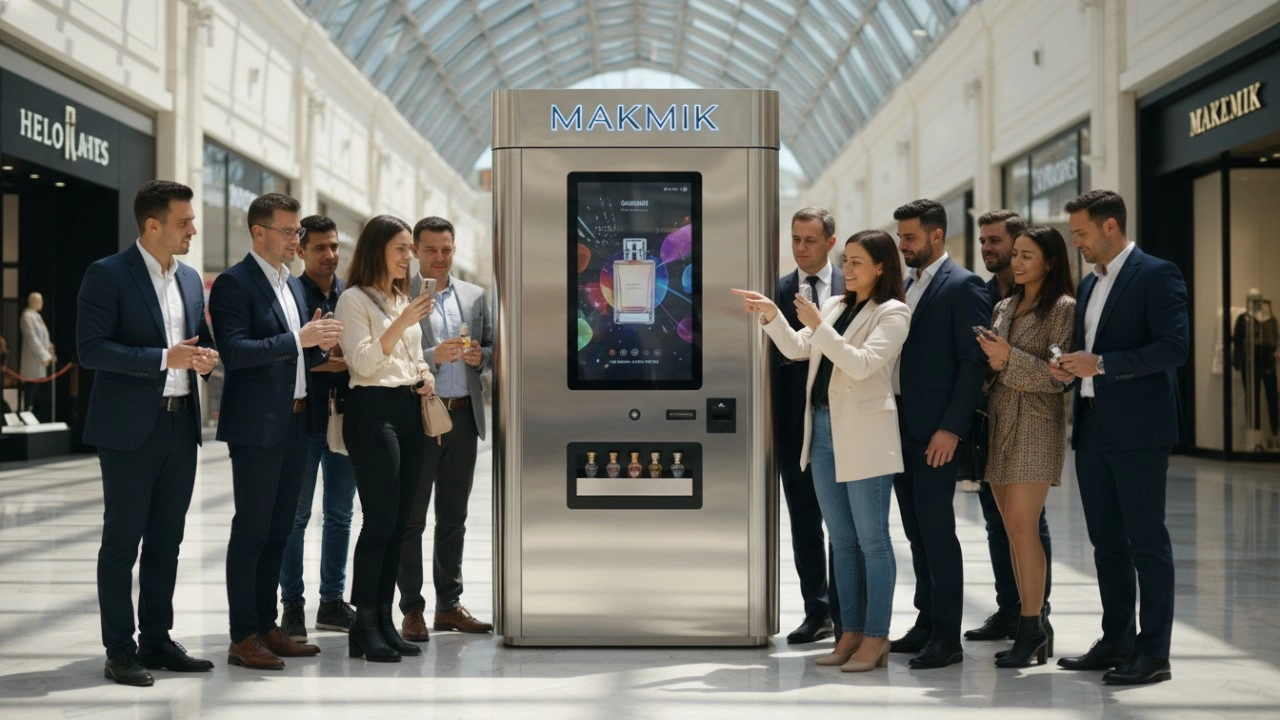
How to Profit from Perfume Vending Machines: Distributor Business Model Guide
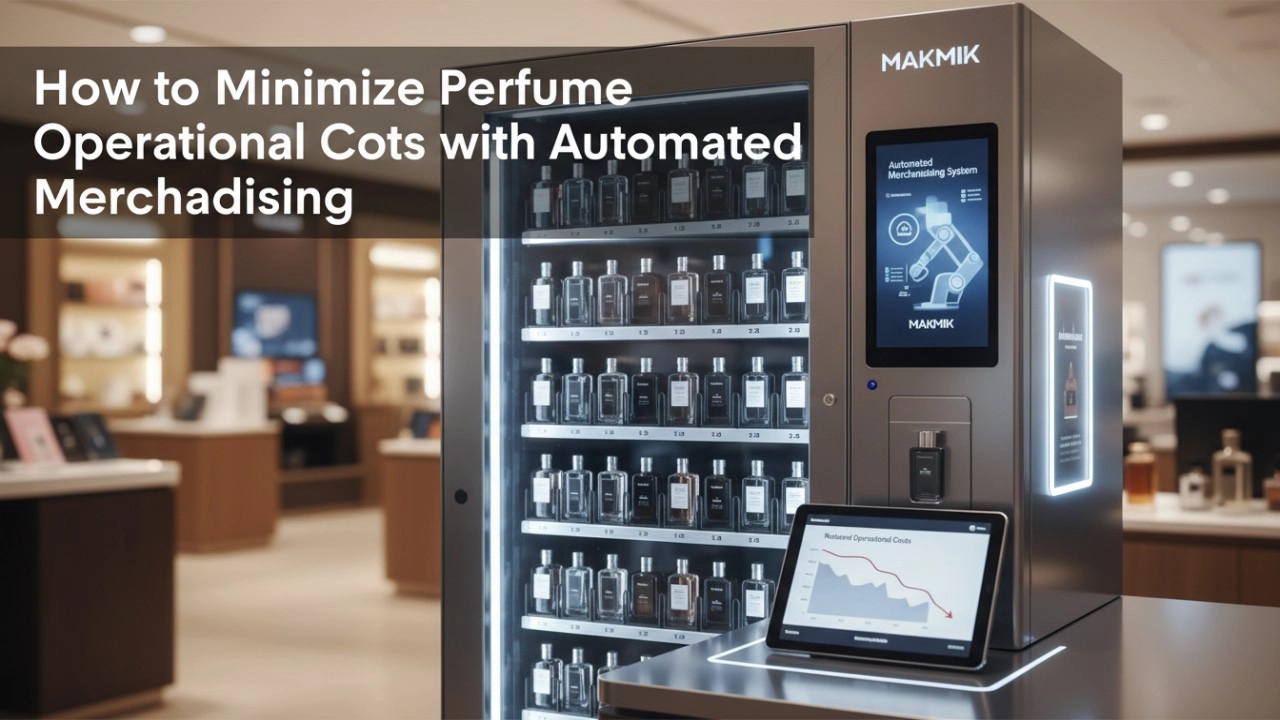
How to Minimize Perfume Operational Costs with Automated Merchandising in 2026
Compliance & Safety: Meeting Perfume Global Standards for Vending Hardware in 2026
Events & Festivals: Mobile Perfume Vending for Short-Term ROI in 2026
FAQ
Do you offer warranties on your vending machines?
Yes, we provide warranties on all our vending machines, covering parts and labor for a specified period to ensure peace of mind for our clients.
What types of vending machines do you manufacture?
We manufacture a wide range of vending machines, including snack, beverage, combo, fresh food, and specialty vending machines.
What is the lead time for manufacturing and delivery?
Lead times vary based on the type and quantity of vending machines ordered, but we strive to deliver within 6-8 weeks from the date of order confirmation.
What kind of technical support do you offer?
We provide 24/7 technical support, including troubleshooting, repair services, and remote assistance to resolve any issues promptly.
Do you provide installation and maintenance services?
Yes, we offer comprehensive installation and maintenance services to ensure your vending machines operate smoothly.

Send my request
Connect with us to schedule a consultation, request samples, or arrange a site visit to see our facilities and capabilities firsthand.
Reach out to us via phone, email, or through the contact form below, and we'll get back to you promptly within 24 hours.
© 2025 MAKMIK | All Rights Reserved.
Facebook
Linkedlin
YouTube
Instagram