




How much do perfume vending machines cost to buy or lease?
- 1. How much do perfume vending machines cost to buy or lease, broken down by entry-level, mid-range, and High Quality models, and what features drive price differences?
- 2. What are the recurring operational costs (refill inventory, maintenance, payment processing, connectivity) per month for a perfume vending machine in a high-traffic mall?
- 3. How do fragrance refill logistics and shelf life affect profitability and what systems minimize waste for multi-scent dispensers?
- 4. What are realistic revenue projections and break-even timelines for perfume vending machines in different locations (mall, airport, hotel)?
- 5. What legal, safety, and insurance requirements (flammability, labeling, product liability) must buyers follow when operating perfume vending machines across US/EU?
- 6. Can you integrate omnichannel features (loyalty, contactless payments, telemetry, digital sampling) and what are realistic integration costs and timelines?
- Conclusion — Advantages of Perfume Vending Machines
Perfume Vending Machines: How Much Do They Cost to Buy or Lease?
As an experienced vending-machine specialist with extensive deployments of fragrance vending kiosks and automated perfume dispensers, this article answers six specific long-tail questions beginners often search for but rarely find up-to-date, operationally useful answers to. Content reflects vendor quotes and real-world deployments (MakMik Tech) and explains purchase vs lease economics, refill logistics, compliance, and omnichannel integration for cosmetics vending machines and retail kiosks.
1. How much do perfume vending machines cost to buy or lease, broken down by entry-level, mid-range, and High Quality models, and what features drive price differences?
Cost range (industry-observed, vendor quotes 2022–2024):
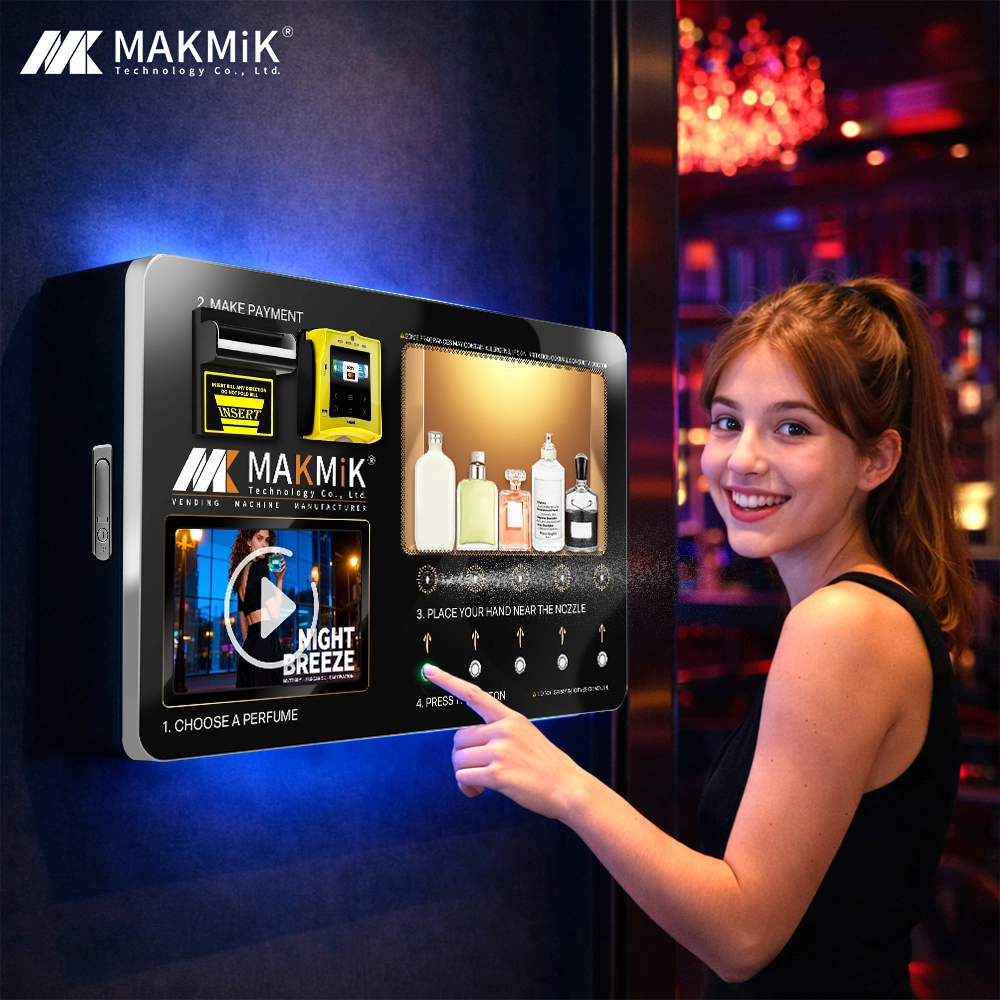
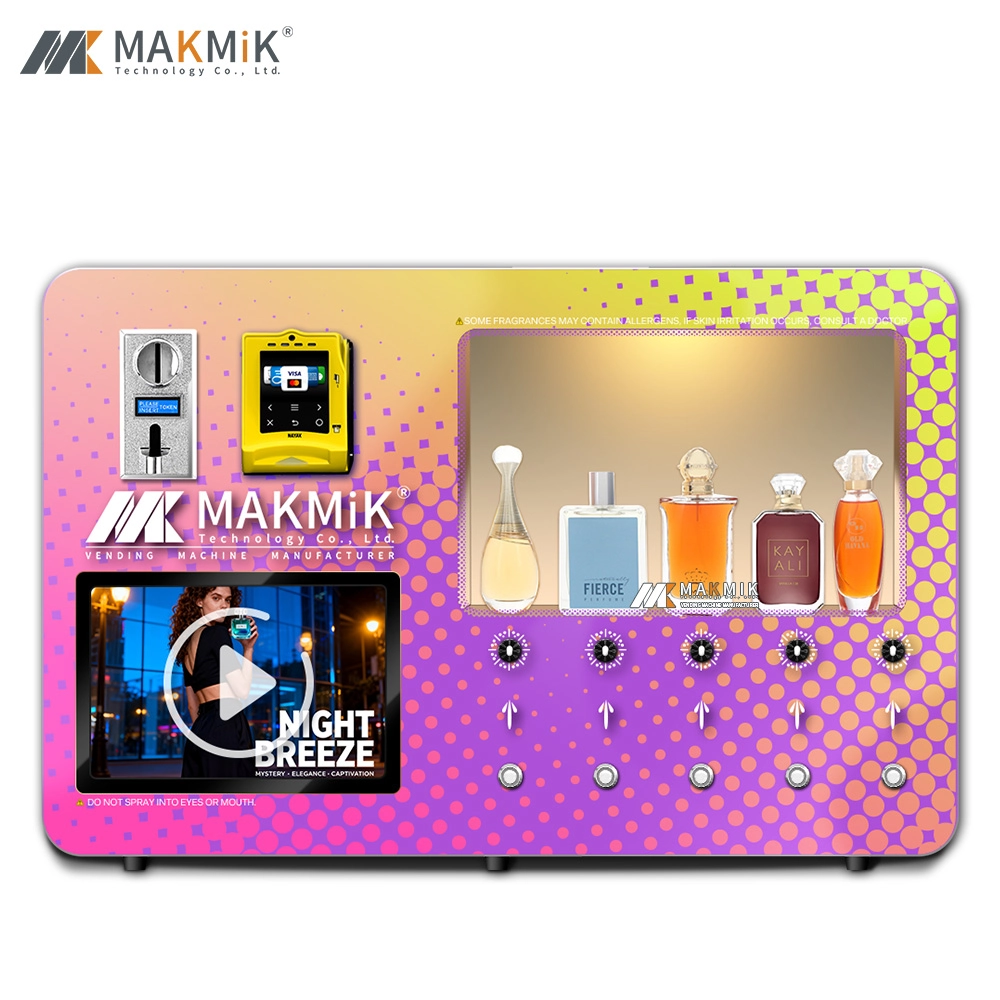
- Entry-level automated perfume dispensers: typically $3,000–$7,000 to buy. These are compact, single-or-few-scent kiosks, basic coin/card readers, small touchscreen, and manual refill ports.
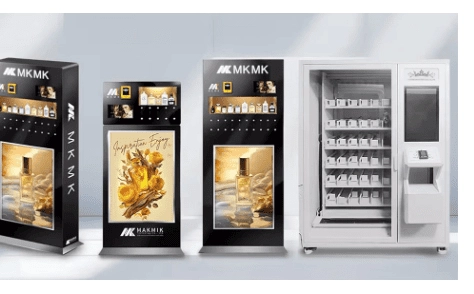
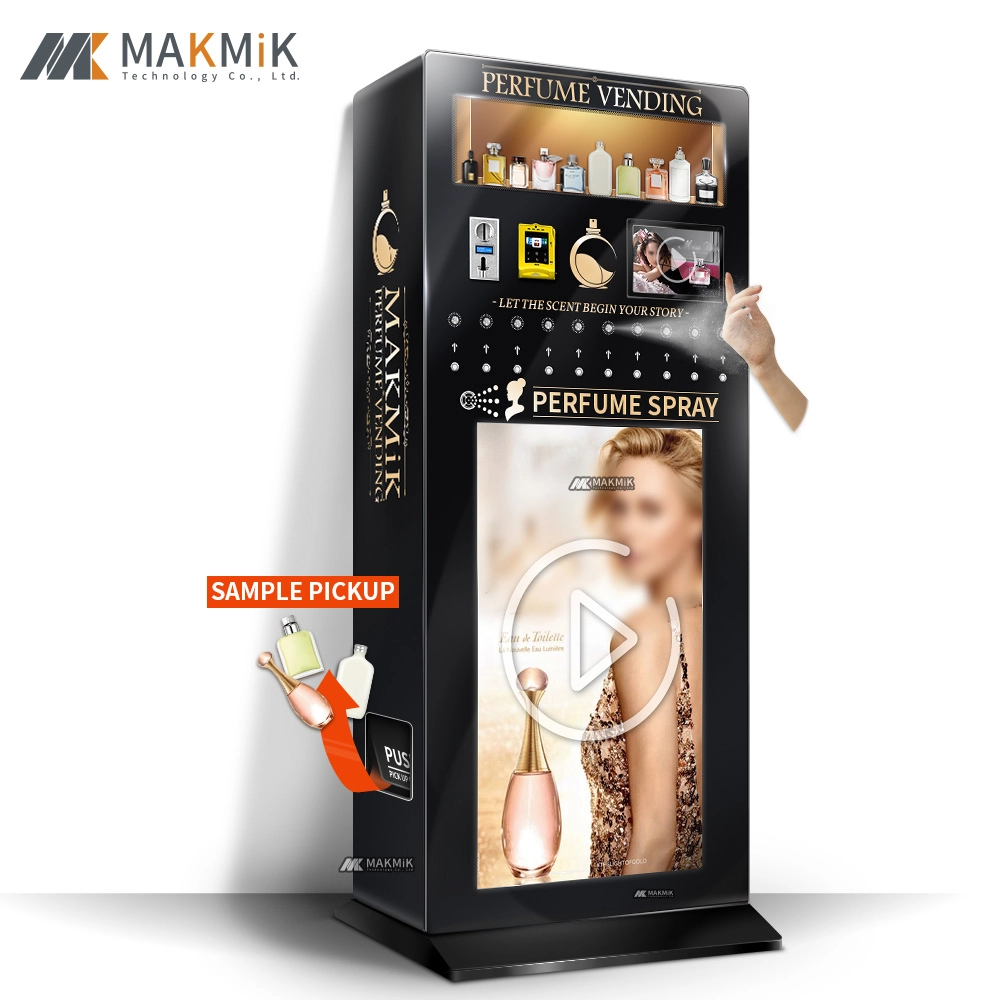
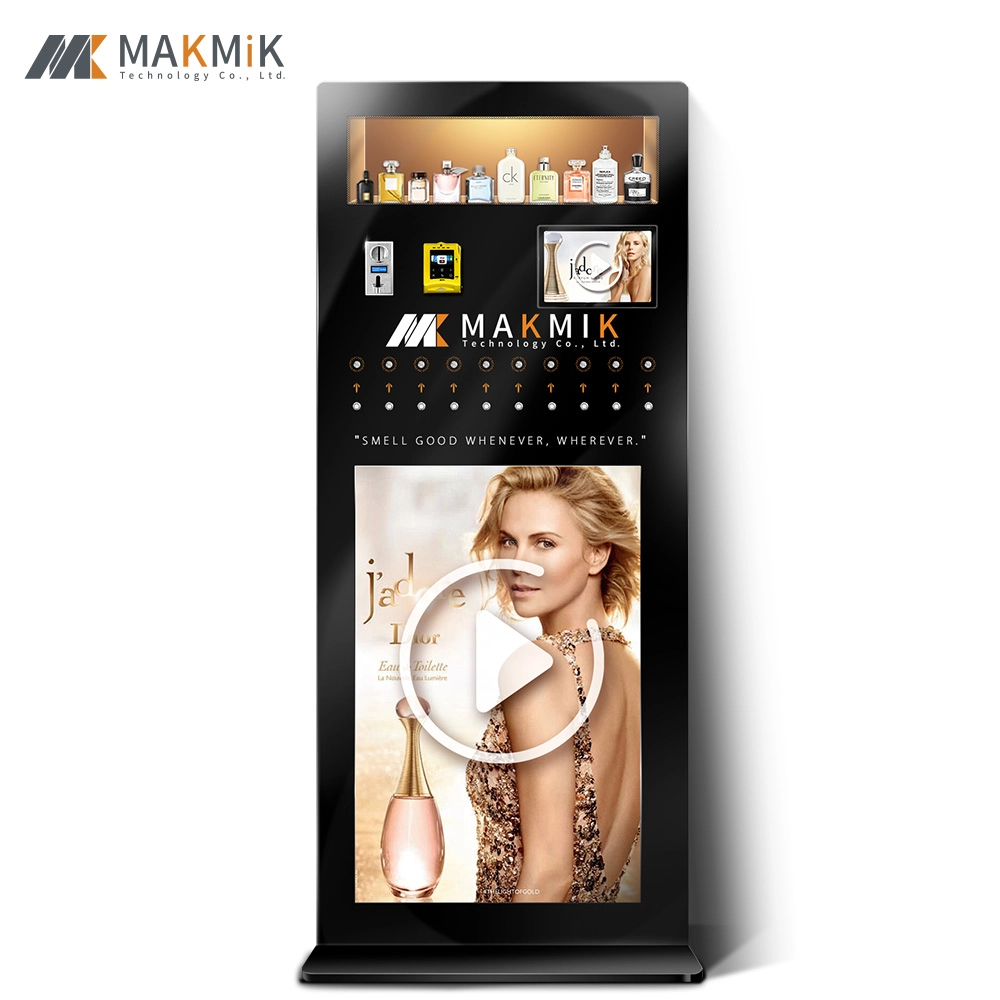
- Mid-range fragrance vending kiosks: typically $8,000–$18,000 to buy. These include multi-scent carousels (6–24 SKUs), advanced touchscreens, cashless/contactless payments, basic telemetry, and small ad displays.
- High Quality custom retail kiosks: typically $20,000–$50,000+ to buy. These are full retail-grade units with refrigeration optionality, large interactive displays, integrated CRM/loyalty, multi-dispense mechanics, advanced IoT telemetry, and bespoke cabinetry/branding.
Lease options vary: simple operating leases for entry-level machines often start around $80–$300/month; mid-range machines commonly lease for $300–$900/month; High Quality kiosks can lease $900–$2,500+/month depending on term, credit, and included services (maintenance, inventory management). Many vendors (including managed-deployment providers) offer revenue-share or hybrid rent-plus-commission models—typical placements use 20%–40% commission on gross sales to the site host.
Primary features that drive price up:
- Number of SKUs and mechanical complexity (multi-dispense modules, vacuum/atomizer systems)
- Touchscreen size, advertising displays, camera/analytics
- Payment and compliance modules (EMV, PCI-certified, NFC, crypto terminals)
- Telemetry and remote inventory tracking (IoT gateways, cellular SIMs)
- Custom branding, cabinetry, HVAC or explosion-proof options for high-alcohol content products
2. What are the recurring operational costs (refill inventory, maintenance, payment processing, connectivity) per month for a perfume vending machine in a high-traffic mall?
Monthly operational cost components (example, conservative mall deployment):
- Inventory refill cost: depends on SKU price and sales velocity. If average transaction price is $12 and cost-of-goods-sold (COGS: perfume, vial, packaging) is 30%, COGS per sale = $3. For 300 sales/month, refill cost = $900.
- Host commission / site rent: 20%–40% of gross sales. At $12 avg price × 300 sales = $3,600 gross; commission at 30% = $1,080.
- Payment processing fees: 1.5%–3.5% + small per-transaction fees. For $3,600, expect $60–$140/month.
- Connectivity (cellular/IoT telemetry): $10–$40/month per SIM. Wi‑Fi installations can be lower if the site provides stable network access.
- Maintenance and consumables (cleaning, nozzle replacement, small repairs): $50–$250/month averaged over year; larger mechanical modules may require $200–$500 intermittently.
- Insurance and compliance (product liability, property, transit): allocate $50–$150/month depending on coverage and territory.
Example total (conservative mid-traffic mall): $2,150–$2,650/month. For a higher-traffic location or High Quality SKUs the inventory and commissions rise; for managed service agreements vendors often bundle maintenance and inventory management into a monthly fee or margin split.
3. How do fragrance refill logistics and shelf life affect profitability and what systems minimize waste for multi-scent dispensers?
Key product facts affecting logistics:
- Perfume shelf life: unopened perfume (alcohol-based) typically maintains quality 2–4 years if stored away from heat and light; opened bottles degrade faster (12–24 months depending on storage and formulation). For sample vials and dispenser cartridges, manufacturers often recommend discreet rotation and FIFO.
- Flammability and storage: perfumes are alcohol-based and require appropriate storage away from ignition sources and often in compliant containers.
Logistics and waste-minimizing best practices:
- SKU rationalization: stock best-selling fragrances in larger pack sizes; niche scents in smaller quantities to reduce dead stock.
- Modular refills: use replaceable cartridges or sample vials to limit exposure and simplify refill operations. Refillable bulk tanks can reduce per-unit cost but increase spoilage risk.
- IoT telemetry and inventory sensors: remote telemetry that reports unit-level dispense counts enables just-in-time refills and prevents overstock. Many smart dispensers provide SKU-level depletion alerts and daily reports.
- First-In-First-Out (FIFO) checks in field refills: maintain lot/expiry tracking in your inventory management system and label cartridges with fill dates to rotate stock correctly.
- Package choices: use airtight, UV-stable sample vials to extend opened-life; consider inert dispensing technologies (airless pumps) to reduce oxidation.
Financial impact example: reducing waste by 10% via telemetry + FIFO can improve gross margin proportionally (e.g., if COGS is $900/month, 10% waste reduction saves $90/month).
4. What are realistic revenue projections and break-even timelines for perfume vending machines in different locations (mall, airport, hotel)?
Revenue varies by foot traffic, spend-per-transaction, and placement quality. Below are conservative industry-observed ranges with a simple break-even example. Adjust by local rental and commission terms.
- Mall (good corridor, cosmetics anchor nearby): typical gross sales $30–$150/day → $900–$4,500/month.
- Airport (high dwell time, tourists): typical gross sales $150–$600+/day → $4,500–$18,000+/month.
- Hotel lobby (boutique or luxury hotel): $20–$80/day → $600–$2,400/month.
Break-even example (mid-range kiosk at $12,000 purchase price):
- Assume gross sales $3,600/month (mall mid-range). Net after commissions (30%) = $2,520. Subtract monthly operating costs (inventory COGS $900, payment fees $80, maintenance $100, connectivity $25, insurance $70) = $1,175 operating costs. Net profit ≈ $1,345/month.
- At $1,345/month net, break-even on a $12,000 purchase is ~9 months. If placed on lease ($600/month) rather than purchased, up-front capital is lower and payback shifts to operating profitability; lease payments and host commissions reduce monthly net and extend payback.
Important caveat: these are illustrative; airports often require higher commissions or revenue share, support fees, and higher insurance but substantially higher sales volumes can still produce faster payback. Always model three scenarios (conservative, expected, optimistic) and include host agreements and seasonal variation (holiday spikes for perfume sales).
5. What legal, safety, and insurance requirements (flammability, labeling, product liability) must buyers follow when operating perfume vending machines across US/EU?
Perfumes are alcohol-based and carry regulatory considerations. Key compliance areas:
- Product safety and labeling: cosmetics and fragrances in EU must comply with the EU Cosmetics Regulation (EC) No 1223/2009 — ingredient labeling, product information file (PIF), and Responsible Person designation. In the US, the FDA regulates cosmetics labeling; fragrances must not be adulterated or misbranded.
- Flammability and storage: ethanol-containing products are flammable. Storage limits, fire codes, and transport regulations (e.g., DOT/ADR rules for quantities during transit) apply. Consult local fire marshal and your insurer for storage limits in public spaces.
- Packaging and child-safety: if selling small vials or concentrated sprays, use child-resistant closures where required; include safety and allergen warnings where applicable.
- Insurance: product liability insurance and general liability are essential. For deployments in public venues (malls, airports), host contracts often require evidence of insurance with specified limits and additional insured endorsements.
- Data & payments compliance: PCI DSS requirements for card readers, plus local data privacy laws (GDPR for EU customer data, CCPA-like laws in the US) if you collect personal data via loyalty or apps.
Actionable steps before deployment: obtain MSDS for every SKU, validate compliance with regional cosmetics regulators, consult site-specific fire and safety rules, and secure product liability insurance. Failure to follow these can result in fines, forced removal, or increased insurance High Qualitys.
6. Can you integrate omnichannel features (loyalty, contactless payments, telemetry, digital sampling) and what are realistic integration costs and timelines?
Yes — modern smart dispensers and fragrance vending kiosks are designed to be integrated into omnichannel retail and CRM platforms. Common integrations:
- Contactless payments (NFC, mobile wallets) and EMV card readers — often standard on mid-range and High Quality models.
- Telemetry and remote inventory via cellular or Wi‑Fi — provides real-time SKU depletion, sales data, and remote diagnostics.
- Loyalty and CRM integration — tie purchases to email/phone numbers or QR-based accounts to enable coupons, repeat purchases, and remarketing.
- Digital sampling and personalized recommendations — touchscreen UI or QR-driven surveys can suggest matches and capture opt-ins.
- ERP / POS syncing — connect vending telemetry to back-office inventory and finance systems for consolidated reporting.
Cost and timeline estimates (typical):
- Basic payment + telemetry (out-of-box): often included or $100–$600 incremental per unit; time-to-deploy: days to 2 weeks.
- Standard CRM/loyalty integration (using APIs): $2,000–$6,000 engineering effort + per-unit configuration; timeline 4–8 weeks.
- Full custom integration (ERP sync, custom app, digital sampling workflows): $8,000–$25,000+ depending on complexity; timeline 8–16 weeks.
When evaluating offers, ask vendors for documented API specs, existing integration references, and sample telemetry dashboards. Factor in ongoing SaaS fees for cloud services, analytics, and SMS/email messaging if you want omnichannel campaigns tied to the kiosks.
Experience note: MakMik Tech's deployments use modular IoT stacks and PCI-compliant payment modules; many clients realize time-to-first-sale in 2–6 weeks for standard builds and 8–12 weeks for customized omnichannel projects.
Conclusion — Advantages of Perfume Vending Machines
Perfume vending machines and fragrance vending kiosks offer a scalable way to expand cosmetics retail with low staff overhead, 24/7 availability, and engaging digital experiences. Advantages include impulse-driven incremental sales, low labor costs compared to staffed counters, data-driven inventory and marketing via telemetry, and flexible commercial models (purchase, lease, or revenue-share). With correct inventory management, compliance planning, and omnichannel integration, vending kiosks can deliver healthy margins and rapid payback—especially in high-dwell locations like airports and High Quality malls.
For a tailored cost estimate, location analysis, or to discuss lease vs buy with accurate ROI modeling for your target sites, contact MakMik Tech for a quote: www.makmiktech.com or info@makmiktech.com.
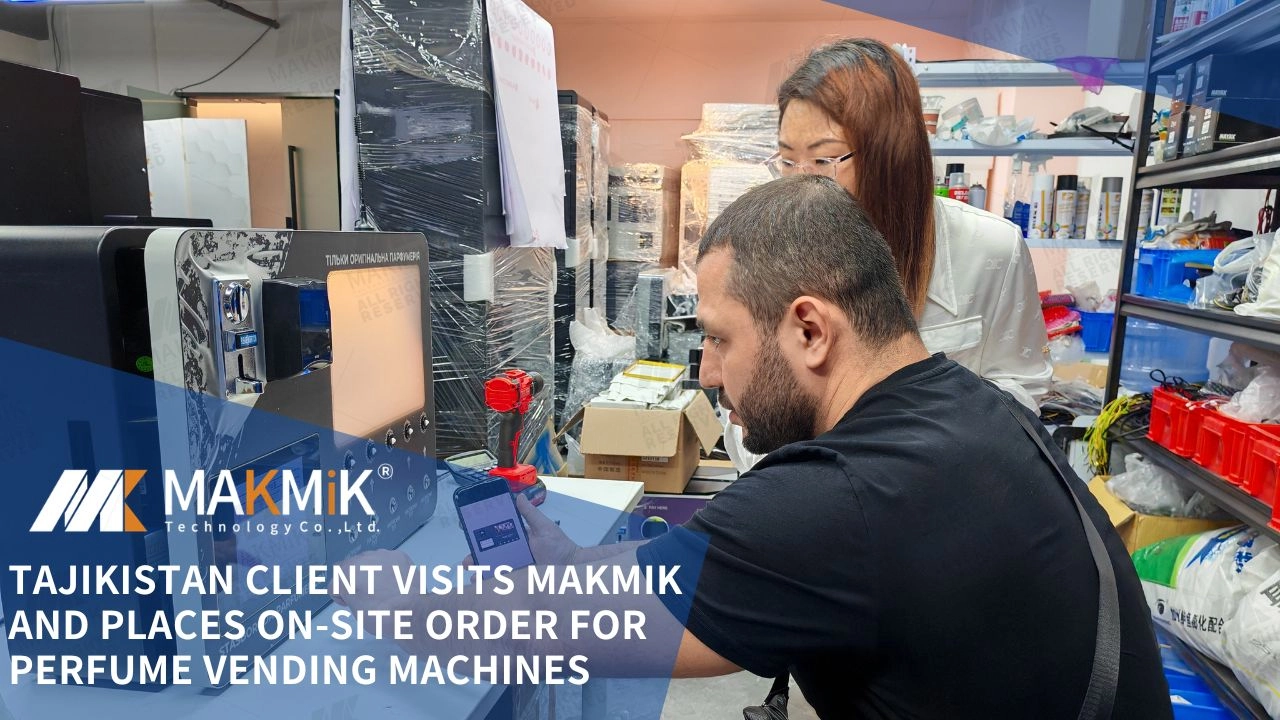
Tajikistan Client Visits MAKMIK and Places On-Site Order for Perfume Vending Machines
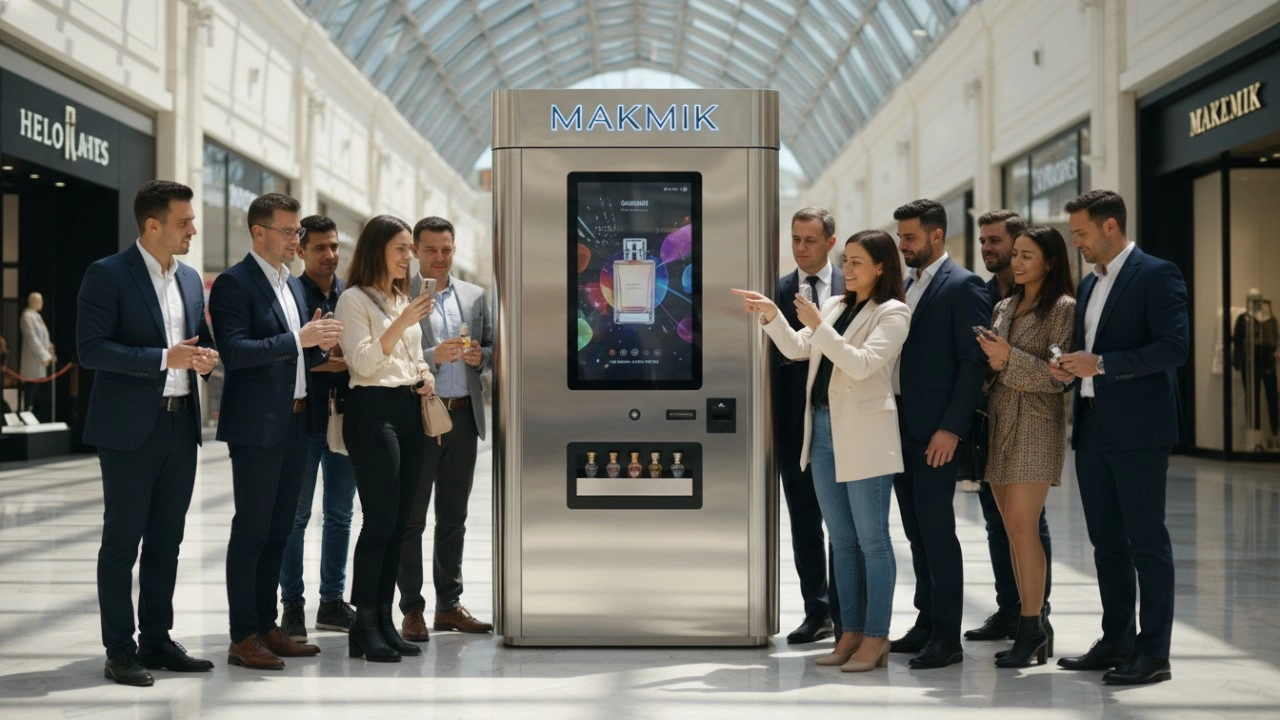
How to Profit from Perfume Vending Machines: Distributor Business Model Guide
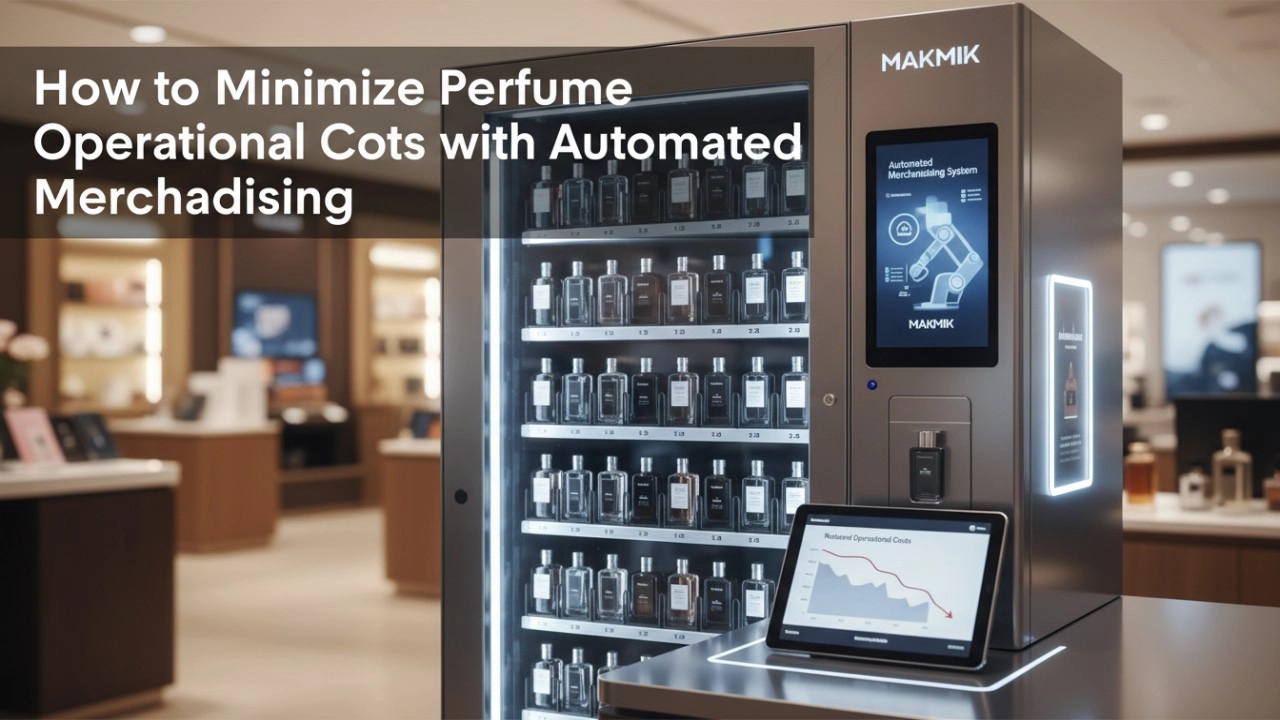
How to Minimize Perfume Operational Costs with Automated Merchandising in 2026
Compliance & Safety: Meeting Perfume Global Standards for Vending Hardware in 2026
Events & Festivals: Mobile Perfume Vending for Short-Term ROI in 2026
FAQ
Are your vending machines energy-efficient?
Yes, our vending machines are designed with energy-efficient technologies to reduce power consumption and minimize environmental impact.
Can your vending machines be customized?
Yes, we offer customization options to meet specific client requirements, including branding, product selection, and payment systems.
What payment options do your vending machines support?
Our vending machines support various payment methods, including cash, credit/debit cards, mobile payments, and contactless payments.
How can I monitor and manage my vending machines remotely?
Our vending machines come with advanced telemetry systems that allow remote monitoring and management through a web-based platform or mobile app.
Do you offer warranties on your vending machines?
Yes, we provide warranties on all our vending machines, covering parts and labor for a specified period to ensure peace of mind for our clients.
Send my request
Connect with us to schedule a consultation, request samples, or arrange a site visit to see our facilities and capabilities firsthand.
Reach out to us via phone, email, or through the contact form below, and we'll get back to you promptly within 24 hours.
© 2025 MAKMIK | All Rights Reserved.
Facebook
Linkedlin
YouTube
Instagram