





are perfume vending machines profitable | Insights by MAKMIK
This guide under-addressed questions beginners ask about whether perfume vending machines are profitable. It covers realistic ROI modeling, procurement of authentic fragrances at acceptable COGS, SKU & pricing for different venues, theft mitigation, cosmetic regulatory compliance (US/EU/CHINA), and maintenance/SLA budgeting—so buyers can make informed procurement decisions.
- 1. How do I build a realistic ROI model for a perfume vending machine that includes shrinkage, payment fees, rent, and service costs?
- 2. What procurement routes secure authentic, legally-sellable perfume at acceptable COGS for vending machines?
- 3. How should I choose SKU mix and pricing for different venues (mall vs airport vs hotel) to maximize sales and minimize dead stock?
- 4. What physical security, machine design, and insurance options reduce theft and vandalism losses?
- 5. What cosmetic regulatory and labeling requirements must I meet for vending sales across major markets (EU/US/China)?
- 6. What are realistic maintenance/SLA expectations and how should I budget for downtime, parts replacement and software updates?
- MAKMIK Advantage — Why buy through MAKMIK?
1. How do I build a realistic ROI model for a perfume vending machine that includes shrinkage, payment fees, rent, and service costs?
Why this matters: many profitability checks ignore shrinkage (theft/damage), cashless fees, and on-site costs—leading to over-optimistic ROI.
Step-by-step model (use your own inputs):
- List fixed startup costs (CAPEX): machine purchase or lease, installation, wiring, signage, first inventory, permits. Typical range for specialty retail vending machines is wide (low thousands to low tens of thousands USD) depending on customization—use your supplier quote.
- Estimate variable operating costs (annual): inventory cost of goods sold (COGS), payment processing (card/wallet) fees, restocking labor, transportation, utilities, insurance, maintenance parts, and commissions to location owner (if applicable).
- Forecast revenue drivers: average selling price (ASP) per unit, units sold per day, footfall, and conversion rate. For impulse retail, conversion often ranges from 0.5%–5% depending on venue (lower in convenience corridors, higher in airports/tourist hubs).
- Include shrinkage: assume 3%–15% shrinkage depending on venue security (mall vs corner store vs unattended location). This covers theft, breakage, tampering, and misplaced inventory.
- Calculate gross margin per unit = ASP – COGS. Then monthly gross profit = (units sold × gross margin) − variable fees (payment processing, commissions).
- Break-even period = CAPEX / monthly net profit (after operating expenses and expected shrinkage).
Example (hypothetical calculation to illustrate): if ASP = $15, COGS = $5 → gross margin $10. At 15 sales/day → 450 sales/month → gross margin $4,500/month. Subtract payment fees (~2.5% card: $168), restocking/labor ($600), location commission ($900) and maintenance & insurance reserve ($400) → net ≈ $2,432/month. If machine + first inventory cost $9,000, break-even ≈ 3.7 months. Change any input and recalc.
Key procurement insight: get exact COGS (including packaging, labeling, and freight), negotiate payment fees, and secure a clear location commission agreement before buying the machine. Sensitivity test best/worst cases for units/day and shrinkage.
2. What procurement routes secure authentic, legally-sellable perfume at acceptable COGS for vending machines?
Problem: Beginners either overpay for retail bottles or risk counterfeit/illegal supply. You need predictable margins and compliant product.
Practical procurement options:
- Travel-size authorized distributors: buy genuine travel-size or decant products via authorized distributors or brands where MOQ and margins are acceptable. Pros: authentic, easier returns; cons: MOQ and MSRP constraints.
- White-label / contract manufacturers: work with cosmetic manufacturers to create private-label fragrances in travel formats (5–15 mL). Pros: control on COGS and SKU; cons: lead times, MOQ, formulation/label compliance work.
- Third-party decant suppliers: reputable decant houses provide single-use vials or sealed testers. Use caution: verify supply chain, label accuracy, and packaging quality to avoid regulatory issues.
- Bulk concentrate + local bottling: buy fragrance concentrate and bottle locally to reduce freight and packaging costs. Requires strong QA and regulatory compliance processes.
Sourcing checklist (procurement professional): supplier references, certificates of authenticity, MSDS/SDS for each SKU, shelf-life/stability data, batch traceability, MOQ and lead times, unit cost landed (inc. freight & duties), sample testing protocol, labeling templates, and minimum advertising/brand restrictions.
3. How should I choose SKU mix and pricing for different venues (mall vs airport vs hotel) to maximize sales and minimize dead stock?
Problem: a one-size SKU approach wastes space and capital. Venue audience and occasion change demand.
Guidelines:
- Start with a 6–12 SKU assortment per machine. Too many SKUs increases dead stock; too few reduces appeal.
- Match SKUs to venue personas:
- Malls/High streets: broad mix—bestsellers, niche scents, and giftable sets.
- Airports: High Quality travel sizes, recognisable brands, limited editions—higher ASP tolerated.
- Hotels: in-room convenience formats, unisex or calming fragrances; consider collaboration with concierge for promotions.
- Implement a top-60/30/10 rule: 60% of inventory SKU by sales should be top 2–3 SKUs; 30% mid-tail; 10% experimental/niche. Track weekly sell-through and rotate fast sellers.
- Pricing strategy: set ASP above COGS + vending operating margin target. Consider psychological pricing (e.g., $14.95) and bundling (e.g., 2-for-1 travel decants when slow). For High Quality venues you can test 1.2–1.8× mall ASP if the brand allows.
- Use telemetry & POS data: track SKU-level sell-through and shelf-days to adjust replenishment frequency and remove slow movers quickly.
Procurement tip: negotiate small, frequent replenishment runs to avoid overstock; request mixed-case pallets or sample boxes to trial new SKUs without committing to full-case MOQ.
4. What physical security, machine design, and insurance options reduce theft and vandalism losses?
Problem: unattended machines face theft and vandalism—a major unseen cost.
Practical measures:
- Choose cashless-first machines (card, contactless, mobile wallet). Removing cash reduces coin-box break-ins. Payment fees remain but often cost less than theft losses.
- Machine hardware: reinforced steel cabinet, anti-pry locks, tamper-evident product delivery system, and internal alarm sensors (door open, tilt sensors).
- Site-level prevention: place machines in visible, well-lit locations with CCTV coverage or within staffed environments. Higher visibility lowers shrinkage rates dramatically.
- Telemetry & alerts: use remote monitoring for door forced-open, repeated failed dispense attempts, and inventory anomalies; respond quickly to incidents.
- Insurance: secure commercial property/contents insurance and public liability. Ask underwriters about crime endorsements for unattended equipment; High Qualitys depend on location risk profile but are commonly justified by lowering business interruption exposure.
- Operational controls: limit high-value SKUs in fully unattended locations or add tamper-evident single-use vials rather than loose bottles.
Procurement note: compare supplier machine specifications for anti-theft features and warranty terms. Ask for case studies from locations similar to yours to estimate realistic shrinkage improvements.
5. What cosmetic regulatory and labeling requirements must I meet for vending sales across major markets (EU/US/China)?
Problem: cosmetics sold via vending are still regulated—noncompliance risks fines, recalls, and reputational damage.
Key regulatory checkpoints (high-level):
- European Union: Regulation (EC) No 1223/2009 applies. You must have a Responsible Person established in the EU, a Product Information File (PIF) with safety assessment, proper INCI ingredient labeling, batch number, nominal content, and appropriate claims. Some ingredients are restricted/banned and must be checked against annexes.
- United States: The FDA does not pre-approve cosmetics, but products must be safe and properly labeled (ingredients, identity, net quantity). Certain ingredients (e.g., color additives) are regulated. Misbranded or adulterated products can be subject to enforcement.
- China: Cosmetic registration or filing requirements depend on classification (special vs ordinary cosmetics) and whether animal testing exemptions apply. Importers face extra documentation; many vendors use local distributors compliant with NMPA rules.
Practical steps to ensure compliance:
- Work with a regulatory consultant early if selling across borders.
- Obtain MSDS/SDS, full ingredient disclosure, stability data and preservative efficacy where applicable.
- Labeling: ensure machine-sold items include required labels on the packaged unit (not the machine), and display any country-specific consumer information (e.g., contact for responsible person) either on package or via QR code linked to full product info.
- Batch traceability: maintain lot numbers for recalls; PIF or equivalent documents must be accessible to authorities.
Procurement implication: prefer suppliers who provide full regulatory dossiers and batch certificates. If you plan private label, budget for safety assessments and labeling translations.
6. What are realistic maintenance/SLA expectations and how should I budget for downtime, parts replacement and software updates?
Problem: many buyers assume low upkeep—unexpected downtime kills sales and ROI.
Recommended SLA & budgeting approach:
- Operational cadence: plan weekly visual checks/restocks for high-turn locations; biweekly or monthly for lower-turn sites. Schedule preventive maintenance quarterly and a full technical inspection annually.
- Remote health monitoring: use machines with telemetry that reports inventory levels, payment errors, and mechanical faults—this reduces mean time to repair and avoids long downtime.
- Parts & consumables: budget for fast-moving parts (motors, belts, sensors), payment terminal replacements, and consumables (labels, packaging dispensers). Keep a small spare-parts kit locally.
- Budget guidance (rule-of-thumb, not universal): set aside 5%–15% of gross revenue for maintenance, replacements, and minor upgrades. Higher percentages for harsh environments or older machines.
- Response SLA: negotiate with your vendor/operator a 24–72 hour onsite response for high-traffic locations, and 72+ hours for low-traffic. Define penalties or credit structures for extended downtime.
- Software & security: include periodic firmware updates and PCI/EMV compliance patches in your contract—these are critical for secure cashless payments.
Procurement checklist: require an SLA in the purchase or lease agreement, request mean time between failures (MTBF) data, ask about spare-part availability and average repair times from the vendor’s reference clients.
MAKMIK Advantage — Why buy through MAKMIK?
MAKMIK combines turnkey vending hardware, remote telemetry, and cosmetics procurement expertise. We provide travel-size and private-label sourcing vetted for regulatory compliance, robust anti-tamper machine designs, multilingual UI for tourist-heavy venues, and global service partners for fast SLAs. Our integrated solution reduces shrinkage, speeds break-even, and simplifies cross-border compliance.
Ready to get a tailored procurement quote and ROI model for your target venues? Contact us at www.makmiktech.com or info@makmiktech.com for a free consultation and quote.

Perfume Vending Machine Business Guide for Operators: Profit, ROI & Strategy

Are Perfume Vending Machines Profitable? ROI & Business Guide (2026)
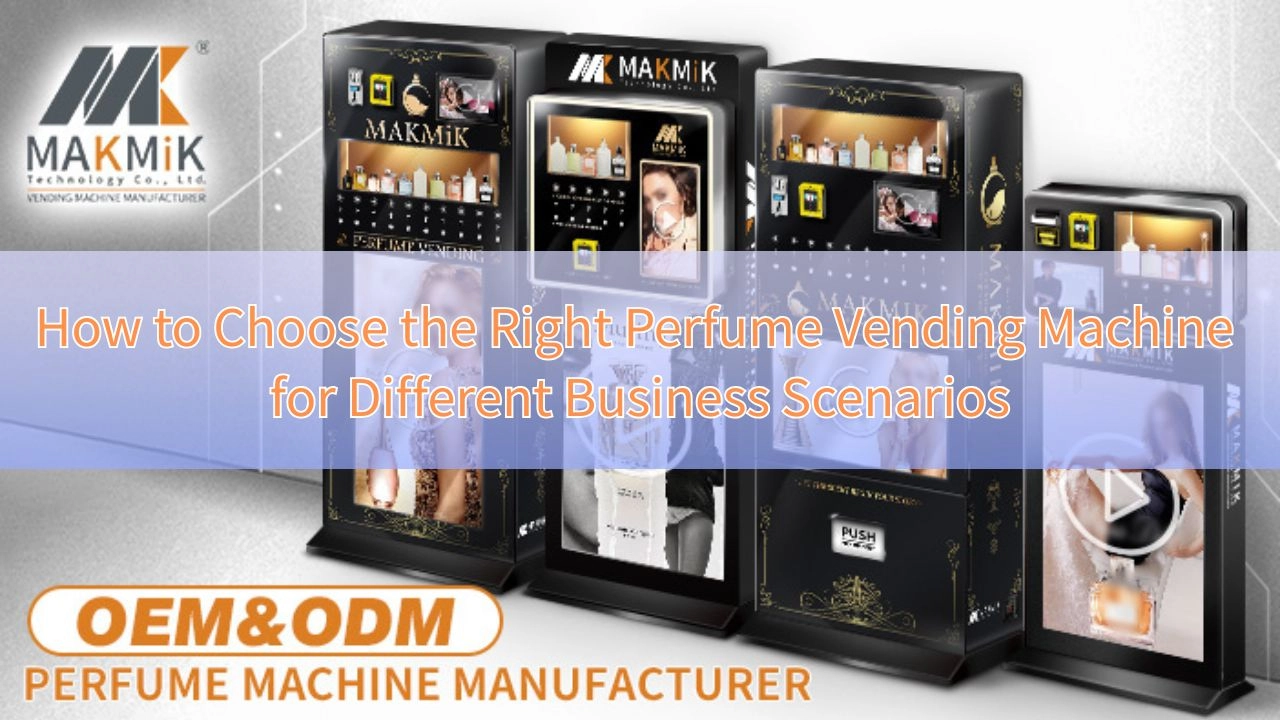
How to Choose the Right Perfume Vending Machine for Different Business Scenarios | MAKMIK Guide
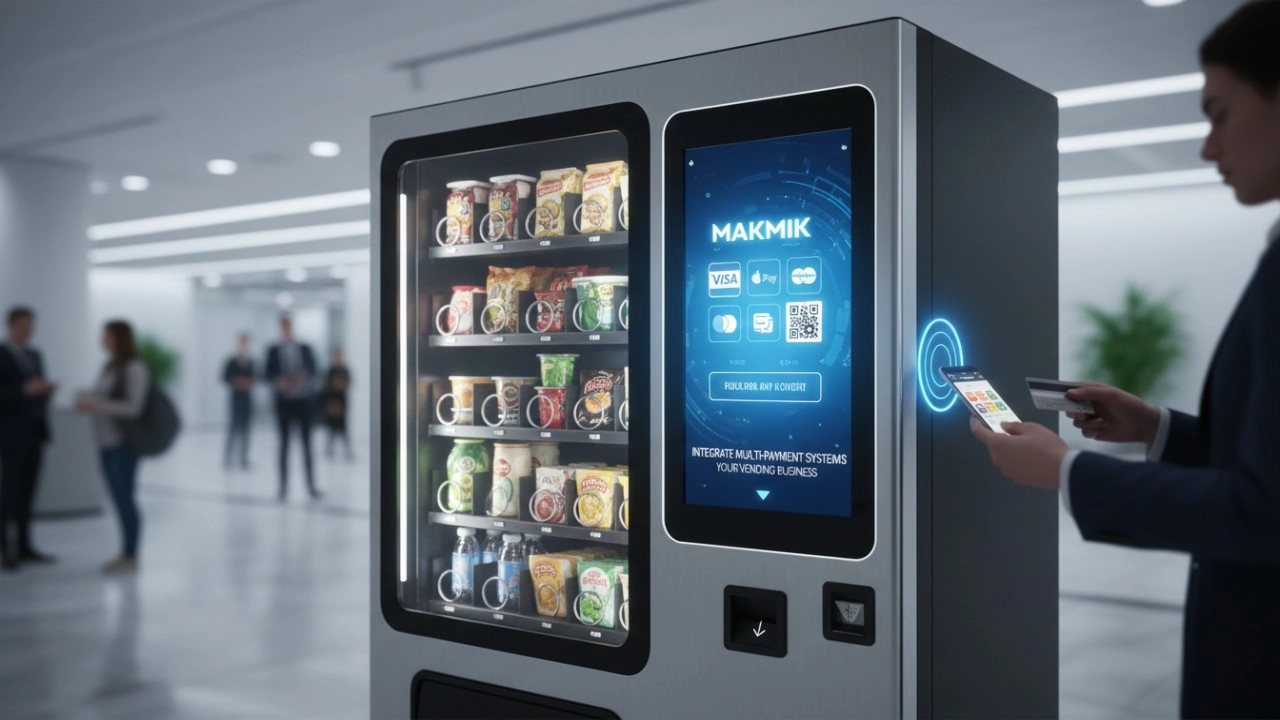
Integrating Multi-Payment Systems into Your Vending Business: The Ultimate 2026 Guide
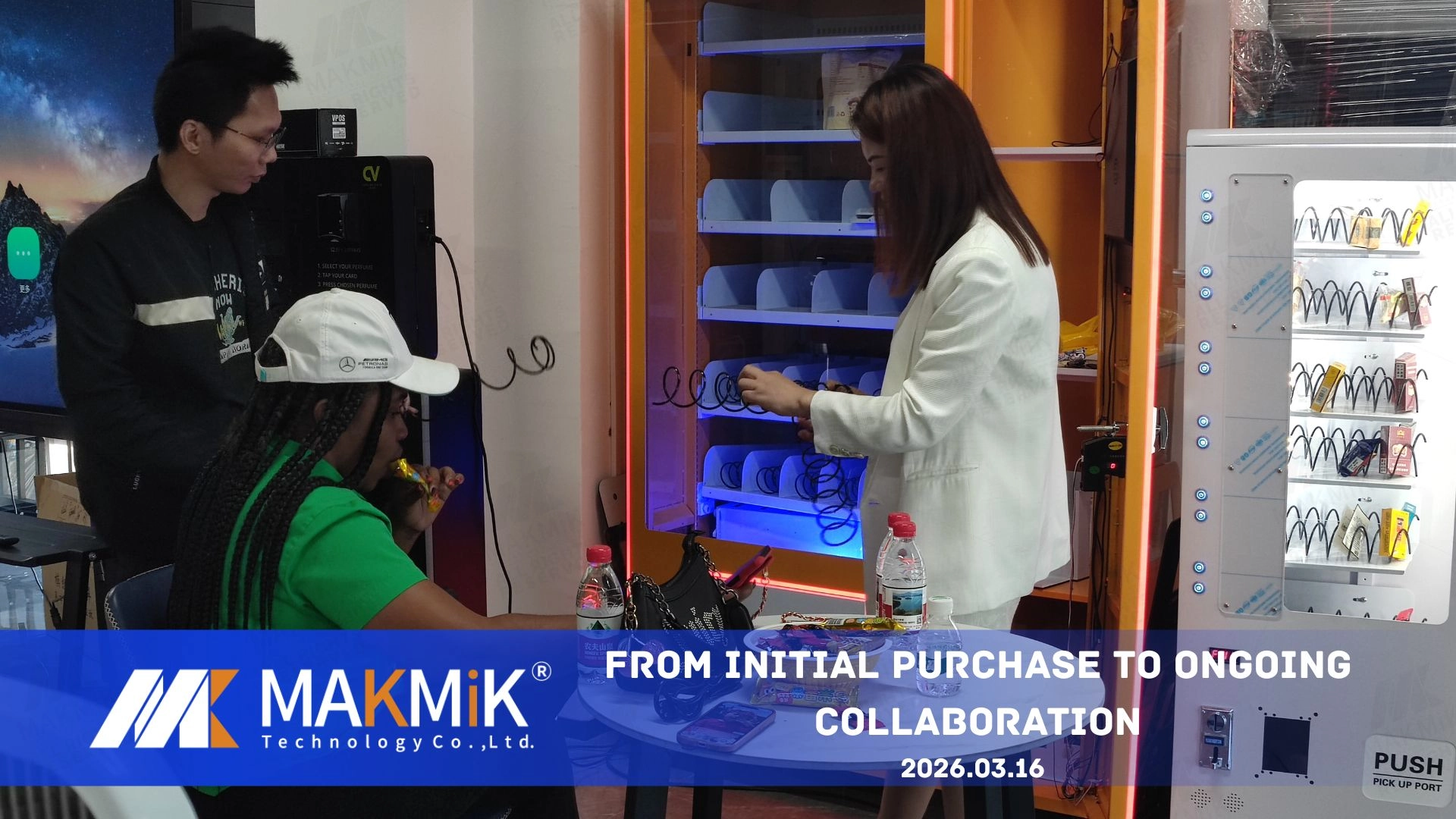
MAKMIK NEW | US Vending Machine Distributor Revisits MAKMIK to Explore New Products and Procurement Opportunities
FAQ
Can your vending machines be customized?
Yes, we offer customization options to meet specific client requirements, including branding, product selection, and payment systems.
Do you offer warranties on your vending machines?
Yes, we provide warranties on all our vending machines, covering parts and labor for a specified period to ensure peace of mind for our clients.
What is the lead time for manufacturing and delivery?
Lead times vary based on the type and quantity of vending machines ordered, but we strive to deliver within 6-8 weeks from the date of order confirmation.
Are your vending machines energy-efficient?
Yes, our vending machines are designed with energy-efficient technologies to reduce power consumption and minimize environmental impact.
How can I monitor and manage my vending machines remotely?
Our vending machines come with advanced telemetry systems that allow remote monitoring and management through a web-based platform or mobile app.
Send my request
Connect with us to schedule a consultation, request samples, or arrange a site visit to see our facilities and capabilities firsthand.
Reach out to us via phone, email, or through the contact form below, and we'll get back to you promptly within 24 hours.
© 2025 MAKMIK | All Rights Reserved.
Facebook
Linkedlin
YouTube
Instagram